
Michael Scott Roberts, known to most people simply as Scott, was born on March 6th, 1975, in Texarkana, Texas. He grew up in the region and maintained deep connections to the community throughout his life. By the summer of 2015, he was forty years old and living across the state line in Texarkana, Arkansas.
Scott had earned a bachelor’s degree from Texas A&M University–Texarkana and obtained numerous professional certificates and licenses. His greatest professional passion, however, was flying.
For nine years, Scott had worked as a pilot, building a career that allowed him to pursue his enthusiasm for aviation. He flew charter flights and, most recently before his death, worked as a pilot for Wholesale Electric Supply. Aviation was more than a means of employment. It represented the freedom, excitement, and sense of exploration that characterized much of his life.
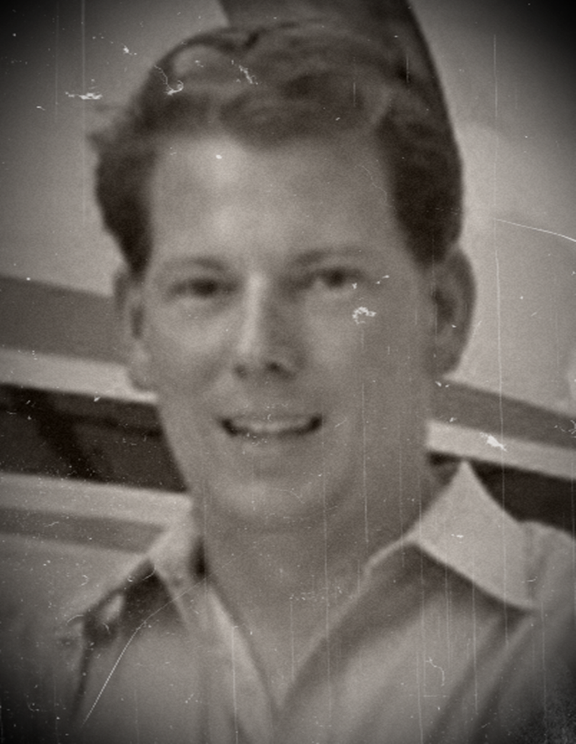
Those who knew Scott remembered a man with an adventurous spirit. In addition to flying, he enjoyed bicycling, golfing, scuba diving, attending baseball games, and traveling. He also treasured the time he spent at a piece of property along the river that he called Big Sky.
But while his interests took him in many directions, his family remained central to his life. Scott was the father of a son, Jett Thomas Roberts, whom he adored. He was also close to his parents, John and Betty Roberts, and his brother, Shawn.
Faith was another important part of his life. Scott attended Heritage Church, where his family said his Christian beliefs and personal relationship with God had become increasingly meaningful.
Thursday, July 2nd, 2015, began as an ordinary summer day in Texarkana, a city divided by the Arkansas–Texas state line. Scott had recently returned from an out-of-town trip and was at his residence in the 1800 block of Garland Street.
According to information subsequently released by the Texarkana Arkansas Police Department, Scott was shot and killed at approximately eleven o’clock that morning.
The precise sequence of events inside the residence has never been fully disclosed publicly. Investigators have not released a detailed account of how the killer entered the home, whether Scott knew the person responsible, or whether there was a confrontation before the shooting.
What is known is that Scott’s family became increasingly concerned when telephone calls to him went unanswered. Eventually, family members decided to check on him in person. His brother, Shawn, went to the residence and discovered Scott’s lifeless body.
The discovery led to an emergency call, and officers from the Texarkana Arkansas Police Department responded to the Garland Street home. Initial reports described the dispatch as a possible suicide. However, the officers who entered the residence discovered circumstances that required further investigation: Scott Roberts had sustained multiple apparent gunshot wounds.
Police secured the residence and called in crime scene investigators to examine the evidence. His body was sent to the Arkansas State Crime Laboratory for an autopsy.
By the following day, July 3rd, local news outlets were reporting that authorities were investigating Scott’s death as a possible homicide. Police subsequently confirmed that he had been murdered.
The Texarkana Arkansas Police Department launched an intensive investigation into Scott Roberts’ death. Although investigators knew that he had been shot inside his home, determining who had committed the crime and why proved considerably more difficult.
In the days following the murder, police publicly confirmed that detectives were working to identify potential suspects. However, authorities released relatively little information about the evidence gathered at the scene. There were no immediate public announcements identifying a suspect or establishing a definitive motive.
As the investigation continued, authorities grew increasingly convinced that the shooting had not been a random act. That belief would eventually become one of the most significant details disclosed about the case.
Police would later state that they did not believe Scott had been killed during a theft. The investigation therefore focused on understanding Scott’s personal and professional life, his relationships, and his activities leading up to the shooting.
Detectives worked to establish who might have had contact with him, whether anyone had reason to harbor hostility toward him, and whether anything unusual had occurred before his death.
The Texarkana Arkansas Police Department eventually made its assessment of the crime’s nature explicit. In a July 2nd, 2019, public appeal marking the fourth anniversary of Roberts’ death, the department stated: “This was no random act.”
As the months passed, the Scott Roberts investigation grew more complex. Detectives followed leads, reviewed information, and processed forensic evidence in hopes of identifying the person or people responsible. The investigation required substantial time and resources. By October 2015, police were publicly describing the case as complicated and labor-intensive. Captain Doug Avery, commander of the Texarkana Arkansas Police Department’s Criminal Investigation Division, acknowledged that investigators were dealing with a large number of leads.
The investigation also benefited from assistance provided by the Federal Bureau of Investigation. The FBI supplied specialized equipment and technical support to help local detectives process and analyze information and evidence. This assistance reflected the challenges investigators faced in trying to turn the material they had collected into a prosecutable case.
Over time, the investigative effort expanded further. According to later statements from police spokeswoman Corporal Kristi Bennett, the department sought assistance from FBI personnel in Little Rock and Texarkana. Investigators also consulted a retired Texas Ranger homicide investigator who had spent his career working on murder cases.
By September 2015, more than two months had passed without an arrest. Family members and friends decided to take a more public role in encouraging anyone with information to come forward.
A fundraising campaign was established through GoFundMe under the name Scott Roberts Reward Fund. Organized by Kim Dugan Kinder, the campaign sought donations that could be offered as a financial reward for information leading to an arrest and ultimately a conviction.
The response was substantial. By October 8, 2015, the reward fund had raised approximately $10,000. Police announced that the money would be available to anyone whose information helped authorities apprehend the person responsible.
On July 2nd, 2016, the first anniversary of Roberts’ murder, the case remained unsolved. The Texarkana Arkansas Police Department renewed its appeal for information and reassured the family that investigators had not abandoned their efforts.
Three years later, on July 2nd, 2019, the department issued another public appeal. The message was unusually direct and emotional. Police reiterated their belief that the killing had not been random and urged anyone with information to speak with investigators. They promised to investigate every lead and rumor brought to their attention.
On July 2nd, 2025, Texarkana Today published an article marking the tenth anniversary of Scott Roberts’ murder. The anniversary report revisited the central facts, and also reiterated the police department’s previous statements that investigators did not believe theft had motivated the killing.
Perhaps most striking was the revelation that Scott’s murder had been described by police as the only unsolved homicide on the books in Texarkana, Arkansas, at the time of the department’s earlier public comments.
As of November 2026, there have been no new developments in the case, and Scott Roberts’ murder remains unsolved.

