
On the evening of May 27th, 2015, twenty-seven-year-old Charnice Avia Milton was doing what she loved: covering the stories of ordinary people in Washington, D.C. A dedicated community journalist, Charnice had spent the evening attending a neighborhood meeting near Eastern Market, gathering information for an article. She was heading home on public transportation when an apparently random act of violence brought her promising career, and her life, to a devastating end.
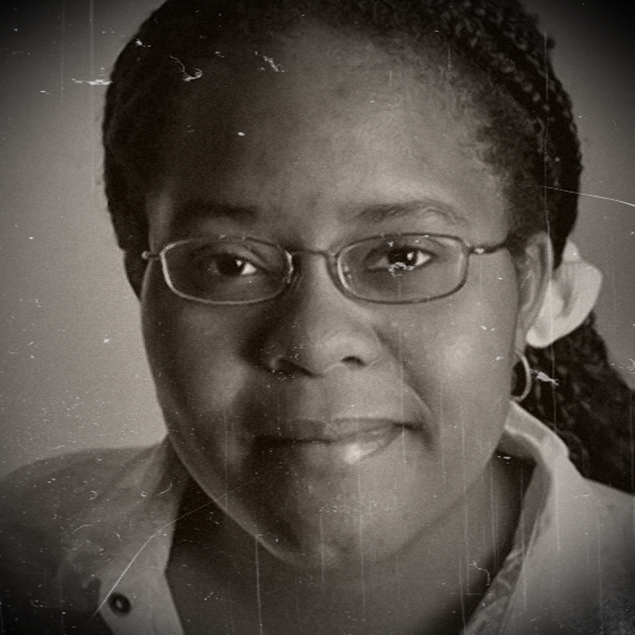
Born and raised in Washington, D.C., Charnice Milton had developed a passion for journalism despite overcoming considerable personal challenges. As a child, she struggled with a severe stutter, social anxiety, and developmental difficulties associated with Asperger’s syndrome. Her speech impediment made communicating with strangers particularly difficult, but she refused to allow it to prevent her from pursuing a career that required precisely that skill.
After graduating from Bishop McNamara High School in Maryland, she continued her education and earned a master’s degree in journalism from Syracuse University in 2011. Her professors remembered her determination and her unusual ambition: while many aspiring journalists dreamed of working for prestigious national publications, Charnice wanted to tell meaningful stories about the neighborhoods where she had grown up.
After returning to Washington, Charnice became a freelance reporter for Capital Community News, contributing to the Hill Rag and East of the River. Her reporting focused primarily on Wards 7 and 8, two predominantly African-American communities east of the Anacostia River that frequently received media attention only when something terrible happened. Charnice believed those neighborhoods deserved more thoughtful coverage. She profiled community activists, investigated local government spending, covered neighborhood development disputes, and celebrated residents whose accomplishments might otherwise have gone unnoticed. Her editor, Andrew Lightman, admired her persistence and her willingness to tackle stories other reporters overlooked. Although naturally shy, Charnice had become a respected presence at community meetings, meticulously gathering information and giving a voice to residents who rarely appeared in the city’s larger newspapers.
Wednesday, May 27th, began as another working day for Charnice. That evening, she attended a community meeting near Eastern Market on Capitol Hill. After completing her reporting, she boarded public transportation for the journey home to Benning Heights, where she lived with her mother, Francine Milton, and stepfather, Kenneth McClenton. At some point during the trip, she sent her mother a brief message indicating that she was on her way. Francine expected that she might need to collect her daughter from the bus stop. Instead, the family would receive devastating news before the night was over.
At approximately nine forty p.m., Charnice was waiting near a bus stop in the 2700 block of Good Hope Road SE when gunfire erupted. According to investigators, the shooting appeared to involve an intended target other than Charnice. Early accounts suggested that a man fleeing the gunfire had grabbed her and positioned her between himself and the shooter, effectively using her as a human shield. Her stepfather publicly repeated that account, which became one of the most widely reported details of the murder. However, investigators subsequently cautioned that the human-shield story had never been substantiated. Detective Brian Haythe told FOX 5 Washington in 2019 that police regarded it as an unconfirmed rumor. What investigators did believe was that Charnice had been an innocent bystander caught in violence directed at someone else.
Charnice suffered a fatal gunshot wound. Metropolitan Police Department officers responded to the scene, but there was nothing they could do to save her.
The murder generated widespread outrage throughout Washington, particularly among the residents and community leaders whose stories Charnice Milton had spent her career documenting. Police Chief Cathy Lanier described her death as a tragic case of being in the wrong place at the wrong time.
Investigators quickly began examining the circumstances surrounding the shooting. Their attention turned toward a group of individuals riding dirt bikes and all-terrain vehicles through Southeast Washington around the time of the murder. On June 5th, 2015, police released surveillance footage showing fourteen people traveling on seven dirt bikes and four-wheelers. Detectives wanted to identify and question the riders, believing they might possess information relevant to the shooting. The footage, however, did not capture Charnice’s murder itself. The individuals shown were described as persons of interest, not necessarily suspects, and police did not publicly establish that any particular rider had fired the fatal shot.
Despite the publicity surrounding the case, investigators struggled to identify the person responsible. The lack of surveillance footage showing the actual shooting complicated efforts to reconstruct the encounter. Detectives believed the gunfire had been directed toward another person, but the precise sequence of events remained uncertain.
The Metropolitan Police Department offered a reward of up to $25,000 for information leading to an arrest and conviction. As the months passed without an arrest, Charnice Milton’s family became increasingly frustrated by the lack of progress.
The case remained in the public eye through subsequent anniversaries. In 2016, Washington police again appealed for witnesses, and Charnice’s murder was featured in a campaign designed to generate leads in unsolved homicides. In May 2019, FOX 5 Washington revisited the investigation, interviewing detectives and examining the continuing uncertainty surrounding the circumstances of her death.
As of November 2026, Charnice Milton’s murder continues to be listed as an open case, and no arrest or conviction has been publicly confirmed in connection with her death.

