
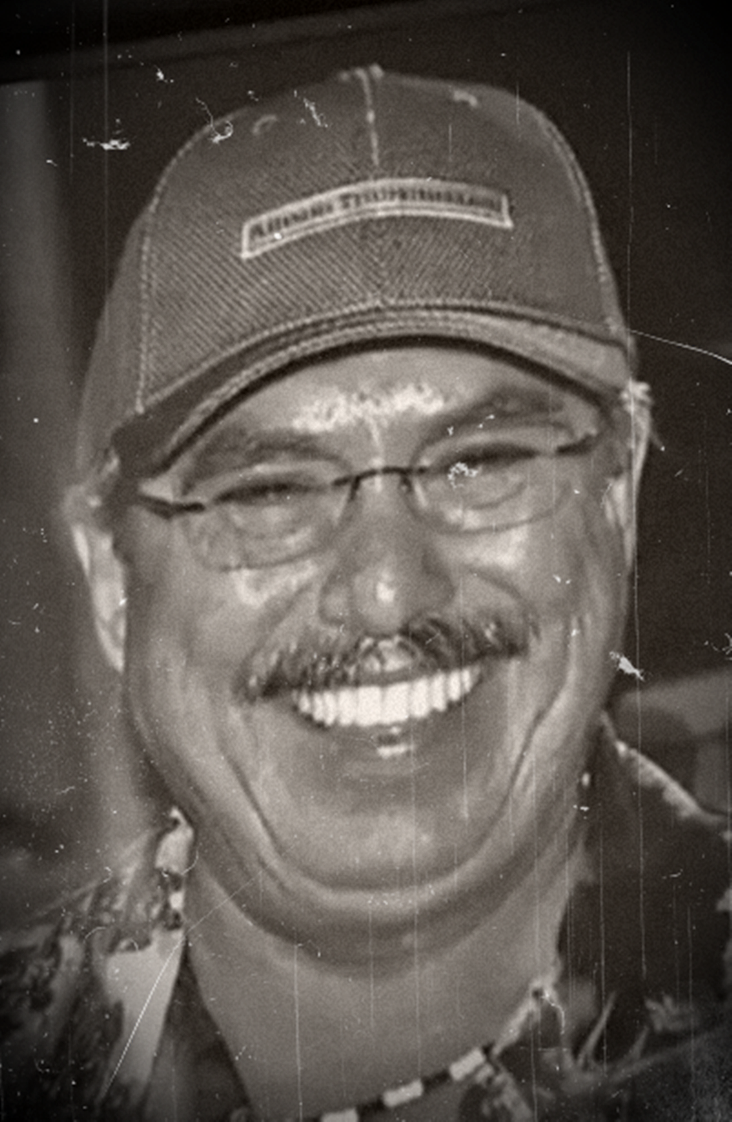
On Christmas Eve 2015, the close-knit community of Schertz, Texas, was stunned by the murder of one of its most prominent and recognizable businessmen. Henry M. Gutierrez Jr., seventy-one-year-old multimillionaire and owner of the successful waste management company Bexar Waste, was found shot to death inside his own home. His killer had apparently stolen his vehicle and several personal possessions before disappearing, leaving behind a mystery that would frustrate investigators and torment Henry’s family for more than a decade.
Born on November 25th, 1944, Henry had spent nearly his entire life in Schertz, a small city northeast of San Antonio. His parents, Henry Sr. and Rosie Gutierrez, established a garbage collection business in 1961, beginning with a modest operation that eventually grew into a major regional enterprise. Following his father’s death in 1979, Henry took over the family business and helped transform it into Bexar Waste, which provided trash collection and recycling services to municipalities throughout the region. By 2015, he had accumulated a substantial fortune, although friends and relatives described him as an approachable, generous man who never forgot his roots.
Henry was also an enthusiastic drag-racing aficionado who owned several vintage funny cars, including vehicles associated with the legendary racer Jungle Jim Lieberman. He had played baseball in his youth, attended Southwest Texas State University on a baseball scholarship, and developed a passion for collecting rocks, fossils, and Native American artifacts. He was known for charitable contributions throughout Schertz, where a park had been dedicated to his family in recognition of its longstanding community service. Every Christmas season, Gutierrez personally delivered tamales to local police officers and firefighters, a tradition he had continued just two days before his murder.
On the morning of Thursday, December 24th, Henry was expected to attend an important business meeting concerning the proposed sale of Bexar Waste to Republic Services, a large national waste management corporation. Although he had a reputation for occasionally arriving late, his son Miguel knew that his father would not simply miss a meeting of such significance. When repeated telephone calls went unanswered, Miguel became concerned and drove to his father’s residence, located on company property in the 2200 block of FM 3009.
Arriving shortly before eleven a.m., Miguel noticed that his father’s white Ford SUV was missing. Initially, he wondered whether Henry had simply gone somewhere without informing anyone. However, an employee told him that he had not seen Henry since arriving on the property around six-thirty that morning. Miguel then noticed that the front door of the residence was partially open.
Looking inside, he made a horrifying discovery. His father was sitting in a recliner, his body partially covered by a blanket. Blood was visible on the floor, along with spent shell casings. Henry had been shot multiple times and was already dead. Police arrived within minutes, launching what would become one of the most challenging murder investigations in the department’s history.
Although initial reports suggested that Henry might have been killed around ten a.m., investigators subsequently developed a different timeline. Detectives established that he had sent a text message to a girlfriend around midnight and theorized that the murder could have occurred sometime between that communication and the arrival of an employee around six-thirty a.m. The precise time of his death, however, remained uncertain.
The crime scene presented several disturbing clues. In addition to Henry’s missing vehicle, investigators learned that his wallet, cash, and a distinctive sterling silver ring were gone. The ring, decorated with the image of a Native American chief wearing a feathered headdress, was particularly significant because Henry was rarely seen without it. Investigators also discovered that gift cards he had purchased for Christmas presents had disappeared.
Perhaps the most unusual detail was the blanket placed over his body. Investigators considered whether this might indicate that the killer had known Henry personally and had covered him out of remorse or some other emotional reaction. However, police cautioned that the gesture was not conclusive evidence of a personal relationship. A robbery by a stranger remained possible.
Further complicating matters, Henry’s home had been burglarized approximately a month earlier while he was away during Thanksgiving. An alarm system had subsequently been installed, but it was not activated on the night of the murder. Investigators also learned that numerous people knew where Henry kept a spare house key, potentially allowing someone to enter without forcing a door.
The missing vehicle became one of the investigation’s most promising leads. Henry’s white Ford Expedition had vanished from the property following the murder, prompting authorities to search for it. In March 2016, nearly three months later, the SUV was discovered abandoned at an apartment complex in San Marcos, approximately thirty miles northeast of Schertz. Unfortunately, forensic examination failed to produce evidence sufficient to identify the killer.
Investigators also traced the stolen Christmas gift cards to the Houston area, where they had been used or sold shortly after the murder. Witnesses described purchasing the cards from an unidentified man outside a gas station. With assistance from witnesses, the Texas Rangers produced a composite sketch of the individual and released it publicly in May 2016. Although he was considered a person of interest who might possess valuable information, investigators did not establish that he was responsible for Henry’s death. The sketch failed to produce a decisive breakthrough.
As the investigation continued, attention turned to Henry’s extensive business and personal relationships. His wealth and prominence meant that he had dealings with a wide variety of individuals, and detectives discovered several possible sources of conflict. At the time of his death, Henry was involved in litigation with a former business associate concerning ownership of Bexar Waste. Investigators also examined allegations that a municipal official had pressured him for money and other favors. Neither circumstance was publicly established as connected to his murder.
The possibility of a financially motivated killing attracted particular attention. Henry was known to keep substantial amounts of cash at home, and relatives wondered whether someone familiar with his habits might have targeted him.
Others considered the possibility of a professionally arranged murder, pointing to the manner in which he had been killed and the blanket placed over his body. These ideas remained theories rather than proven explanations, and investigators never publicly established a definitive motive.
The investigation was further complicated by the sheer number of people in Henry’s orbit. Detectives eventually interviewed approximately a hundred potential witnesses, attempting to reconstruct his final movements, business dealings, and personal interactions. His wide-ranging interests and friendships made the task difficult, as different acquaintances possessed different pieces of information about his life.
As the years passed, Guadalupe County Crime Stoppers increased the reward for information, eventually reaching $75,000, an unusually large amount for a local homicide investigation. Despite the substantial financial incentive and continued publicity, the case remained unresolved.
In December 2022, seven years after Henry Gutierrez’s death, the Schertz Police Department officially designated his murder a cold case, the first such designation in the department’s history. Police Chief James Lowery announced that investigators would undertake a comprehensive review of the evidence, revisit earlier leads, and seek assistance from outside agencies. The department hoped that fresh perspectives and advances in investigative techniques might uncover something previously overlooked.
There was a potentially significant development in December 2024, when Schertz police announced that their continuing investigation had identified a new person of interest. Chief Lowery explained that investigators were directing renewed attention toward that individual, although earlier persons of interest had not been eliminated. Authorities declined to release the person’s identity or specify what evidence had prompted the development. No arrest followed the announcement.
On December 15th, 2025, as the tenth anniversary of the murder approached, Schertz police issued another public appeal for information. By then, the investigation involved cooperation among the Schertz Police Department, the Texas Rangers, the FBI, and other federal agencies. Chief Lowery acknowledged that the Henry Gutierrez investigation had been the catalyst for establishing the city’s Cold Case Team, underscoring the lasting impact of the murder on local law enforcement.
As of November 2026, the case continues to be publicly listed as unsolved. The $75,000 Crime Stoppers reward remains advertised for information leading to an arrest and indictment.

