
On a pleasant summer evening in August 2016, twenty-year-old Calvin Riley was enjoying a night out with friends along San Francisco’s waterfront. Like millions of people across the country that summer, Calvin had become caught up in the phenomenon of Pokémon Go, the wildly popular smartphone game that encouraged players to explore their surroundings in search of virtual creatures. But what should have been an ordinary evening of harmless entertainment ended in an inexplicable act of violence.
Calvin Riley was a promising young athlete with a bright future. His family had relocated from Massachusetts to California, where he attended Junípero Serra High School in San Mateo, graduating in 2015. A talented baseball pitcher, Riley continued playing the sport at San Joaquin Delta College in Stockton, where he was a member of the Mustangs baseball team. Those who knew him remembered a friendly, compassionate young man who was fiercely competitive on the baseball diamond but equally committed to his friends and teammates. His coach, Reed Peters, described how other players naturally gravitated toward Calvin, both during practice and away from the field. He was also close to his parents, Sean and Kariann Riley, and his two younger siblings.
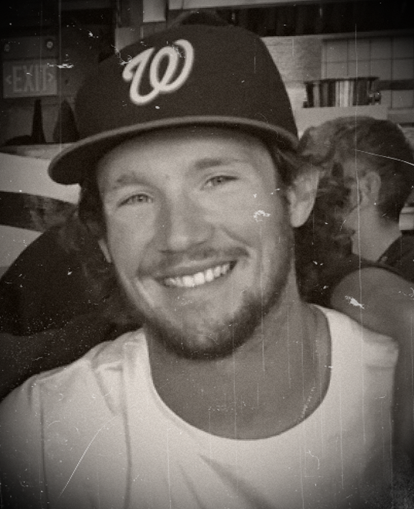
On Saturday, August 6th, 2016, Calvin traveled to San Francisco to spend the evening playing Pokémon Go with friends. The game had been released just a month earlier and had become an international sensation, drawing crowds of players to public parks, landmarks, and waterfront attractions. One particularly popular destination was Aquatic Park, a scenic recreational area near Fisherman’s Wharf and Ghirardelli Square, overlooking San Francisco Bay.
At approximately nine fifty p.m., Calvin and a friend were walking near the end of the Aquatic Park promenade, absorbed in their phones as they searched for Pokémon. According to accounts that emerged afterward, the two had noticed a suspicious figure watching them from a nearby hill. However, because it was dark and they were concentrating on the game, neither paid the individual much attention.
Suddenly, a gunshot rang out.
Calvin had been struck by a bullet in his torso. His companion reportedly heard the shot, turned back, and discovered Calvin lying on the ground. Emergency responders rushed to the scene and attempted to save him, but his injuries proved fatal. He was pronounced dead at the scene.
What made the shooting particularly disturbing was the apparent absence of any confrontation. There had been no argument, no threats, and no apparent attempt to rob Calvin. His wallet and cellphone were left untouched. Family spokesperson John Kirby emphasized that nothing about the encounter suggested Calvin had done anything to provoke the attack. Investigators were left with the unsettling possibility that the young baseball player had been murdered by a complete stranger, seemingly for no reason.
Because the shooting occurred within the federally administered Aquatic Park area, the United States Park Police took the lead in the investigation. Detectives interviewed witnesses, examined the circumstances surrounding the shooting, and searched for anyone who might have seen something suspicious that evening. Unfortunately, there were no surveillance cameras covering the precise location where Calvin was killed, making the search for reliable evidence especially difficult.
In September 2016, investigators released a composite sketch of a man believed to have been in the vicinity of the shooting. Authorities also sought information about vehicles observed leaving the area around the time of the murder. Among those identified were a dark-colored Audi A3 wagon and a white sedan. Investigators hoped the vehicles or the individuals associated with them might provide a breakthrough, but the leads did not produce an arrest.
As the months passed, Calvin’s grieving family became increasingly frustrated by the lack of progress. In July 2017, then-U.S. Representative Jackie Speier joined his relatives and investigators to announce a combined $110,000 reward for information leading to the killer’s capture. The money included contributions from Calvin’s family, the City of San Francisco, and the U.S. Park Police.
By August 2021, five years had passed without an arrest. Calvin’s father, Sean, returned to the Bay Area to commemorate the anniversary of his son’s death and renew public attention on the investigation. During a memorial gathering at St. Gregory’s Church in San Mateo, he expressed frustration with the authorities’ handling of the case and questioned whether his son’s death had truly been a random act of violence.
Although the shooting had initially been characterized as apparently senseless, Sean Riley had developed a different theory. He believed his son might have been deliberately targeted, although he did not publicly present conclusive evidence establishing a motive. Investigators, meanwhile, had not identified anyone known to Calvin who had a demonstrated reason to harm him.
The case received renewed attention in June 2025, when the FBI released additional information and images connected to the investigation. Federal authorities identified two individuals they hoped to locate and interview. One was believed to have been driving a vehicle accompanied by a blonde woman estimated to be between twenty and thirty years old. The second individual had reportedly been observed recording video at the crime scene.
Investigators also highlighted two vehicles of interest: a white Hyundai Sonata, described by the FBI as a 2015 model, and a dark-colored Audi A3 wagon. According to federal authorities, the vehicles arrived together shortly before the shooting and departed together immediately afterward. Their movements raised questions about whether the occupants possessed information that could explain what happened that night. However, the FBI did not publicly establish that the people associated with these vehicles were responsible for Calvin Riley’s death.
In August 2026, on the tenth anniversary of the murder, the FBI again appealed to the public for assistance. Investigators continued seeking witnesses, information about the two vehicles, and anyone who might recognize the individuals depicted in the FBI’s materials. A federal reward of up to $25,000 remained available for information leading to the identification and probable-cause arrest of those responsible.
As of November 2026, no one has been publicly identified as Calvin Riley’s killer, and the case remains open.

