
Thirty-year-old Brian Bole was born and raised in Tampa, Florida, where his intellectual abilities became the foundation of an extraordinary academic career. He attended Florida State University, earning a degree in mathematics, before pursuing doctoral studies in electrical engineering at the Georgia Institute of Technology.
His education eventually led him to California, where he began a fellowship at NASA’s Ames Research Center in Mountain View in 2011. His work focused on fault analysis and predictive technology, particularly methods for anticipating and reducing the risk of system failures in unmanned aircraft. It was challenging, highly specialized research, requiring an unusual combination of mathematical ability, engineering expertise, and computer science.
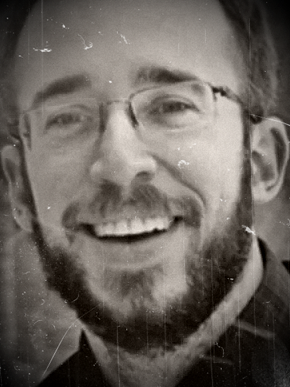
Yet Brian’s professional interests extended beyond aerospace engineering. He was particularly interested in how advanced analytical techniques could improve medical care and patient outcomes. In 2015, he accepted a position as a health data scientist with Armus Corporation, a healthcare software company in San Mateo. His work involved analyzing information used in cardiovascular care and preventive medicine. His friends, family, and colleagues described the position as his dream job.
Brian had also developed a strong attachment to Northern California. He enjoyed the region’s natural beauty and took advantage of opportunities to hike, camp, ski, and travel. He was an enthusiastic reader of science fiction and particularly enjoyed discovering restaurants and craft beer establishments throughout Oakland and San Francisco.
Although much of his family remained in Florida, Brian had established a life for himself on the West Coast. He had moved to Oakland in 2015 and shared a home in a residential neighborhood near Broadway and Piedmont Avenue.
Those who knew him remembered someone whose personal warmth was just as remarkable as his intelligence. His employer, Gyula Sziraczky, later described him as an exceptionally peaceful, gentle, and friendly person.
Saturday, April 9th, 2016, had been an ordinary day. That evening, Brian spoke by telephone with his mother, Patricia Tezzas, and his sister. Their conversation lasted approximately an hour, and nothing suggested that anything was wrong. According to his mother, Brian was enthusiastic about his life and his work. He was already making plans for the following weekend, when he intended to go camping.
Later that night, he went out with friends in Oakland. He visited the Kingfish Pub & Cafe, a well-known neighborhood bar on Telegraph Avenue. At some point, he began the approximately two-mile walk back toward his home. It was a journey through a mixture of commercial streets and residential neighborhoods, ending near the tree-lined 3000 block of Richmond Boulevard.
At approximately twelve fifteen a.m. on Sunday, April 10th, Brian was just a short distance from his front door. He never made it inside.
According to the FBI, an unidentified individual approached him as he walked toward his residence, shot him, and fled. The attack happened so quickly that nearby residents initially had little understanding of what had occurred.
Several neighbors heard gunfire. One woman rushed outside and discovered Brian lying on the ground. In an interview with ABC7, a neighbor described seeing a gunshot wound to his forehead. Another detail reported by witnesses was that Brian appeared to have been wearing an earbud when he was attacked.
Emergency responders could do nothing to save him. Brian Bole was pronounced dead at the scene.
There was no immediately apparent reason for the shooting. No public evidence suggested that Brian had been involved in criminal activity, and investigators did not announce any personal dispute that might have explained the attack.
Robbery was an early possibility, but the physical evidence raised questions. Police reported that Brian’s cellphone and wallet remained with him when officers arrived. Other personal belongings had apparently been left behind as well.
That did not entirely eliminate robbery as a possible motive. A would-be robber might have panicked, fled before taking anything, or abandoned the attempt after firing the fatal shot. But the available evidence also left open the possibility that something else had occurred.
Investigators examined the surrounding neighborhood and attempted to reconstruct Brian’s movements during his walk home. The shooting had occurred in an area where residents were not accustomed to such violence. The apparently random nature of the attack frightened the community, and neighbors began exchanging information and reviewing available surveillance recordings.
One resident told ABC7 that after watching footage, she recognized someone she believed she had seen running in the neighborhood that night. Whether that observation ultimately helped police identify anyone connected to the murder has not been publicly established.
As detectives worked to reconstruct the events of April 10th, they began collecting recordings from security cameras positioned along Brian’s route. The footage provided an important investigative lead.
On May 26th, 2016, Oakland police and FBI investigators held a public briefing and released surveillance photographs showing several people Brian had apparently encountered before his death. Investigators identified three people of interest whom they hoped to locate and interview. One was described as a man wearing a light-blue baseball cap, a blue shirt with a broad light-colored stripe across the chest and back, and dark pants.
Another was a Black woman wearing multiple layers of clothing and a headscarf. The third was described as a thin individual whose race and gender were not determined.
Importantly, the designation person of interest did not mean that any of these individuals had been identified as a suspect. Detectives believed they might have witnessed something or possessed information that could help establish the sequence of events.
Investigators also released information about a silver Honda Accord, believed to be a four-door model manufactured between 2003 and 2007 and equipped with a sunroof. The vehicle had been recorded by surveillance cameras along the route Brian traveled.
As the first anniversary of Brian’s death approached, investigators returned to the public with another potentially significant lead. In April 2017, Oakland police announced that they were interested in identifying a second vehicle visible in surveillance recordings.
CBS San Francisco reported that detectives described it as a white Chevrolet Malibu manufactured between 2013 and 2015. Police asked anyone who recognized the vehicle, or who had observed it near the relevant area, to contact investigators.
Separately, ABC7 reported that detectives were looking for a man wearing a turquoise jacket with a reflective strip on the back who had reportedly been near the scene when Brian was shot.
The Oakland Police Department continued investigating the case with assistance from the FBI’s San Francisco field office. In May 2016, federal investigators announced a reward of up to $20,000 for information leading to the arrest of the person or persons responsible. That amount supplemented a $10,000 local reward, bringing the combined potential reward to $30,000.
Over the following years, investigators repeatedly attempted to revive public interest. In July 2018, the FBI and Oakland police released a public service announcement about Brian’s killing, hoping that renewed attention would encourage someone to come forward. A further appeal was publicized around the third anniversary of his death in April 2019.
On April 10th, 2026, the tenth anniversary of Brian Bole’s murder passed without a resolution. The FBI continues to maintain a public appeal for information and advertises a reward of up to $20,000 for information leading to the arrest of those responsible. The combined $30,000 figure was publicized in earlier years, but the FBI’s currently listed federal reward is $20,000.
As of this writing in November 2026, the person responsible for the murder of Brian Bole has still not been brought to justice.

