
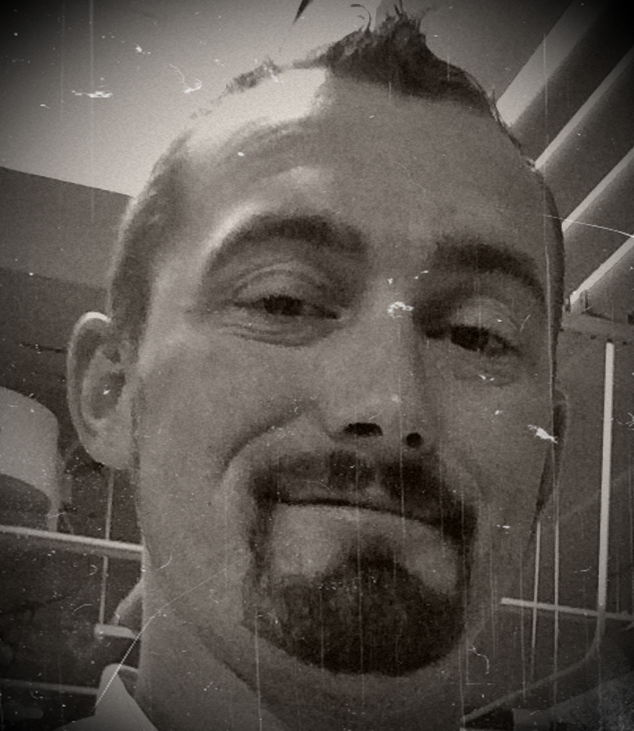
In the early morning hours of September 28th, 2016, a passing motorist spotted a white Chevrolet Silverado pickup truck that had veered off Ellington Parkway in Nashville, Tennessee, and crashed into a wooded area near the Briley Parkway interchange. Inside the vehicle was twenty-nine-year-old Ryan Scott Trent, who had been driving home from work. He was pronounced dead at the scene.
At first, authorities believed they were investigating a fatal traffic accident. The pickup had left the roadway and struck a tree, and there was nothing immediately apparent to suggest that another person had been involved.
But an autopsy revealed a very different story. Ryan had been shot in the back of the head. A bullet had passed through the rear window of his truck, fatally wounding him and apparently causing him to lose control of the vehicle. What initially appeared to be an unfortunate accident was now a homicide investigation, and someone responsible for taking a young man’s life had disappeared into the night.
Ryan Scott Trent was born on November 25th, 1986, and grew up in the Talbott area of East Tennessee. The son of Glenn and Sharon Trent, he came from a close-knit family that included his older brother, Brandon, and numerous relatives who remained an important part of his life.
Those who knew Ryan remembered an outgoing, energetic young man with an adventurous spirit and an easy ability to make friends. He loved motorcycles, snowboarding, and spending time outdoors. His father described him as an exceptionally skilled rider and driver, while family members remembered his sense of humor and willingness to strike up conversations with strangers.
Ryan had also experienced some difficult years. During his young adulthood, he struggled with drug addiction, a battle that caused considerable pain for him and his family. However, he had made significant progress in recovery and was working to rebuild his future.
By September 2016, his life appeared to be moving in a positive direction. He was living in Nashville and working as a night manager for Premier Parking, a company that operated parking facilities in the city. He had developed friendships through his work and recovery community, and his family was proud of the changes he had made.
Ryan had even begun helping others who were struggling with addiction. His father later recalled that Ryan had shared his personal experiences with members of his church during an Easter service earlier that year.
There was also an important new development in his personal life. Ryan had recently become engaged to Brittany Robinson, and was looking forward to marriage and the possibility of building a family of his own.
On Tuesday, September 27th, 2016, Ryan went to work for his evening shift at Premier Parking in downtown Nashville. Before beginning work, he spoke with his mother on the telephone, as he frequently did. Sharon Trent later recalled that her son ended the conversation by telling her he loved her. She had no reason to suspect it would be their final conversation.
Sometime after midnight, Ryan finished his shift and began driving home in his white Chevrolet Silverado. His normal route took him north along Ellington Parkway, a major roadway connecting downtown Nashville with neighborhoods farther north.
His roommate, Michael Stevens, expected Ryan to return home by approximately one a.m. When Ryan failed to arrive, Stevens became concerned. Eventually, he decided to drive along their usual route to see whether something had happened. By then, tragedy had already struck.
At approximately two thirty-nine a.m., a man traveling with his fiancée noticed a pickup truck that had crashed into the trees beside Ellington Parkway, near the Briley Parkway West overpass. He called 911, reporting the accident but explaining that he did not know whether anyone was inside the vehicle.
Police arrived about five minutes later. They discovered Ryan inside the wrecked Silverado. He had sustained fatal injuries, and emergency personnel pronounced him dead at the scene.
While police were still processing the crash site, Stevens arrived. Having gone looking for his missing friend, he found officers surrounding the wrecked pickup. The scene was initially treated as a fatal single-vehicle accident, and traffic investigators were summoned.
However, the medical examiner’s examination uncovered an injury that could not be explained by the collision. Ryan had suffered a single fatal gunshot wound to the head. An examination of the truck’s rear window revealed a bullet hole, indicating that the shot had entered the vehicle from behind. No firearm was discovered inside the Silverado.
One of the most perplexing aspects of Ryan’s murder was the apparent absence of a clear motive. He had been traveling home from work in the middle of the night when someone fired a shot through the rear window of his truck. Yet investigators had little publicly available evidence explaining what happened immediately before the shooting.
Was Ryan targeted deliberately? Had he become involved in a confrontation with another driver? Or had he encountered someone who fired at his vehicle for an entirely different reason?
Investigators considered the possibility of road rage. In 2017, police indicated that Ryan’s death might have resulted from a random roadway confrontation. But the theory was never confirmed, and authorities did not publicly establish that Ryan had exchanged words or gestures with another motorist.
His family also examined other possibilities. When his father Glenn eventually inspected Ryan’s truck, he discovered an unopened energy drink and cigarettes. These items led him to wonder whether Ryan had stopped at a convenience store before the shooting and whether something might have happened during that stop. Investigators reportedly checked with one convenience store, but employees did not remember seeing Ryan. No receipt was found in the vehicle that definitively established where he had purchased the items.
Another unanswered detail concerned a telephone call Ryan made shortly before leaving work. According to reporting by The Daily Beast, his employers had previously provided him with the telephone number of a police officer following a series of break-ins at company parking facilities. Ryan was instructed to contact the officer if another incident occurred rather than intervene personally.
Ryan reportedly called the officer shortly before finishing his shift on September 27th. However, the officer subsequently stated that he could not remember the subject of the conversation and did not recall Ryan reporting any threat or immediate danger. There is no established evidence connecting that telephone call to Ryan’s murder.
From the beginning, Glenn and Sharon Trent refused to allow their son’s murder to fade from public attention. In November 2016, the family announced a $10,000 reward for information leading to an arrest. Combined with rewards offered through Nashville Crime Stoppers and Ryan’s employer, the available reward money reached approximately $12,000.
They also purchased billboard advertisements in Nashville displaying Ryan’s photograph and appealing for information about his murder. One billboard was placed along James Robertson Parkway, where thousands of motorists could potentially see it.
In 2017, Metro Nashville Police arranged overnight roadblocks near the location of the shooting, stopping motorists during approximately the same hours when Ryan was believed to have been killed. Detectives hoped to locate people who routinely traveled that route and might have seen something relevant on the night of the crime. The efforts did not produce an arrest.
Meanwhile, the family continued returning to the crash site to search for possible evidence. During one visit in early 2017, relatives reported finding objects they believed might be connected to the shooting. Investigators responded to the location and examined the discoveries.
The family subsequently reported recovering what appeared to be bullet-related material, including shell casings. However, police expressed doubts about whether the casings were associated with Ryan’s murder. According to a police spokesperson interviewed in 2021, the casings appeared relatively new and lacked the wear that investigators would expect from objects left for years beside a heavily traveled roadway.
The family nevertheless remained concerned that significant evidence might have been overlooked when the case was initially handled as an accident.
In September 2021, five years after the murder, the family increased the reward for information to $20,000.
The Metropolitan Nashville Police Department renewed publicity surrounding the reward in September 2022, encouraging anyone with information, including people who might have overheard conversations about the shooting, to contact investigators.
On September 28, 2026, Ryan Scott Trent’s family marked the tenth anniversary of his murder. Ryan would have been approaching his 40th birthday. Instead, his family was still trying to find out who had killed him when he was just twenty-nine.
As of November 2026, Ryan Scott Trent’s murder remains an open cold case with the Metropolitan Nashville Police Department.

