
Karen Bodine was born in 1969 and grew up in the Olympia, Washington area. She became a mother at nineteen, giving birth to her eldest daughter, Karlee. She later had another daughter, Taylor, and a son, Tanner. Karen and her children frequently lived with her parents, creating what Karlee later remembered as a close multigenerational household.
Over the years, Karen held several jobs. She worked as a restaurant server, at a Safeway supermarket and, for a time, in the cafeteria at her children’s school. Her daughter remembered being especially delighted to have her mother working at the school, where Karen occasionally found ways to make her children feel special. Those who loved Karen described her as outgoing, creative and difficult to forget.
Karen’s life was not without serious difficulties, however. She struggled with drug addiction, and her romantic relationship had become volatile shortly before her death. Her family has never denied those problems, but they have objected to the way her addiction sometimes overshadowed everything else about her.
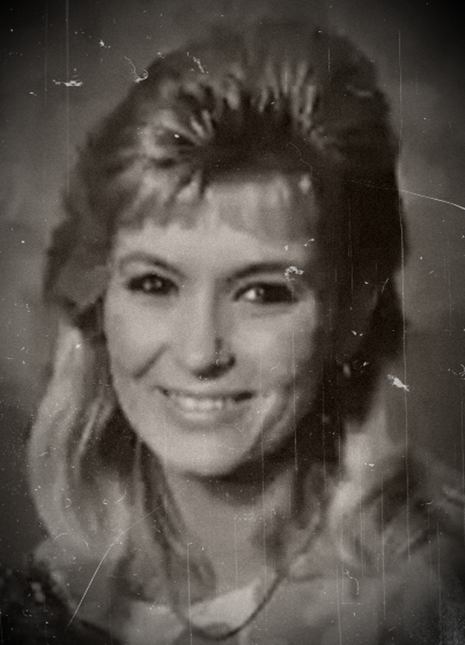
During the days before her death in January 2007, Karen had argued with the boyfriend with whom she had been staying part-time. Embarrassed and unwilling to return immediately to her parents’ home, she went to stay with a mutual friend who lived only a few blocks away. The man was a musician and a bandmate of her boyfriend, and Karen had come to know him through the band’s rehearsals.
The residence was a chaotic place. Several people were staying there or sleeping on couches, while others came and went throughout the weekend. Investigators later learned that narcotics were being used and trafficked around the house. The combination of frequent visitors and drug use would make reconstructing Karen’s final movements extremely difficult.
Relations between Karen and her host also deteriorated. According to Detective Mickey Hamilton of the Thurston County Sheriff’s Office, the man tried several times to have Karen removed. Police were contacted, but there was no legal reason for officers to force her from the residence. The host then allegedly asked associates to drive Karen away and leave her in isolated parts of the county in the hope that she would not return. Each time, Karen managed to make her way back.
On the morning of Sunday, January 21st, 2007, someone saw Karen walking alone in Lacey and requested a welfare check. It was January, the weather was cold, and Karen was not dressed appropriately for the conditions. A Lacey police officer found her and offered her a ride, but she declined. Karen explained that she had argued with her boyfriend and was walking around to calm herself.
The officer persuaded Karen to let him telephone her family. He attempted to reach her mother, but she was at work and did not answer. With Karen insisting that she was all right and refusing a ride, the officer eventually allowed her to continue walking.
It was one of the last known opportunities for someone outside Karen’s troubled social circle to intervene.
By Sunday evening, Karen had returned to the mutual friend’s house. Several people were present, and tension soon erupted around the home’s only bathroom. Karen had reportedly been taking a bath, something her daughter said she often did when she was upset. Another person needed to use the bathroom, and an argument followed.
Witnesses gave different accounts. Some described yelling and pounding on the bathroom door. Others suggested that the confrontation became physical. They also disagreed over when Karen left, whether she left alone and who might have driven her away.
Detective Hamilton later said that the witnesses’ memories were fragmented by narcotics use. The people in the house generally placed the last sighting of Karen somewhere between midnight and three a.m. on January 22nd. Some claimed that they left while she was still there. Others said she walked outside and disappeared from view.
The homeowner said that after the argument, he heard Karen enter a vehicle with a loud exhaust. He did not claim to have seen the vehicle; he simply assumed Karen was inside because the vehicle drove away and she did not return.
On the cold, wet morning of January 22nd, a motorist traveling along Littlerock Road Southwest, north of Rochester, Washington, noticed something near the entrance to an abandoned gravel pit. The area was frequently used for dumping garbage, animal remains and stolen vehicles. What the driver saw that morning, however, was the body of a woman.
The victim was soon identified as thirty-seven-year-old Karen Bodine. She was nude, lying on her back with her head resting on a discarded automobile seat. Her arms and legs had been deliberately arranged. A ligature remained around her neck. The medical examiner determined that Karen had been strangled, and investigators found no evidence that she had been sexually assaulted.
Investigators concluded that Karen had probably not been killed where her body was found. Her clothing was missing, there was little evidence of a struggle at the gravel pit, and the dirt surrounding her body was not significantly disturbed. The injuries associated with her strangulation, however, suggested that she had resisted her attacker somewhere else.
Tire tracks were found and cast by investigators. The medical examination also uncovered a tiny piece of automotive paint embedded in Karen’s hair. Both clues suggested that a vehicle could have played an important role in her death or in the transportation of her body.
The positioning of Karen’s body was equally perplexing. She had not been concealed in the quarry or carried deep into the surrounding countryside. She had been left close to a well-traveled road in a location where commuters would quickly see her after sunrise. Her head was placed on the old car seat, and her limbs had been arranged rather than left in the position in which she fell.
Hamilton believed that whoever placed Karen there intended for her to be discovered. Whether the display was meant to shock, humiliate, communicate a message or simply ensure that her body was recovered has never been established. The detective has also suggested that the logistics of moving, stripping and positioning Karen may indicate that more than one person was involved—or, at minimum, that more than one person knows what happened.
Karen’s boyfriend was an obvious early focus of the investigation. According to Hamilton, however, he appeared genuinely distressed when notified of her death. He cooperated with detectives, submitted to repeated interviews, provided a DNA sample, gave investigators an alibi and took a polygraph examination. Authorities ultimately said he was not considered a suspect and that they had not identified a convincing motive for him to kill Karen.
The man at whose house Karen spent her final weekend drew greater suspicion. Hamilton said that when detectives told him something had happened to Karen, he made a remark asking whether someone had finally strangled her. The autopsy had not yet been conducted, and the cause of death had not been publicly confirmed.
Investigators were also troubled by his repeated attempts to remove Karen from the house and by conflicting accounts of the bathroom confrontation. His level of cooperation varied, and Hamilton said that he did not pass a polygraph examination. Nevertheless, no physical evidence has publicly connected him to Karen’s killing, and he has never been charged in the case.
Witnesses reported seeing a suspicious brown vehicle near the gravel-pit entrance around the time Karen’s body was deposited. The descriptions were not entirely consistent. Some recalled an early-1980s Datsun or Toyota-type vehicle. Some described a small car, while others remembered a pickup with a lighter-colored camper shell. One account mentioned a brown vehicle with a burnt-orange stripe.
Investigators also became interested in a brown Ford F-150 associated with a man connected to the house where Karen spent her final hours. The truck was distinctive because its owner’s name was written across the rear window. One witness reportedly said Karen had been seen getting into it.
Before detectives could thoroughly examine the Ford, they learned that it had been scrapped. The explanation given was that the truck had electrical problems. Hamilton found the timing and circumstances suspicious, particularly because other old vehicles connected to the same group were commonly retained for parts rather than immediately destroyed. Any hair, fibers, paint transfer, fingerprints or other evidence the truck might have contained were lost.
The truck’s owner had reportedly been involved in narcotics trafficking connected to the residence. He was later arrested on unrelated charges and deported because he was not a United States citizen. Hamilton said the man was never interviewed regarding Karen’s death and was one of the few significant figures in the case from whom investigators did not obtain a DNA sample.
No public evidence has established that the brown Ford and the vehicle seen near the gravel pit were the same vehicle.
Three separate DNA samples were reportedly recovered from Karen’s body. One contained a mixture from as many as four contributors. At the time, available testing methods could not reliably separate the contributors into individual profiles.
Investigators obtained DNA samples from nearly everyone whose name arose prominently in the case, either through criminal databases or voluntary submissions. According to Hamilton, those known samples did not match the evidence. He cautioned, however, that the presence of someone’s DNA would not automatically prove murder; authorities would still have to establish how and when it was deposited.
The paint chip found in Karen’s hair offered another possible avenue. Following a 2019 review of the case, investigators sent the fragment for comparison with an automotive-paint database maintained by the Royal Canadian Mounted Police. Factory paint can sometimes be associated with particular manufacturers and production periods. Custom paint, however, may not produce a useful match. No conclusive result from that testing has been publicly announced.
The investigation slowed after its first years, although it never formally disappeared. New information surfaced in 2014 after the man who had hosted Karen went to prison on narcotics charges. Some people who may previously have feared him became more willing to speak, but the resulting information was not sufficient to support an arrest.
In 2019, Karen’s case was selected for CrowdSolve, an event that allowed civilians with professional backgrounds in fields such as law, medicine, forensic science and criminal investigation to study the case alongside law-enforcement personnel. Participants reviewed police reports, telephone records, statements and crime-scene evidence, then proposed additional investigative strategies.
The event helped revive public awareness and produced suggestions concerning the automotive paint chip, DNA-mixture analysis and renewed witness interviews. Retired U.S. Marshal Art Roderick said at the time that several people remained on investigators’ radar, although they had not reached the point where they could publicly designate any one person as Karen’s killer.
In January 2025, the Thurston County Sheriff’s Office renewed its public appeal as a newly established cold-case unit reviewed Karen’s murder. Her children continued holding annual vigils.
The following January marked nineteen years since her body was found. The Sheriff’s Office again stated that the investigation remained active. As of this writing in August 2026, though, no arrest has been made, and no suspect has been publicly identified as Karen Bodine’s killer.

