
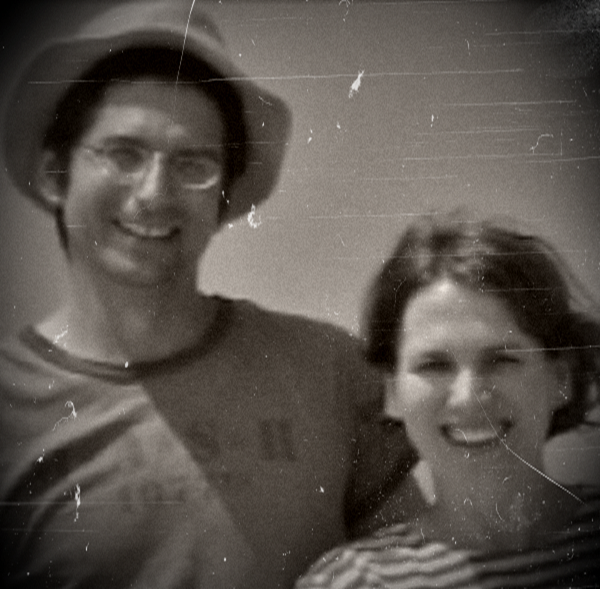
Filmmaker Helen Wingard Hill was born on May 9th, 1970, in Columbia, South Carolina. Her interest in animation appeared early: she reportedly began making short Super 8 films when she was eleven and later studied English and visual arts at Harvard University. After graduating in 1992, she earned a master’s degree in experimental animation from the California Institute of the Arts.
Helen’s films were playful, intimate and unmistakably handmade. She drew and painted directly onto celluloid, built small puppets and figures, incorporated found footage and sometimes processed film using homemade or environmentally conscious methods. Her best-known works included Mouseholes, Madame Winger Makes a Film: A Survival Guide for the 21st Century, Bohemian Town and Scratch and Crow. She also wrote and illustrated Recipes for Disaster: A Handcrafted Film Cookbooklet, which offered practical advice for filmmakers interested in creating and processing motion-picture film outside traditional laboratories.
At Harvard, Helen met Paul Gailiunas, a Canadian student who hoped to become a physician. They initially became close friends, moved to New Orleans together after college and eventually fell in love. They married in 1995 before living for several years in Halifax, Nova Scotia, while Paul completed his medical training.
Both became involved in community causes. In Halifax, the couple helped establish a local chapter of Food Not Bombs, which distributed free meals. Helen taught inexpensive filmmaking classes, while Paul prepared for a career serving patients who otherwise struggled to obtain medical care.
When they returned to New Orleans, Paul opened the Little Doctors Neighborhood Clinic in Tremé, treating poor and uninsured residents. Helen taught filmmaking, co-founded a local film collective and continued creating her own work. Their son, Francis Pop—usually called Poppy—was born in 2004.
Hurricane Katrina forced the family from New Orleans in August 2005. Helen, Paul, their infant son, and their potbellied pig, Rosie, evacuated to Columbia shortly before the storm. They expected to be away for only a few days. Instead, floodwater destroyed their Mid-City home, damaged Helen’s films and possessions, and ruined Paul’s clinic.
The family remained in South Carolina for approximately a year. Paul was deeply uncertain about returning to a city where entire neighborhoods remained devastated and basic institutions were struggling to function. Helen, however, believed passionately that they should go back. She enlisted friends in a postcard campaign designed to persuade her husband that New Orleans needed people willing to participate in its recovery.
In the summer of 2006, the family returned and settled into a small house at 2444 North Rampart Street in the Faubourg Marigny neighborhood.
At approximately five ten on the morning of January 4th, 2007, a woman staying at a bed-and-breakfast several houses from Helen Hill’s home heard a knock. When she opened the door, the hallway appeared empty. A second knock followed. This time she saw a man holding a gun.
The armed stranger attempted to force his way inside, but the woman’s husband pushed against the door and managed to keep him out. The intruder fled, and the couple called police. Officers arrived within minutes and began questioning them.
A short distance away, Helen Hill apparently awakened and went into another part of her house. One theory later advanced by police was that the armed man had escaped from the bed-and-breakfast property, crossed the intervening yards and encountered Helen as she opened a door, possibly to let Rosie outside. The exact way he entered the Hill-Gailiunas residence has never been definitively established in public accounts.
Paul and Poppy were asleep in a rear bedroom when Helen began screaming. Paul later recalled hearing fear in his wife’s voice as she ordered someone to leave and begged him not to harm her baby.
Helen shouted for her husband to call 911. Paul grabbed Poppy and moved toward the sound. He saw a man restraining or standing over Helen. A gunshot rang through the house, striking Helen in the neck.
Carrying his son, Paul ran toward the back of the house. The gunman followed them into a bathroom or kitchen area. Paul dropped to his knees, bent his head and used his body to cover the child. The attacker fired several times.
One bullet tore across Paul’s cheek. Another struck his forearm, and his hand was also wounded, either by a third bullet or a ricochet. He remained motionless on the floor, hoping the gunman would believe he was dead. Poppy, hidden beneath him, became silent. Then Paul heard the back door slam. The gunman had escaped.
Paul rose, took his son into the bedroom and called 911. Police officers were still investigating the attempted intrusion at the nearby bed-and-breakfast when the emergency call from Helen Hill’s home came across the radio. They rushed to the house, but Helen could not be saved. The single bullet that passed through her neck had killed her almost instantly.
Paul Gailiunas was taken to a hospital and survived. Despite being directly exposed to the gunfire, Poppy was physically unharmed.
The timing of Helen Hill’s murder could scarcely have been worse for investigators. The New Orleans Police Department was still struggling to recover from Hurricane Katrina. The storm had damaged police buildings, displaced employees and depleted a force that had already faced chronic problems involving staffing, resources and public confidence.
When Helen’s brother, Jake, arrived to meet detectives, he discovered that members of the homicide division were working from FEMA trailers on a tennis court in City Park. At the time, New Orleans lacked a fully functioning local crime laboratory, and the police department had lost hundreds of officers following Katrina.
Nor was Helen Hill’s killing the only violent death demanding attention. Five unrelated shootings occurred within approximately fourteen hours, while another body was found wrapped in a rug. Six people were murdered during the twenty-hour period surrounding Helen’s death. The city had recorded approximately 161 or 162 homicides during 2006 despite having a drastically reduced post-storm population.
Just one week earlier, Dinerral Shavers, a drummer for the Hot 8 Brass Band and a respected music educator, had been fatally shot while attempting to help his stepson. The deaths of Dinerral Shavers and Helen Hill—two artists who had committed themselves to rebuilding New Orleans—came to represent a broader fear that violence might accomplish what Katrina had not: driving away the people upon whom the city’s cultural recovery depended.
On January 11th, thousands of residents marched on City Hall to demand action from Mayor Ray Nagin, Police Superintendent Warren Riley and other public officials. The demonstration became known as the March for Survival. Protesters called for greater police resources, a more functional criminal-justice system and an end to the atmosphere in which killers appeared able to act without fear of arrest.
Investigators believed that the person who attacked the bed-and-breakfast may also have entered Helen Hill’s home. The close timing, the short distance between the properties and the presence of an armed intruder made the connection plausible. Nevertheless, the theory has never resulted in an arrest.
Paul Gailiunas could provide only a general description of the attacker. Police investigated and formally ruled him out as a suspect, allowing detectives to concentrate on the unknown intruder. Publicly available reports have never identified a compelling motive beyond a probable burglary, attempted robbery or chance encounter with a fleeing offender.
The apparent randomness of the crime made the investigation especially difficult. Helen had no known enemies, and there was no publicly established personal connection between the family and the gunman. If the attacker entered simply because he was escaping another failed crime, detectives had little conventional evidence from which to construct a suspect list.
In subsequent years, police compared DNA profiles obtained from evidence in the case with samples from several individuals. No reported comparison produced the identification needed to bring charges.
Questions have also persisted about the handling and preservation of evidence. In 2026, WWL-TV conducted an extensive review of the police file with the cooperation of Helen Hill’s family. The station reported that some evidence appeared to be missing or may have been confused with material from another case. Its reporting also raised questions about records connected with the autopsy and the later handling of forensic evidence. These findings do not establish who killed Helen, but they renewed concern that mistakes made during the chaotic post-Katrina period may have reduced the likelihood of solving the crime.
Helen Hill’s artistic work did not disappear with her. Paul Gailiunas donated her films, papers and home movies to the Harvard Film Archive. Preservationists from Harvard, New York University, Colorlab, the University of South Carolina and other organizations collaborated to restore and preserve ten of her films.
In 2009, the Library of Congress selected Hill’s 1995 student film Scratch and Crow for inclusion in the National Film Registry, recognizing it as culturally, historically or aesthetically significant. The following years also brought the creation of the Helen Hill Award, which honors independent filmmakers whose work reflects creativity, collaboration, generosity and handmade artistic practice.
At the time of her death, Helen had been working on The Florestine Collection, a film inspired by approximately one hundred handmade dresses she had found discarded on a New Orleans street. She eventually learned that the dresses had belonged to Florestine Kinchen, an elderly seamstress who had recently died. The project became a meditation on art, memory, race, loss and the hidden lives contained within handmade objects.
After Helen’s murder, Paul Gailiunas used her footage and notes to complete the film. Released several years later, it became both a portrait of Florestine and a final collaboration between husband and wife.
As of August 2026, Helen Hill’s murder remains officially unsolved.

