
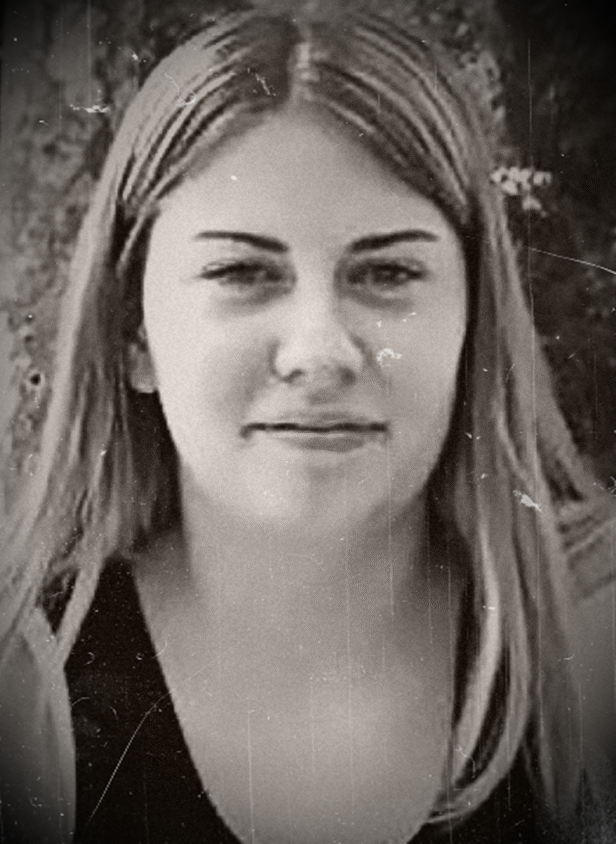
Nineteen-year-old Brittany McGlone grew up in the Winnsboro area of Texas and had graduated from Winnsboro High School in 2006. At the time of her death, she was working at both the Lowe’s distribution center in nearby Mount Vernon and the ALCO store in Winnsboro.
Family accounts describe Brittany as a hardworking young woman who was close to her mother and surrounded by an extensive family that included numerous brothers, a younger sister, grandparents, aunts, uncles and cousins. She had played trumpet in her high-school marching band and graduated with honors. She was considering following her mother into nursing and had plans that extended far beyond the jobs she was working while preparing for her future.
Those plans ended on May 4th, 2007, inside a home on County Road 4837.
Brittany had worked overnight before arriving at the home of her boyfriend, Jeff Stogner. Jeff and members of his family were away from the residence that morning. Brittany went into his bedroom to sleep.
The decision to stay there was apparently unusual. Brittany generally went home after working overnight, but on this occasion she chose to sleep at her boyfriend’s house instead. Only a relatively small number of people would have known both that she was there and that the house would be otherwise empty.
Jeff Stogner returned during the afternoon and found Brittany unresponsive in his bedroom. Authorities were called to the house at 242 County Road 4837. Investigators determined that Brittany had been struck repeatedly in the head with a blunt object. The Texas Rangers’ public case file also states that she appeared to have been sexually assaulted.
Reports about the crime scene indicate that Brittany’s underwear was missing. Investigators found no obvious indications that someone had forced a door or window, and the contents of the house did not suggest that a burglar had entered looking for valuables. There were also indications that someone may have used the residence’s bathroom after the attack, raising the possibility that the killer attempted to wash away blood or other evidence before leaving.
Taken together, the details suggested a targeted crime rather than a random break-in. The killer had entered, or had been allowed to enter, a private home, found Brittany alone in a bedroom and escaped without attracting immediate attention.
Detectives questioned the people closest to Brittany and the residents of the house. Investigators examined the whereabouts of her boyfriend and other family members who were away that morning. Public accounts have indicated that their alibis were checked and apparently verified. No one living in the residence was charged with Brittany’s murder.
Attention soon turned to Chad Earl Carr, who was dating the sister of Brittany’s boyfriend at the time. His relationship placed him within the family’s social circle and, investigators believed, gave him potential knowledge of the household’s routines.
The probable-cause affidavit later used to obtain Carr’s arrest warrant alleged that investigators found gaps in his account of his whereabouts on May 4th. The affidavit also claimed that he knew Brittany was at the house and that the other residents would be away. A polygraph examination conducted later that month reportedly indicated deception, although polygraph results alone do not establish guilt.
On May 21st, 2007, investigators searched Carr’s residence. According to the affidavit, officers collected white shorts bearing possible bloodstains, a gray ski mask and two pairs of women’s underwear. One pair was reportedly the same size Brittany wore. Investigators later determined that one of the garments could have belonged to Carr’s girlfriend and that another belonged to a second woman, but the publicly reported evidence did not establish conclusively that the second pair belonged to Brittany.
In January 2008, Carr’s then-girlfriend spoke with the lead investigator about what she considered suspicious behavior on the day of the murder. She reportedly said Carr had become angry because Brittany had been permitted to spend the night at the family home while he was not allowed to stay there with his girlfriend. Investigators would later cite that resentment as a possible motive.
The affidavit also referred to a previous aggravated-assault conviction involving Carr and a female victim who had been struck in the head with a blunt object. Authorities considered the prior incident relevant because of the similarity in the alleged method of attack.
Despite the suspicions surrounding him and the items seized during the search, prosecutors did not bring a murder case in 2007. No physical evidence publicly disclosed at the time conclusively connected any particular person to the killing. The investigation gradually stalled.
As administrations changed within the Wood County Sheriff’s Office, Brittany’s case remained open but unresolved. Her family continued to hold vigils, speak to reporters and push investigators to review the evidence.
The case received renewed attention when Kelly Cole became Wood County sheriff in 2021. Cole had worked in the department when Brittany was murdered and made the investigation a priority after taking office. Investigators reviewed years of reports, interviews and physical evidence, working with the Texas Rangers and other agencies.
The renewed investigation finally produced what Brittany’s family had waited fifteen years to see.
On August 31st, 2022, authorities obtained a warrant charging Chad Carr with capital murder. He was arrested the following day in the Dallas–Fort Worth area and booked into the Wood County Jail. His bond was set at one million dollars.
Sheriff Cole described the arrest as the result of a review combining older investigative material with additional work conducted under his administration. The publicly reported probable-cause affidavit, however, primarily discussed evidence and witness statements gathered in 2007 and 2008.
An arrest, however, is not a conviction—or even a formal indictment. Before the prosecution could proceed, a grand jury had to determine whether sufficient probable cause existed to charge Carr and send the case to trial.
The Wood County grand jury considered the case during the fall of 2022. On November 30th, it returned a no-bill, meaning the jurors declined to indict Carr based on the evidence presented.
The capital-murder charge did not proceed. Carr was released from jail after spending approximately three months in custody. He has not been tried or convicted in connection with Brittany’s death and remains legally presumed innocent.
Sheriff Cole publicly disagreed with the outcome, saying he believed the evidence justified moving the case forward. Brittany’s sister described the decision as both a “slap in the face” and a “punch in the gut.” After allowing themselves to believe a trial was approaching, the family found themselves returned to essentially the same position they had occupied since 2007.
The failed prosecution also exposed tension between the sheriff’s office, which had obtained the arrest warrant, and the district attorney’s office responsible for presenting the case. Family members criticized prosecutors and questioned how the evidence had been handled before the grand jury. The district attorney’s office maintained that the available evidence, including its weaknesses, had been presented.
Because grand-jury proceedings are secret, the public does not know precisely which witnesses testified, how jurors evaluated individual pieces of evidence or which deficiencies prevented an indictment.
The publicly known evidence paints a troubling but incomplete picture. The killer apparently knew Brittany was sleeping inside the residence. There was no clear sign of forced entry, and robbery did not appear to be the purpose of the attack. The assailant had enough time and privacy to commit a prolonged, violent assault and may have cleaned up before leaving.
Investigators identified Carr as a person of interest because of his connection to the household, his alleged knowledge of Brittany’s location, purported gaps in his timeline and the items recovered during the search of his home. Authorities also cited statements made by his former girlfriend and his prior violent history when seeking the 2022 arrest warrant.
But public reports have not described a definitive DNA match, fingerprint, eyewitness identification, confession or murder weapon linking Carr, or anyone else, to the crime. The ownership of the underwear recovered from his home was not conclusively established in the material made public, and the reported possible bloodstains did not lead to a publicly announced forensic link. Those evidentiary gaps were significant enough that a grand jury declined to indict.
Brittany’s murder remains listed as unsolved by the Texas Rangers. Texas Crime Stoppers continues to offer a reward of up to $3,000 for information leading to the arrest of the person or people responsible.

