
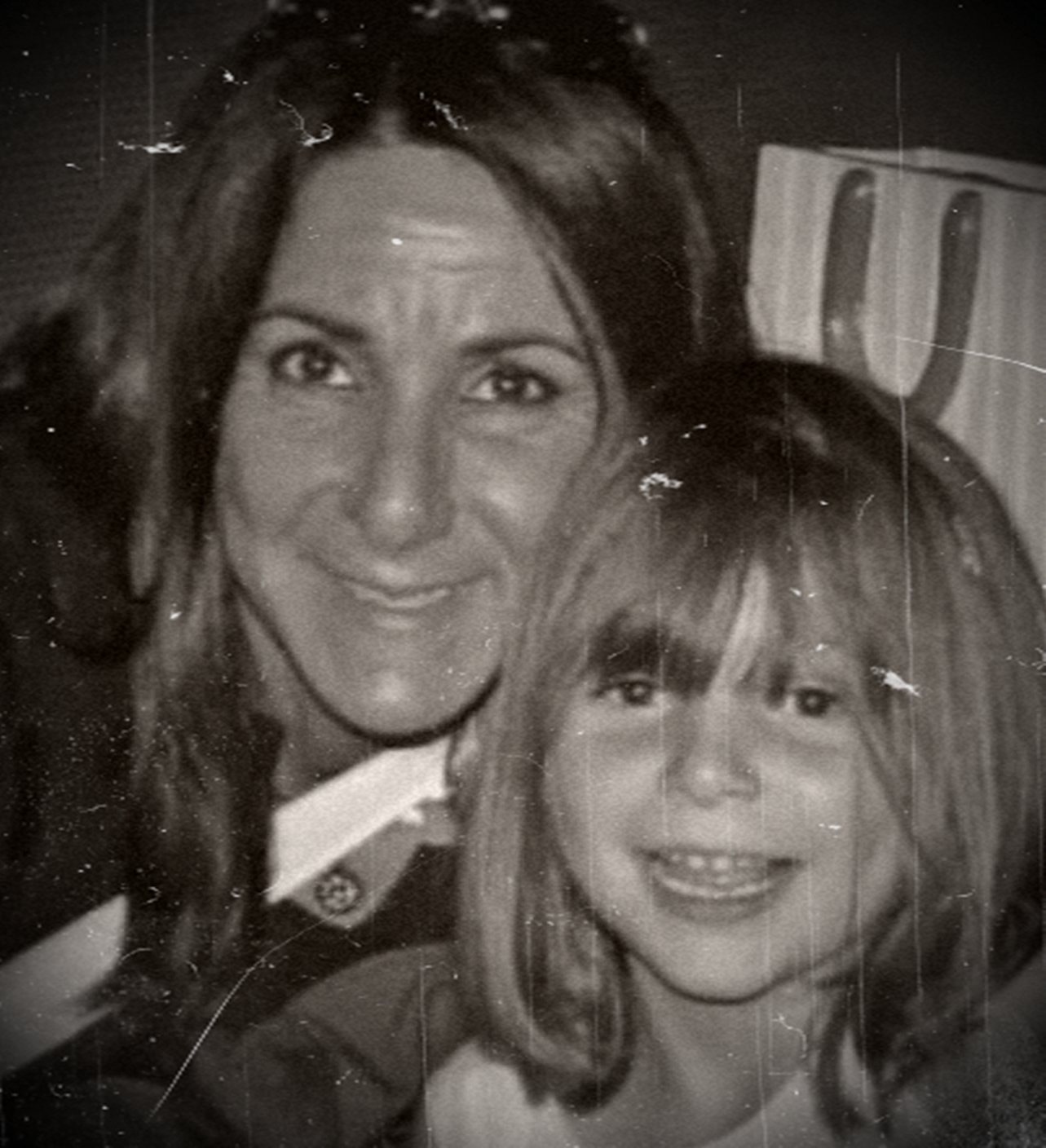
On December 12th, 2007, forty-seven-year-old Nancy Bochicchio and her seven-year-old daughter, Joey Bochicchio-Hauser, spent part of an ordinary Wednesday afternoon at the Town Center at Boca Raton in Florida. Christmas was less than two weeks away. Joey was only days from her eighth birthday. Mother and daughter entered the busy South Florida mall shortly after two in the afternoon, shopped for less than an hour, and walked back through the same doors at three eleven p.m.
They never made it home.
Later that night, a mall security guard noticed Nancy’s black 2007 Chrysler Aspen sitting on the south side of the Sears department store. The engine was still running. Inside the SUV, police discovered Nancy and Joey, both restrained and fatally shot. The bizarre way they had been bound, and the disturbing similarities to another kidnapping from the same mall only four months earlier, would transform their deaths from an apparently horrific robbery into one of South Florida’s most enduring unsolved mysteries.
Nancy Bochicchio was a single mother living in Boca Raton, and people who knew her described mother and daughter as exceptionally close. On the morning of December 12th, Nancy picked Joey up from her second-grade class for a doctor’s appointment. Afterward, they headed to Town Center, one of Boca Raton’s busiest and most upscale shopping destinations.
Nancy’s sister, JoAnn Bruno, later recalled speaking to Nancy on the telephone as she arrived at the mall. Nancy was still talking to her as she got out of the car and began walking toward the building. It would be the sisters’ final conversation. Nancy and Joey were supposed to have dinner with family later that evening, but they never arrived. Bruno and other relatives repeatedly tried calling Nancy, with no response.
Mall surveillance cameras provided investigators with the last confirmed images of the pair before their ordeal began. According to the Boca Raton Police Department, Nancy and Joey entered through Entrance No. 4, between Sears and Neiman Marcus, at approximately two nineteen p.m. At about three eleven p.m., they walked back out through the same entrance. Nothing captured on the available footage apparently suggested that anything was wrong.
What happened in the minutes immediately afterward remains one of the crucial missing pieces of the case. Investigators believe Nancy and Joey were confronted after reaching their vehicle and abducted by a man who had probably been watching for a suitable victim. Precisely how he approached them is unknown, and police have never established exactly where every subsequent event took place.
At some point during the abduction, Nancy’s cellphone placed a call to 911. The Palm Beach County Sheriff’s Office received the call, but it disconnected before a dispatcher could answer. When the operator attempted to call Nancy back, nobody picked up.
Investigators later determined that Nancy’s SUV traveled to a bank drive-through ATM. Nancy was forced to withdraw $500. Contemporary reporting indicated that the vehicle was captured by surveillance equipment at the bank, but the footage did not provide investigators with the break they needed.
After that, the timeline becomes murky. Police have never publicly established whether Nancy and Joey remained in the Boca Raton area throughout the ordeal, whether the killer drove them elsewhere, or even exactly where the shootings took place. The Boca Raton Police Department specifically notes that there is no evidence establishing whether they were killed at the mall or at another location before their SUV was returned. Investigators similarly do not know exactly when the vehicle came back to the Town Center parking lot.
What they do know is how carefully the killer attempted to control his victims. Nancy and Joey had been restrained using a strange collection of items: plastic flex ties, duct tape, handcuffs and goggles. Their hands, feet and even their necks had been secured in ways intended to prevent them from moving freely inside the vehicle. Their vision was obstructed with darkened goggles.
The restraints were not improvised from things found inside Nancy’s car. Whoever abducted them appears to have arrived prepared.
One detail immediately drew investigators’ attention. When Nancy was discovered, the restraints around her wrists had been broken. It was tempting to interpret that as evidence that she had fought back, particularly because her family remembered her as fiercely protective of Joey. Police, however, have remained careful about that conclusion. There is no direct evidence establishing who broke the restraints or under what circumstances.
Both Nancy and Joey had been shot. Contemporary investigators believed that resistance could have played a role in the killer’s decision to murder them, but that has remained a theory rather than an established fact.
By the time they were discovered late that night, hours had passed since mother and daughter had left the mall. Retired FBI Special Agent John MacVeigh, who worked the investigation, has said they may have remained in the vehicle for roughly eight or nine hours before anyone realized what had happened. Investigators cannot say whether the murderer simply left after the killings or whether he returned at some point to see whether the SUV had been discovered.
The apparent $500 robbery did little to explain the extraordinary lengths the killer had gone to. And detectives had seen those lengths before. Four months earlier, on August 7th, 2007, another mother had visited the Town Center with her two-year-old son.
The woman, whose identity has remained confidential and who is generally referred to as “Jane Doe,” finished shopping and returned to her Lincoln Navigator in a mall parking garage. She placed her young son in the rear seat and went to the back of the vehicle to load her stroller and purchases. During those few seconds, according to investigators, a stranger apparently slipped inside the unlocked SUV.
When the woman got into the driver’s seat, she discovered a man behind her armed with a gun. The assailant forced her to drive around the area and directed her to ATMs. She eventually withdrew a total of $600. During the ordeal he had her stop at another parking area, where he began restraining her. Her feet were secured with plastic ties; inexpensive handcuffs held her wrists; another restraint connected her neck to the vehicle’s headrest. He later covered her eyes with darkened goggles.
The resemblance to what would later be done to Nancy and Joey was extraordinary.
There were also peculiar contradictions in the attacker’s behavior. Although he repeatedly threatened the woman, he reportedly remained relatively calm. He expressed concern about her son’s needs, asking whether the boy required water, and helped the mother obtain her inhaler when she needed it. Eventually, after driving the pair back to the mall, he disappeared.
Jane Doe managed an extraordinary escape. Still handcuffed with her hands behind her, she maneuvered them beneath her feet and brought them around to the front of her body, allowing her to operate the vehicle and seek help. She and her son survived physically unharmed.
The kidnapper took her driver’s license and threatened her against cooperating with police. Nevertheless, she eventually provided investigators with the description used to create the composite drawing that would become one of the most recognizable images associated with the Bochicchio investigation. Contemporary reports described the assailant as roughly six feet tall and of medium build, wearing sunglasses and a full-brimmed or floppy hat, with what may have been a ponytail.
Police have long been confident that the August abductor and the man responsible for Nancy and Joey’s deaths were the same person. Although there is no direct forensic evidence connecting the two crimes, the combination of a mother and young child, an SUV, forced ATM withdrawals, plastic restraints, handcuffs and blacked-out goggles is difficult to dismiss as coincidence.
There was yet another troubling case. On March 23rd, 2007, months before either of the mother-and-child abductions, fifty-two-year-old Randi Gorenberg visited the same Town Center mall. Surveillance footage showed her walking out at approximately one fifteen p.m. after shopping. Less than an hour later, witnesses at Governor Lawton Chiles Memorial Park, about five miles away, reported gunfire and saw a woman being pushed or falling from a vehicle. Randi had been fatally shot. Her Mercedes SUV was subsequently abandoned elsewhere.
Randi had not been restrained in the elaborate fashion used against Jane Doe or the Bochicchios, and investigators have never established a forensic connection between the cases.
Still, the similarities are unsettling. All three incidents involved women who had been shopping at Town Center during daylight hours. All involved SUVs. And all apparently began shortly after the victims left the mall.
Investigators remain divided on exactly how far the connection extends. Boca Raton police have consistently expressed confidence that the August kidnapping and the Bochicchio murders are related. The Randi Gorenberg case is less certain. Palm Beach County cold-case investigators continue to keep an open mind, while MacVeigh has said he personally believes one offender was responsible for all three incidents. No publicly disclosed forensic evidence proves that theory.
One hypothesis is that Randi could have been the killer’s first attempt, with the offender subsequently changing his method. Investigators interviewed by WPTV in 2024 suggested that a mother accompanied by a small child might have been easier to control than a woman traveling alone because the mother’s overriding concern would be protecting the child. That remains behavioral speculation, not a proven reconstruction of the crimes.
The ATM withdrawals initially made robbery the obvious explanation. But investigators have increasingly questioned whether money was the killer’s primary objective.
Jane Doe surrendered $600. Nancy withdrew $500. Considering the planning, equipment, time and risk involved in kidnapping victims and driving them around South Florida, those were relatively small sums. Investigators who revisited the cases for WPTV’s 2024 documentary The Missing Piece said they believed the offender may have been more interested in domination and control, with the money merely an additional benefit.
That possibility could also explain the restraints. The killer did not simply threaten his victims, take their money and flee. He brought equipment specifically intended to render them helpless and blind.
Investigators also noted that there was no apparent sexual assault associated with the three Town Center cases. That has further complicated attempts to assign the offender a conventional motive.
The investigation quickly expanded far beyond Boca Raton. Nancy’s cellphone and credit cards eventually surfaced in Miami-Dade County. Two men initially drew police attention after coming into possession of the property. David Goodman was believed to have found Nancy’s credit card, while Charles Jackson told detectives that he had found her cellphone near 1500 NE First Avenue in Miami. Both were located and interviewed, and neither emerged as the killer.
Police canvassed the Miami neighborhood, distributed flyers, reviewed surveillance footage and interviewed numerous people.
Years later came another potentially important clue. Investigators determined that the plastic flex ties and duct tape used in the Bochicchio crime had been purchased from a major home-improvement store in Miami-Dade County. Authorities apparently made that determination by around 2010 but did not publicly reveal it until 2015, when Boca Raton police and the FBI renewed their appeal for information. Investigators said the finding strengthened the possibility that the killer lived in, worked in or otherwise had meaningful ties to Miami-Dade.
It was the kind of lead detectives hoped might trigger a memory: someone who knew a man who routinely carried flex ties, unusual goggles and handcuffs; someone who remembered an odd purchase; someone whose behavior changed abruptly in December 2007. No such tip has yet produced an arrest.
The crime scene generated an enormous amount of evidence. Boca Raton police say technicians collected several hundred individual items, including DNA samples. Investigators scrutinized surveillance footage, canvassed multiple locations and pursued hundreds—and eventually thousands—of tips. America’s Most Wanted profiled the case repeatedly and commissioned forensic artist John McMahon to produce an enhanced version of the composite drawing based on Jane Doe’s description.
A reward ultimately reached $400,000 during some phases of the investigation. The enormous publicity produced leads from around the country but no identification of the man police believe abducted Nancy and Joey.
In December 2025, on the eighteenth anniversary of the murders, Boca Raton police said the case was being continually reevaluated as DNA technology evolves. The department expressed hope that technological advances could eventually provide the breakthrough investigators have been waiting for.
As the years have passed, various serial killers and criminals have inevitably been proposed as possible suspects, particularly online. One of the most persistent names has been Israel Keyes, the itinerant murderer arrested in Alaska in 2012 who admitted traveling widely to commit crimes and who sometimes used elaborate preparations and victims’ bank cards. The FBI believes Keyes committed multiple kidnappings and murders across the United States between 2001 and 2012. However, authorities have never publicly established that he had anything to do with the Boca Raton crimes.
Another theory received considerable attention in 2024 when a Swedish documentary suggested convicted serial killer Peter Mangs might have committed the Town Center crimes.
That theory has effectively been rejected by investigators. Records reviewed by authorities showed Mangs had left the United States ten days before Randi Gorenberg was murdered and did not return until 2009. Boca Raton Detective Scott Hanley subsequently said that, after the leads were fully vetted, Mangs was not considered a suspect in either the Jane Doe kidnapping or the Bochicchio murders.
The identity of the man in the police sketch remains unknown, and as of August 2026, the murders of Nancy Bochicchio and Joey Bochicchio-Hauser remain unsolved.


One thought on “Nancy Bochicchio and Joey Bochicchio-Hauser”