
In the early hours of September 4th, 2008, firefighters were called into the mountains east of Ashland, Oregon, for what initially appeared to be a pair of suspicious structure fires. Several hours later and roughly thirty miles away, another discovery was made beside Bear Creek near Central Point: a man lay dead inside his sleeping bag.
By the end of the day, authorities in Jackson County were facing two homicides and two deliberately set fires. Nine days later, there would be a third fire, this one at the campsite where one of the murdered men had been found.
The victims, forty-six-year-old David Edwin Lewis and forty-four-year-old Troy Dean Carney, apparently did not know each other. They lived very different lives and were killed in very different locations. Yet the timing, the circumstances surrounding the crime scenes, and evidence known only to investigators caused detectives to wonder almost immediately whether the deaths might somehow be connected.
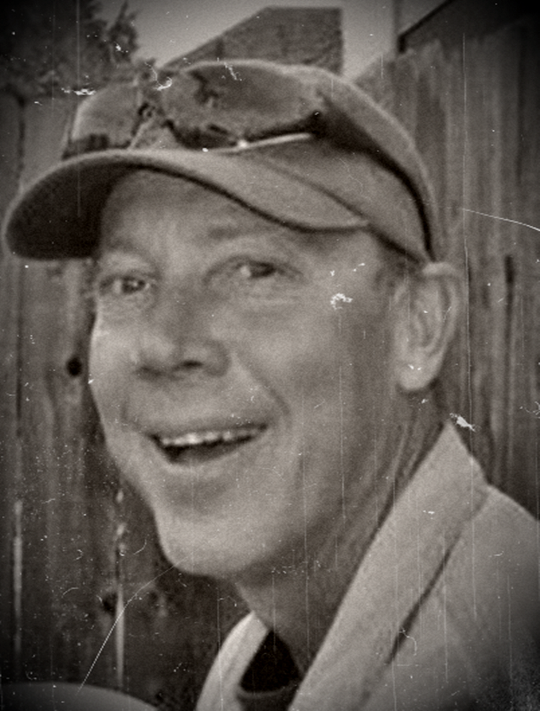
David Edwin Lewis was born on December 23rd, 1961, in Wilmington, Delaware. After traveling across the country, he eventually settled in southern Oregon, making his home in the mountainous country east of Ashland.
David was the father of three sons. According to his obituary, he passed along to them his love of the outdoors, taking them fishing, snowshoeing, snowmobiling, dog-sledding and riding motorcycles. He was an avid Philadelphia Eagles fan and a man remembered by his family as energetic, memorable, and deeply attached to the mountains in which he lived.
Friends and relatives sometimes called him “Fish Hook” because of his ability to catch fish seemingly wherever he went. He was known locally as someone who could build or repair almost anything and who was willing to help his neighbors. He had lived in the area around Dead Indian Memorial Road for decades and was familiar with the isolated mountain country surrounding Hyatt Lake.
That isolation would become an important feature of his murder. David lived at a rural cabin at 12801 Dead Indian Memorial Road, approximately thirteen miles east of Ashland. The property was approached by a long driveway in an area where homes were widely separated and traffic was light, especially in the middle of the night.
Sometime during the night of September 3rd into the morning of September 4th, a killer crept into the area.
The first indication that something was wrong came when a fire was reported at another property several miles from David Lewis’s home. The building, a seasonal or vacation cabin at 18196 Dead Indian Memorial Road, was unoccupied. Early reporting indicated that the structure had neither ordinary electrical activity nor any obvious reason to ignite on its own. It was destroyed.
Then, within roughly an hour, another fire was reported about five or six miles away. This one was at David Lewis’s home.
By the time firefighters reached the property, the residence was engulfed and ultimately reduced to ruins. Inside the burned structure they discovered human remains. Because of the severity of the fire, the victim was not immediately identified, but DNA testing later established that the remains belonged to David Lewis.
More troubling was what investigators learned once the fire scene and David’s remains were examined. This was not an accidental house fire in which the occupant had become trapped. David had been the victim of homicidal violence before the house was deliberately burned. The Sheriff’s Office determined that both fires on Dead Indian Memorial Road had been intentionally set. Later reporting on the investigation stated that David Lewis’s actual cause of death was a gunshot wound rather than the fire. Whoever killed him had then apparently used fire in an effort to obliterate the scene.
The destruction created an enormous problem for investigators. A burned structure is one of the most difficult crime scenes to process: fingerprints, biological evidence, fibers, documents and objects that might establish a timeline or identify a visitor can all be destroyed or badly damaged.
Detectives nevertheless began retracing David’s relationships and movements. They spoke with family members, friends and neighbors, as well as people for whom David had worked. Contemporary reporting indicated that investigators also interviewed hunters and young people known to have been in the surrounding mountain area.
No obvious motive emerged. There was no clearly documented business dispute, personal conflict or other event that explained why someone would travel to David’s secluded home, kill him, and then go to such extraordinary lengths to destroy the property.
The separate arson several miles away only deepened the mystery. Why would someone burn an empty cabin on the same remote road at approximately the same time? Was it a diversion intended to draw firefighters elsewhere? Was it connected to David Lewis’s murder? Or were two arsons occurring in the same small geographical area on the same night merely an extraordinary coincidence?
Investigators believed the first possibility could not be dismissed. Before they had much time to answer those questions, however, another dead man was found.
Troy Dean Carney was born August 26th, 1964, in Lewiston, Maine. His life was far less geographically settled than David Lewis’s.
Troy traveled frequently and took temporary jobs as he moved around the country. He was particularly known around truck stops, where he would earn money helping drivers load or unload freight and performing other short-term work. His mother, Linda Wood, later described him as a free spirit who enjoyed the adventures that came with life on the road.
In late August and early September 2008, Troy was in southern Oregon and spending time around the Pilot truck stop in the Central Point area. He ate there, used the telephone, and looked for work from truckers.
Troy reportedly planned to find another job aboard a truck and eventually leave the area. Surveillance footage captured him leaving the Pilot truck stop at approximately six p.m. on Labor Day, September 1st. It was one of the final confirmed sightings of him alive.
While waiting for work, Troy had established a campsite near the Bear Creek Greenway, the bicycle and walking trail that runs through the Rogue Valley. The area around the Greenway was also used by people living outdoors, and temporary camps were not unusual.
Troy was apparently careful about telling people precisely where he slept. His mother later said that he considered secrecy about his campsite a matter of personal safety. In this instance, unfortunately, it did not protect him.
On September 4th, Troy Carney’s body was discovered between the Bear Creek Greenway and Bear Creek in Central Point. He was still inside his sleeping bag. He had been shot.
Investigators found no indication of the type of violent confrontation that normally precedes a homicide. Later accounts stated that there was no sign of a struggle and that Troy appeared to have been asleep when he was attacked. He had reportedly been shot in the head.
Robbery did not provide an obvious explanation. Accounts of the investigation indicated that his belongings had not been taken by his killer. Nor did investigators find evidence suggesting that Troy Carney’s murder stemmed from intoxication or a drug dispute. According to his family, toxicology found no drugs or alcohol in his system.
Someone apparently approached an unsuspecting man sleeping beside the Greenway, shot him and left him where he lay.
Detectives interviewed people staying in camps in the area and tried to determine who had been close enough to see or hear anything unusual.
One peculiar object attracted attention. Investigators found a distinctive yellow-and-black Wolverine mask at one of the nearby camps. Because the item was unusual, detectives hoped it might help identify people who had been present.
DNA eventually enabled investigators to identify its owner. The individual was questioned, but authorities said they did not establish a connection between the mask’s owner and Troy’s murder. It was an intriguing clue that apparently led nowhere.
Then the crime scene itself burned.
In the early morning hours of September 14th, 2008, nine days after Troy Carney’s body had been discovered, fire swept through the area of his campsite. Investigators determined that this fire, too, had been intentionally set.
The timing was bizarre. The campsite had already been searched. Troy’s body had long since been removed. Police had processed the immediate scene.
Yet someone returned—or at least someone arrived at the same location—and started a fire. Was the arsonist attempting to destroy evidence that investigators had overlooked? Was someone afraid that police would return and find something? Or was the fire unrelated to the murder?
The episode was particularly striking because fire had already played such a conspicuous role in David Lewis’s death. David’s house had also been burned after he was killed, and another cabin had been deliberately burned along the same road.
Now the area in which Troy Carney had been shot was burning as well. The similarities were impossible for investigators to ignore.
On the surface, David Lewis and Troy Carney appeared to have almost nothing in common. David was a longtime mountain resident with a house, family ties and deep roots in the Ashland area; Troy was a traveler temporarily camping near a truck stop.
Authorities could find no evidence that the men knew one another. But two individuals had been killed within the same small Oregon county at approximately the same time. Both cases involved gunfire according to later public reporting. And both crime scenes became associated with deliberately set fires.
In 2010, the Sheriff’s Office reportedly announced that investigators had discovered an evidentiary link between the two homicides, although they declined to reveal what that link was.
Years later, however, the public picture became more complicated. A Jackson County Sheriff’s Office statement marking the sixth anniversary of the murders said detectives had initially believed the cases were connected but that extensive forensic testing subsequently led them to believe that the two murders were not linked. Both investigations nevertheless remained active.
Then, in a 2020 interview with KOBI-TV, Captain Tim Snaith of the Jackson County Sheriff’s Office again spoke about investigators examining connections between the cases and said there had been “strong persons of interest,” although detectives lacked enough evidence to build a prosecutable case.
Snaith said investigators had spent considerable time examining similarities and connections involving people and physical evidence. He would not publicly disclose the specific evidence that had once suggested a relationship between the murders.
The differing statements do not necessarily mean investigators contradicted themselves as much as they reflect the uncertainty typical of a cold case. What can be said with certainty is that no publicly established connection between David Lewis and Troy Carney has ever resulted in charges.
Detectives investigating David Lewis’s murder confronted another obstacle: there was no simple explanation for why someone wanted him dead.
His isolated home makes a purely random attack seem unlikely. A person unfamiliar with the area would have had to find the property, negotiate the rural road and approach a residence where the occupant might reasonably have been expected to recognize an unexpected visitor.
Early investigators reportedly considered it possible that David Lewis knew his killer. His family has spent years examining possibilities surrounding his work, personal relationships, possessions, and financial affairs. Online discussions have also produced numerous theories, but none has borne any fruit so far.
Troy Carney’s murder is, in some ways, even more difficult to explain. He had little property worth stealing and was temporarily living outdoors. According to his mother, he was friendly and accustomed to meeting people during his travels. She believed that whoever killed him may have been someone he had recently met and trusted enough to allow near his camp.
If that is true, the killer might have been another person living outdoors, someone associated with the truck stop or simply someone Troy encountered during his final days.
The apparent lack of a struggle suggests Troy was caught completely unaware. If he was sleeping, he may never have seen his killer. And if the shooting occurred late at night beside the Greenway, witnesses who heard a gunshot may not have immediately understood its significance.
As of this writing in late August 2026, neither the murder of David Lewis nor that of Troy Carney has been solved, and it remains unknown whether the crimes are connected.

