
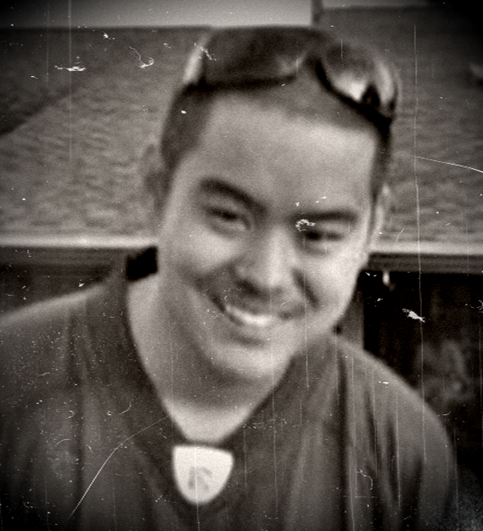
Daniel Ho Coverston was born on May 22nd, 1986. His parents, Paul and Linda Coverston, adopted him when he was approximately six months old, and he grew up in Prince George’s County, Maryland. His family also included his sister, Rebekah Kyung Coverston.
Daniel attended Towson University, where he majored in kinesiology. Although some later news reports referred to him as a Towson University student, university records identify him as a member of the Class of 2008, and other accounts describe him as a recent graduate at the time of his murder.
By early February 2009, the then-twenty-two-year-old Daniel was living in an apartment on Lachlan Circle in Towson.
Then he developed a serious problem with one of his eyes. Daniel underwent surgery to repair a detached retina approximately ten days before his death.
Recovery from that type of procedure can require a patient to maintain a particular head position for extended periods, and Daniel had been instructed to remain face down for much of the day. His mother called him regularly to check on his progress. Friends also stopped by his apartment to help him.
Rather than repeatedly interrupting his recovery to answer the door, Daniel kept it unlocked. That seemingly minor decision would later become one of the most important circumstances surrounding his murder. The person who killed him apparently did not have to force his way inside.
There were also potentially many people who knew that the door would be open. Daniel’s friend had checked on him several times during his recovery and had found him following his doctor’s instructions. According to later police accounts, the friend had visited him at about two p.m. on February 13th and returned the following afternoon.
February 14th was Valentine’s Day. Shortly before three p.m., the friend entered the apartment. Daniel was still face down on his bed. At first glance, the position itself would not have seemed alarming. It was exactly where and how he was supposed to be resting. Then the visitor realized that Daniel was not answering.
Emergency personnel were summoned. Daniel was pronounced dead at the scene. He had been shot in the head.
The circumstances immediately raised difficult questions. There was no reported forced entry. That was not especially surprising because Daniel had intentionally left the door unlocked. But who knew that? Was the killer a stranger who happened upon an unlocked apartment, or someone familiar with Daniel and his circumstances? Did the killer know Daniel was recovering from surgery? Did the killer know that he would be lying face down and physically restricted? And was Daniel asleep or resting when the killer entered, or did he know exactly who had come through the door?
Investigators were unable to identify any established feud or serious ongoing dispute involving Daniel. Police also said they did not know whether anything had been taken from his apartment.
Yet detectives eventually learned something about Daniel’s social life that complicated the picture. During the investigation, police discovered that Daniel occasionally sold small quantities of marijuana to friends from college.
His family did not dispute that information. “Yes, he was selling pot to his college friends,” his sister Rebekah later told WBAL. Because Daniel was recovering from surgery, she explained, friends could enter the apartment and leave what they believed was the appropriate amount of money.
This meant the unlocked door may have served two purposes. It allowed friends to check on Daniel without forcing him to get up, but it also permitted acquaintances to stop in while he was incapacitated.
The revelation inevitably presented investigators with another possible avenue: had Daniel been killed over drugs, money or some disagreement associated with the small-scale marijuana sales?
Publicly, police have never established such a connection. They said they knew of no continuing disputes involving Daniel and had not identified a clear motive. There was also no publicly established evidence that his marijuana sales directly led to his death.
Over time, Baltimore County Police disclosed what has become perhaps the most intriguing clue in Daniel Coverston’s murder. The last telephone call Daniel received came from a public payphone. The phone stood near the intersection of Loch Raven Boulevard and Belvedere Avenue, close to the Alameda Shopping Center.
The payphone no longer exists. Investigators nevertheless believe the call may have been directly connected to the killing.
“We believe that it’s very possible that the person who killed Daniel made that phone call to him right before entering into his apartment,” Baltimore County Police Officer Jennifer Peach said during a later public appeal.
Police have consequently asked anyone who spent time around the Alameda Shopping Center or the Loch Raven Boulevard-Belvedere Avenue intersection in 2009 to think back to the people who used that phone.
The significance of using a public telephone is difficult to ignore. By 2009, cellphones were already ubiquitous. Someone deliberately placing a call from a payphone could have had an innocent reason for doing so, but it also offered a caller a degree of anonymity that an ordinary personal cellphone did not.
Police have never publicly said what was discussed during the call, whether Daniel recognized the caller or even whether investigators know how long the conversation lasted. Nor have authorities publicly identified exactly when the call occurred in relation to Daniel’s estimated time of death. But detectives have repeatedly returned to it.
Despite interviewing dozens of people, detectives struggled to develop a viable suspect. By the tenth anniversary of Daniel’s murder, Baltimore County Police said investigators had spoken with thirty-three people in connection with the case but still had obtained nothing that positively identified a killer. Leads had generated hearsay and rumors, but police said those avenues had ultimately been debunked or had failed to advance the investigation.
Daniel had a large social circle associated with Towson University, and his family has repeatedly expressed the belief that someone connected to that community knows more than he or she has admitted.
Daniel’s relatives also publicly criticized aspects of the investigation, saying at times they felt authorities were dismissive or unresponsive. Police acknowledged that families do not always hear what they want to hear during a homicide investigation and maintained that detectives continued working the case.
The family also ran into a separate dispute involving the reward offered through Metro Crime Stoppers. Relatives and supporters donated money specifically to increase the amount available for information leading to Daniel’s killer. By 2016, however, the family complained that thousands of dollars they believed should have been reflected in the publicly advertised reward had not appeared correctly on Crime Stoppers or police websites. They also said attempts to obtain answers about the discrepancy had sometimes gone unanswered.
Eventually, the reward grew substantially. By 2016, a combined reward of $15,000 was being advertised for information leading to the arrest and prosecution of the person responsible for Daniel’s murder. The larger reward, though, still did not produce the breakthrough the family desperately wanted.
Baltimore County Police have periodically revived the investigation in the public eye. On the eleventh anniversary in February 2020, Rebekah again pleaded for anyone with knowledge of the murder to come forward.
In 2022, detectives specifically renewed their interest in anyone who had frequented the area around the former payphone near the Alameda Shopping Center.
On February 14th, 2024, fifteen years after the murder, Baltimore County Police were still looking for clues. Daniel’s family continued to believe that someone associated with Towson University might possess information capable of breaking the case.
Police issued another anniversary appeal in February 2025. Daniel was still publicly listed as an unsolved homicide victim, and authorities again urged anyone with information, even something that might seem insignificant, to contact homicide investigators.
As of August 2026, the bizarre murder of Daniel Ho Coverston remains a mystery.

