
Lindsey Jo Baum was born on July 7th, 1998. In June 2009 she was ten years old, only eleven days away from her eleventh birthday. She stood approximately four feet nine inches tall, weighed about eighty pounds, and had brown hair and brown eyes.
She lived with her mother, Melissa Baum, and her older brother, Josh, in McCleary, a small Grays Harbor County community roughly twenty miles west of Olympia, Washington.
McCleary had a population of only around 1,500 at the time, surrounded by the thick forests characteristic of western Washington. It was the kind of community in which Lindsey was familiar enough to local police that former McCleary Police Chief George Crumb later recalled seeing her and her friends regularly walking around town.
The Baum family had been through changes. Melissa and Lindsey’s father had divorced, and Lindsey was reportedly unhappy about the breakup. When she initially disappeared, this inevitably raised the possibility that she might have run away.
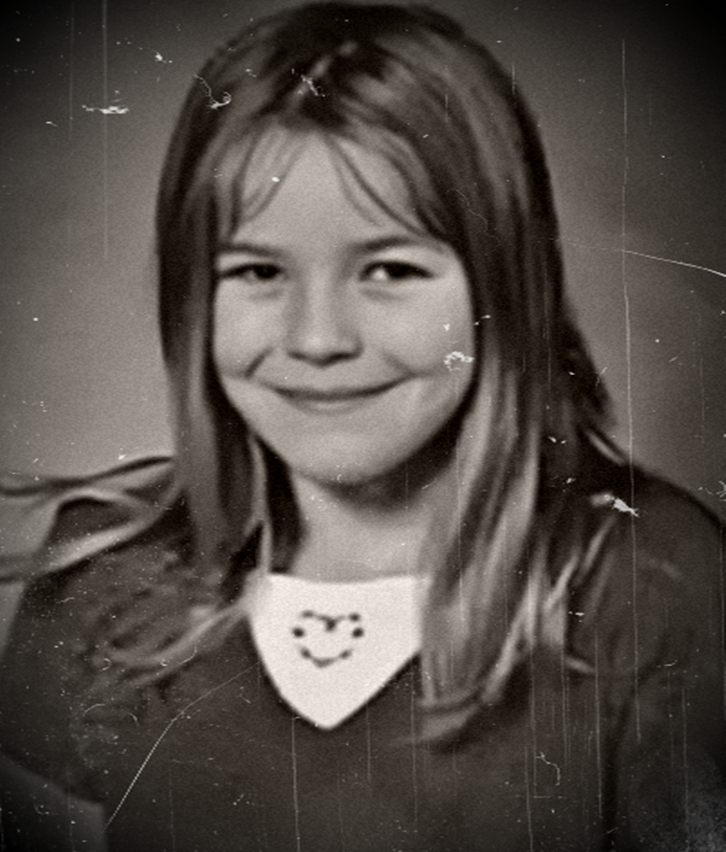
Her mother strongly rejected that explanation. Lindsey had no money or realistic means of going anywhere, had never run away before, and had apparently made no preparations to leave. As the hours passed, the runaway theory became increasingly difficult to reconcile with the circumstances.
Friday, June 26th, 2009 was a hot summer day in McCleary. School was out, and Lindsey spent part of the day doing what many children in the neighborhood were doing: swimming and spending time with friends.
That evening Lindsey, her twelve-year-old brother Josh, and a friend were at the Baum home on Mommsen Road. They decided to walk to the friend’s house on Maple Street to find out whether Lindsey could spend the night.
At some point during the walk, Lindsey and Josh argued, reportedly over his bicycle. Josh turned back toward home while Lindsey and her friend continued.
The sleepover did not happen. Lindsey was told that she could not stay and would have to return home. At approximately nine fifteen p.m., she left alone. The walk should have taken about ten minutes.
She was dressed in a light blue hooded pullover, blue jeans and dark shoes. Most significantly, she did not have her cell phone with her. It had been left at home. That small detail would soon become painfully important.
A local woman who knew Lindsey reported seeing her walking along Maple Street between Fifth and Sixth streets a little after nine fifteen p.m. The sighting placed Lindsey somewhere along the short route between the friend’s house and her own.
There was nothing obviously alarming about what the witness saw. Lindsey appeared simply to be walking home. But investigators could never establish that she reached the busier portion of town or the street near her house.
Somewhere after that sighting, Lindsey disappeared.
There was no confirmed scream. No publicly identified witness saw someone force her into a car. No abandoned belongings were found along the route. No obvious disturbance marked the spot where anything had happened. That absence of a clear crime scene would become one of the central difficulties of the investigation.
By around nine forty-five p.m., Melissa Baum was beginning to wonder where her daughter was. Lindsey disliked being outside in the dark, and night had fully fallen.
Melissa tried Lindsey’s cell phone, initially more irritated than frightened. She reportedly left messages telling Lindsey to answer because that was why she had been given a phone. Then Melissa discovered the phone was still at the house. Her concern intensified.
She contacted the family Lindsey had been visiting and learned that Lindsey had already left. Melissa and others began searching the surrounding neighborhood. There was no sign of her.
At approximately ten fifty p.m., Melissa called police. Local officers knew the Baum family and began looking for Lindsey that night. By the early hours of June 27th, the Grays Harbor County Sheriff’s Office had been briefed. Search-and-rescue personnel were deployed after daylight. Still, no Lindsey.
At first, authorities had to consider the possibilities that accompany almost any report of a missing child. Perhaps Lindsey had become angry and gone somewhere without telling her mother. Perhaps she was hiding. Perhaps she had been hurt in the woods or suffered an accident. But every passing hour made those explanations less convincing.
By Sunday, Grays Harbor County officials had called for substantial outside assistance, including the FBI. According to then-Sheriff Rick Scott, who was undersheriff when Lindsey vanished, more than eighty deputies and FBI agents were involved by Sunday afternoon. For weeks, investigators worked exceptionally long days out of a command operation established in McCleary. At points during that summer, more than a hundred people were working the case, supported by staff tasked with organizing the enormous amount of incoming information.
Searchers walked streets, fields and wooded areas. Dogs trained to follow scent were deployed. Helicopters searched from above. Search-and-rescue teams combed areas surrounding McCleary. Volunteers joined law enforcement in repeated searches.
The FBI also used its digital billboard network to publicize Lindsey’s disappearance, asking anyone who had been in McCleary between 8 p.m. and midnight on June 26th to contact investigators.
Yet nothing belonging to Lindsey was found. And investigators increasingly confronted the possibility Melissa Baum had feared from the beginning: someone had taken her daughter.
What makes Lindsey’s disappearance particularly disturbing is how little time was apparently available for it to happen. She had left the friend’s house at about nine fifteen. A witness saw her partway home. Her destination was only minutes away. Whoever was responsible therefore appears to have encountered Lindsey during an exceptionally short window.
That has long encouraged speculation that the perpetrator may have been someone familiar with McCleary, or even someone Lindsey knew, but authorities have not publicly established that as fact.
An offender would also have needed to remove Lindsey from the area without attracting sufficient attention to create an immediately recognizable lead. McCleary was small, but it was not isolated from traffic. Roads through the community connected it with other parts of western Washington. One vehicle leaving at the right moment could have carried Lindsey far from town before most residents even knew that she was missing.
Investigators gathered surveillance recordings from local businesses. One piece of footage from a Shell station eventually drew public attention. In 2010, authorities released images showing a white Honda Ridgeline and a man who entered the convenience store on the night Lindsey disappeared. Police emphasized that neither the man nor the occupants of the vehicle were necessarily suspects; investigators wanted to identify them because they might have seen something useful.
Other surveillance video was subsequently released as investigators continued looking for people who had been in McCleary that evening.
One early investigation centered on a twenty-three-year-old McCleary man after authorities received information concerning a small white sports car and discovered discrepancies involving his account of where he had been on June 26th.
Search warrants were served in September 2009. Investigators searched properties connected to him but found nothing linking him to Lindsey. Rick Scott later made the result explicit: authorities had found no evidence indicating that the man was involved and moved on to other leads.
In 2010, authorities searched the home, vehicle and storage space associated with another man after discovering inconsistencies in information he had provided. Again, officials cautioned against assuming guilt. “We found nothing yesterday that clearly links him to Lindsey’s disappearance,” Scott told ABC News at the time.
By the tenth anniversary of Lindsey’s disappearance, Scott said investigators had developed approximately twenty persons of interest and accumulated an extraordinary volume of information. Search warrants had been executed at various points after people made statements that investigators believed required closer examination. None produced the evidence necessary to make an arrest.
As months became years, Lindsey’s case remained prominent. Her photograph appeared nationally. Missing-person organizations circulated her information. Age-progressed images attempted to show what Lindsey might look like as she grew older. Her family continued to hope she might still be alive.
The FBI periodically reiterated its involvement, and as late as May 2017, almost eight years after Lindsey disappeared, the bureau listed her among Washington’s unresolved missing-child cases and appealed again for information.
For Melissa, the uncertainty created a particularly cruel form of grief. Without a body, there was still hope. But there was also no way to know whether hope was justified.
Then, in September 2017, hunters discovered human remains in rugged terrain in the Manastash area of Kittitas County, roughly twenty miles west of Ellensburg. The area is mountainous and heavily forested, with steep slopes, cliffs and ravines.
Authorities conducted an initial search before winter weather arrived. The remains included part of a human skull. Because investigators did not initially know whose remains they had found or have an obvious crime associated with them, forensic testing was not immediate. Eventually, samples were submitted for DNA analysis.
Months passed. Then the result came back. The remains belonged to Lindsey Baum. The discovery officially changed the nature of the investigation. Authorities now described the case as a kidnapping and homicide. Investigators have never publicly released Lindsey’s cause of death.
Finding part of Lindsey’s remains created an entirely new crime scene. After the snow melted in May 2018, authorities returned to the Manastash area.
Twenty-two K9 teams participated in one search, with personnel coming from numerous Washington counties and even Idaho. A further search the following weekend involved approximately 240 law-enforcement officers and volunteers covering roughly two square miles.
Investigators were looking for additional remains, clothing, personal belongings and anything else capable of connecting Lindsey to the person who brought her there. Authorities have never publicly disclosed everything those searches produced.
In its April 2026 appeal, the Grays Harbor County Sheriff’s Office specifically asked hunters and recreational visitors in the Manastash area to remain alert for possible additional human remains or evidence. Anyone who finds something potentially significant is asked not to move or disturb it but to record the location if possible and contact authorities.
A dramatic development occurred in June 2021 when Grays Harbor County investigators arrested Paul Bieker in connection with an entirely separate 2003 crime.
A seventeen-year-old girl had been abducted in McCleary, restrained and sexually assaulted. DNA had been recovered in that case, but no match was initially found.
Years later, forensic genetic genealogy helped investigators identify Bieker, who had lived in McCleary. His DNA was subsequently matched to evidence from the 2003 assault, and he was eventually convicted.
Because the 2003 crime involved an abduction in the same small community, investigators naturally examined whether Bieker could have had any connection to Lindsey’s case.
The possibility received considerable publicity. However, investigators reported that they found no evidence linking Bieker to Lindsey’s kidnapping or murder, and he passed a polygraph examination relating to Lindsey. He has not been charged or identified by authorities as Lindsey’s killer.
The investigation remained active. On March 25th and 26th, 2023, more than 160 law-enforcement personnel, search-and-rescue professionals and volunteers descended on a wooded area near West Fish Hatchery Road in Mason County. The search was directly related to Lindsey’s case and had been prompted by a tip.
Participants included multiple county search-and-rescue units, the FBI and investigators associated with the Washington Attorney General’s office. The scale of the operation demonstrated that investigators were still willing to commit substantial resources when new information appeared credible.
Despite this, no evidence was publicly reported as having been found, and authorities have not disclosed enough about the tip to determine why that particular location was significant.
As of August 2026, Lindsey Baum’s murder remains unsolved. The county says a reward of up to $40,000 is available for information leading to an arrest and conviction. Separately, the FBI’s current Lindsey Baum page lists a reward of up to $15,000 for information leading to the identification, arrest and conviction of the person or people responsible.
 Crime Immemorial