
On the afternoon of April 24th, 2009, a routine bus ride through Vista, California, led to a discovery that would leave one family searching for answers for years.
At around four p.m. that Friday, the daughter of fifty-seven-year-old Demetrio Bautista was riding a bus that stopped at the Vista Transit Center. Somewhere in the parking lot she spotted her father’s pickup truck, a 2001 Toyota Tundra. She got off the bus and walked over to it. Inside was her father.
Demetrio was unresponsive. His daughter hurried to a nearby business and asked someone to call 911. Sheriff’s deputies and Vista Fire Department paramedics responded, but there was nothing they could do. Demetrio was pronounced dead at the scene.
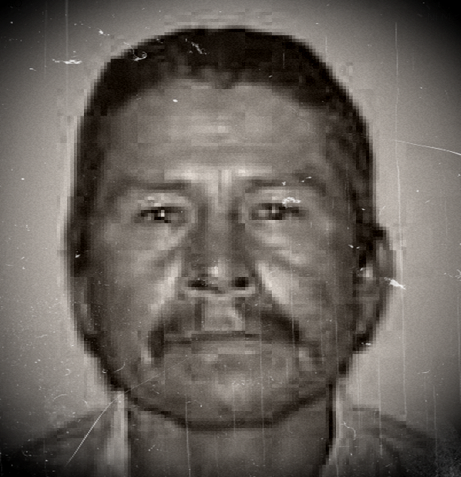
What might initially have appeared to be an unexplained death soon became something considerably more disturbing: an autopsy determined that the victim had died as the result of foul play.
Demetrio Bautista’s body was found in his Toyota Tundra in a parking area associated with the Vista Transit Center, in the 100 block of Olive Avenue in downtown Vista, a North San Diego County community between Oceanside and Escondido. Today the transit center serves both North County Transit District BREEZE buses and the SPRINTER rail line.
The location is an important element in the case. Unlike an isolated roadside or private residence, Demetrio was found at a public transportation hub, a place where people routinely arrive and depart by bus, train, car and on foot.
In fact, the SPRINTER system itself was still relatively new when Demetrio was killed. Regular SPRINTER service had begun in March 2008, only a little more than a year before his death. The Vista station served as one of the system’s principal transfer points between trains and buses.
That makes the enduring mystery surrounding Demetrio’s murder all the more striking. Someone managed to kill a man, or leave the body of a murdered man, in his pickup truck at or near a functioning transit center in the middle of the afternoon without producing, at least publicly, the evidence investigators needed to identify the killer.
Authorities have never said whether Bautista was actually killed inside the truck or whether his body was placed there afterward. And exactly why Demetrio’s daughter approached his truck has not been publicly explained. Authorities have not said whether she had expected to meet him there, whether she simply happened to recognize his vehicle while passing through the station, or whether there was some other reason she knew where he would be.
The Sheriff’s Department has been particularly guarded about how the victim died. Officials have said that an autopsy determined his death was the result of foul play, and the Sheriff’s Homicide Detail subsequently took responsibility for the investigation. But authorities have not publicly disclosed his precise cause of death.
Other seemingly basic questions also remain unanswered in the public record. It has not been disclosed whether there were signs of a struggle in the Tundra, whether anything belonging to Demetrio was missing, whether robbery was considered a possibility, or whether investigators found physical evidence that might eventually be tested using newer forensic technology.
Further, investigators have not released a detailed timeline of his movements that day. There is no publicly available account establishing when he arrived at the transit center, whom he may have met, when he was last known to be alive or how long he had been inside the pickup before he was found. Likewise, authorities have not announced that anyone saw Demetrio in an argument or confrontation before his death.
The Sheriff’s Department says investigators conducted an extensive investigation and attempted to determine a motive. Despite those efforts, they were unable to develop any viable suspects. The motive for the murder remains unknown.
Eventually, the investigation became a cold case, and it remains such as of September 2026.

