
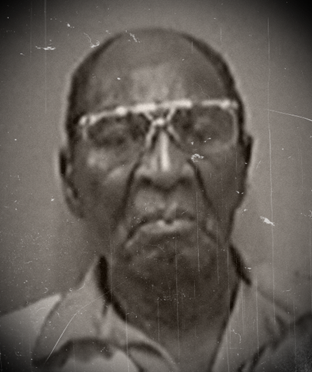
North E. Woodall was born in Mississippi in 1924 and grew up under circumstances far removed from the distinguished military career that awaited him. According to accounts later cited by the Dayton Daily News, he was the grandson of a formerly enslaved person. His son later recalled that North was largely self-educated and learned to read and write as he grew older.
North entered the Army after being drafted and ultimately made the military his career. He served during three of the defining American conflicts of the twentieth century: World War II, the Korean War and the Vietnam War. He became a paratrooper and served in Army Special Forces—the Green Berets—eventually reaching the senior enlisted rank of sergeant major. Contemporary accounts identify his retirement rank as E-9.
North completed nearly 1,500 parachute jumps during his career. His decorations included two Silver Stars, one of the United States military’s highest awards for valor in combat.
He was also a husband and the father of six children.
Just weeks before his death, the then-eighty-five-year-old North had participated in an Honor Flight trip to Washington, D.C., visiting memorials dedicated to veterans and the wars in which he had served. He returned from that trip in late June 2009. A month later, he was murdered.
By 2009, North’s wife had been dead for approximately two years, and he was living alone in his longtime home on Walton Avenue in West Dayton. Family, friends and neighbors nevertheless remained part of his life and regularly checked on him.
North was particularly well known for helping people manage their money. At least thirteen people reportedly trusted him to act as their Social Security payee. North would receive or cash their checks, safeguard the money and distribute it gradually so that the recipients would not spend everything before their next payment arrived.
It was an arrangement born from trust. Unfortunately, it also meant that people in the neighborhood knew North sometimes had significant amounts of cash in his possession.
Investigators later learned that he commonly carried money in his left front pants pocket. He also kept cash in a box inside a bedroom dresser drawer. The existence and location of the money apparently were not secret. Police would eventually come to regard that knowledge as one of the most important elements of the murder.
North spent part of Monday, July 27th, 2009 with members of his family. Investigators later reconstructed the evening closely enough to establish a relatively small window during which the fatal home invasion probably occurred. Family members were with North until approximately nine thirty p.m. A neighbor subsequently had a view of the house for roughly another twenty minutes while watering flowers outside.
By approximately eleven thirty p.m., something was clearly wrong. A woman who went to check on North noticed that his front door had been damaged. The door appeared to have been forced or kicked open.
She entered the residence and discovered North lying on the living-room floor. He had suffered severe injuries to his head and face, and was pronounced dead. The Montgomery County Coroner’s Office determined that he died from blunt-force trauma to the head.
Investigators estimated that the attack probably occurred sometime between approximately ten and eleven thirty that night. Exactly what happened during those minutes remains unknown.
Authorities initially said they could not determine whether North had been deliberately struck in the head or whether he suffered the fatal injury by falling and hitting his head during a struggle with the intruder. No weapon was conclusively identified as having been brought to the scene.
The condition of the house immediately raised suspicions that the crime was not a random burglary. Much of the residence was undisturbed. Instead, the evidence concentrated around the places where North was known to keep money. His left front pants pocket—the pocket in which he routinely carried cash—had been pulled outward. In the bedroom, the particular dresser drawer associated with his stored money had also been pulled open. Investigators found little comparable disturbance elsewhere in the residence.
To detectives, that pattern was significant. It suggested the intruder had not entered the house and begun searching randomly for valuables. Someone apparently knew that North possessed cash and may even have known precisely where he kept it.
Police also noted the significance of the forced entry. Whoever arrived that night apparently did not simply knock and gain admission through North’s trust. The damaged door indicated that the offender forced a way inside.
One possibility considered by detectives was that someone familiar with North Woodall’s financial arrangements supplied information to another person who actually committed the home invasion. Investigators have never publicly established that scenario as fact, however.
The killer did leave evidence behind. Investigators recovered fingerprints as well as DNA evidence from North’s home. Some prints could not be matched to a known person, and for years the available forensic evidence failed to produce the breakthrough detectives needed.
There was also an unusual development the following year. In 2010, North’s driver’s license turned up in a parking lot in Xenia, approximately fifteen miles east of Dayton. Investigators examined it, but according to police, nothing recovered from the license moved the investigation forward. Police have not publicly established that the person who discarded it was necessarily the killer.
Despite interviews, forensic evidence and an apparent motive, the investigation stalled, but the case never completely disappeared from Dayton police files. When the department expanded its cold case unit years later, North Woodall’s homicide became one of the investigations detectives returned to. Retired homicide investigators Gary White and Doyle Burke were among those who began reviewing old evidence and asking people with information to reconsider coming forward.
In November 2024, Ohio Attorney General Dave Yost announced that the Ohio Bureau of Criminal Investigation’s Cold Case Unit would formally assist the Dayton Police Department with a new review of North Woodall’s murder. Investigators again examined evidence collected inside the house, while DNA associated with the crime scene was submitted to the FBI’s Combined DNA Index System, commonly known as CODIS, in hopes of obtaining a match.
But as of this writing, the murder of North Woodall remains unresolved.

