
On Halloween night in 2009, more than a hundred young people crowded into a house in Columbia, Maryland, for a party that would continue into the early morning hours of November 1st. The party took place at a residence in the 11500 block of Manorstone Lane that had been rented for the event and admission was apparently open to members of the public who paid to enter.
It was not the first large gathering at the property to attract police attention. Authorities had responded to another party at the house several months earlier, in June 2009, following complaints about noise or disorderly conduct. That earlier incident would eventually become unexpectedly important to the murder investigation.
As Halloween night progressed into November 1st, an argument reportedly developed among some of the people attending the party. Police spokeswoman Sherry Llewellyn told reporters shortly after the killing that investigators believed the shooting had been the culmination of an argument that had been building during the evening.
Exactly who participated in that confrontation, and how it escalated into gunfire, has never been conclusively established in court.
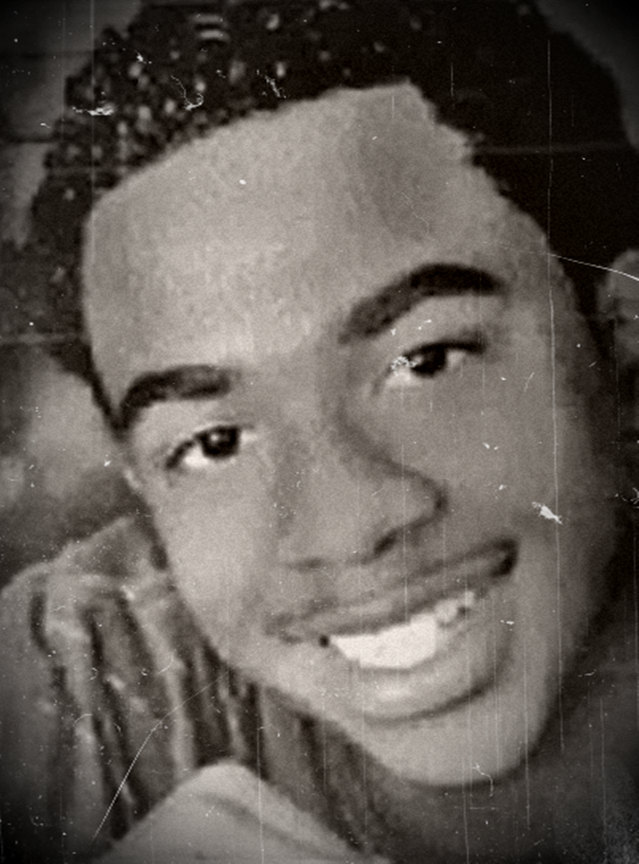
At approximately one fifteen a.m. on November 1st, Howard County police began receiving calls from people at the party reporting that shots had been fired.
When officers reached Manorstone Lane, they encountered an unusually complicated crime scene. More than a hundred people had been inside or around the house, creating an enormous pool of witnesses who had to be identified and interviewed while officers simultaneously attempted to preserve physical evidence.
Nineteen-year-old Aaron Thomas Brice was found outside the residence, in or near the driveway. He had been shot and was pronounced dead at the scene. More than twenty spent shell casings were reportedly recovered near the area where he was found.
Inside the house, officers found a second gunshot victim: twenty-two-year-old Nathaniel Quick of Columbia. Nathaniel was located in the basement and rushed to the University of Maryland Shock Trauma Center in Baltimore in critical condition.
Two additional young men were taken to Howard County General Hospital with injuries associated with an altercation around the time of the shooting. Police said those injuries were not believed to have been caused by the gunfire.
The relationship between the two gunshot victims was also complicated by where they had been found. Aaron was outside in the driveway, while Nathaniel was inside the basement. According to a later CBS Baltimore report, investigators concluded that a bullet had traveled through part of the structure before striking Nathaniel. He survived but was left paralyzed.
With dozens upon dozens of people in and around the residence, it seemed improbable that a shooting involving so many rounds could go unwitnessed. Yet identifying who had actually fired the shots proved far more difficult.
Investigators initially appeared to make rapid progress. Police arrested twenty-two-year-old Devon O’Brian Dixon of Elkridge, and charged him with Aaron Brice’s murder and the attempted murder of Nathaniel Quick. A second man, Dean Edward Schroyer Jr., was accused of being an accessory after the fact and also faced a drug-related charge. Contemporary reporting described Dixon and Schroyer as living at the same Elkridge residence.
The case against the men initially appeared significant enough to produce serious criminal charges. A witness had identified suspects, and investigators had recovered a firearm they believed might have been connected to the crime.
But forensic testing created a major problem. The gun did not match the weapon that had fired the ammunition recovered from the murder scene.
Police also encountered difficulties with the eyewitness evidence. Howard County police later explained that the witness’s account implicating the men could not be sufficiently supported by statements from other people who had been at the party. The murder and attempted-murder charges were dropped.
Although the homicide charges didn’t stick, the investigation produced evidence of unrelated criminal activity. On November 1st, only hours after Aaron Brice was killed, Howard County police executed a search warrant at the Elkridge trailer where Schroyer lived and where Dixon had also been staying.
Federal prosecutors later said officers discovered nearly two pounds of marijuana, drug-packaging materials, a digital scale, ammunition, and a loaded Glock Model 23 .40-caliber handgun in Schroyer’s bedroom.
In Dixon’s room, investigators recovered more than six ounces of marijuana, .380-caliber ammunition, another digital scale and a loaded 12-gauge shotgun hidden in the ceiling ventilation system. Because Dixon had previous felony convictions, he was legally prohibited from possessing a firearm.
Federal authorities also disclosed an intriguing detail. Earlier on November 1st, Dixon had sent a text message to a friend acknowledging that he possessed a firearm and asking whether he should bring it to a party the friend was attending.
Despite how suspicious such evidence might have appeared in the immediate aftermath of a fatal party shooting, suspicion was not enough. The physical evidence still had to connect a particular gun and shooter to Aaron Brice’s murder. It did not.
Dixon and Schroyer ultimately pleaded guilty to federal drug offenses arising from the investigation. Dixon additionally pleaded guilty to being a felon in possession of a firearm. Those convictions, however, did not establish that either man had killed Aaron Brice.
Then investigators discovered one of the case’s most unusual clues. The Manorstone Lane residence had hosted another large party in June 2009, approximately four months before Brice was killed. Police had been called to the house on that occasion because of disorderly behavior. During the incident, according to investigators, someone leaving the property fired a gun into the air.
Police recovered evidence from that shooting. When ballistics testing was later performed, investigators discovered that the ammunition from the June incident matched the weapon used in Aaron Brice’s murder on November 1st.
The significance was obvious. The gun that killed Aaron Brice apparently had been present at, or at least associated with someone present at, the same Manorstone Lane property months before his death.
The drug evidence discovered during the subsequent search might make it tempting to assume Aaron’s killing resulted from drug trafficking. Investigators, however, have cautioned against that conclusion. Police told reporters that they did not believe Aaron Brice’s murder was connected to drugs or gang activity.
Contemporary accounts instead suggested that an argument at the party escalated before the shooting. Precisely what the argument concerned, who was involved, and whether Aaron himself was an intended target have never been publicly established with certainty.
Years passed without another murder prosecution. Howard County police continued periodically to publicize the case, highlighting it as one of the jurisdiction’s unresolved homicides. In 2016, seven years after the murder, police again appealed to the public for help identifying Aaron Brice’s killer.
As of 2026, Howard County police still officially list Aaron Thomas Brice’s homicide as an unsolved cold case.

