
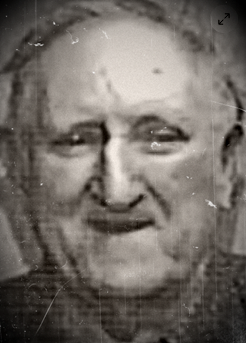
James J. Carver, known as “Bunk,” had spent virtually his entire life in the Seneca area of South Carolina’s Oconee County. Born in 1927, James was a native of Seneca and one of nine children born to William and Dora Long Carver. During his working life, he was employed in the textile industry at La France before becoming an owner and operator of mobile home parks. He also raised cattle.
By 2010, James was eighty-two years old. He was married to Emily I. Carver and had a large extended family. His surviving children included sons Wayne and Michael and daughter Kathy Alexander, along with grandchildren and great-grandchildren. Another son, Larry Wallace Carver, had died before him.
James lived on James Carver Road outside Seneca, in an area just off South Carolina Highway 59. The road itself appears in Oconee County’s official road directory, placing it in the rural area south of Seneca.
It was there, sometime during a roughly two-day period in May 2010, that James encountered the person, or possibly persons, who would kill him.
The exact date of James Carver’s murder has never been definitively established in the public record. The Oconee County Sheriff’s Office currently lists the case under May 11th, 2010, but investigators have explained that Carver was killed sometime between May 11th and May 13th. Precisely when during that interval the killer arrived remains unknown, and so does the identity of the last person known to have seen James alive.
James Carver was found dead in the bathroom of his home. He had been subjected to a severe beating, sustaining injuries primarily to his head and upper torso. A later local newspaper account reported that his death had been ruled a homicide caused by blunt-force trauma to the head. Whatever object was used to inflict those injuries has not been publicly identified. Nor have investigators publicly said whether a suspected murder weapon was recovered.
What they have emphasized instead is the extraordinary degree of violence. Greg Reed, then a captain in the Oconee County Sheriff’s Office Criminal Investigations Division, later described the attack as one of the worst and most brutal beatings he had encountered during his career.
The sheriff’s office has also stated that evidence connected to the crime was found in the kitchen. Public accounts do not describe that evidence in detail, and investigators have never publicly provided a complete reconstruction of how the attack moved through the residence.
Perhaps the most important physical clue was what investigators did not find: there were no indications that the killer had forced a way into the house. That detail took on particular importance because, according to investigators, James Carver normally kept his doors locked. Investigators consequently believed that James probably opened the door himself and admitted whoever killed him.
It did not necessarily mean James was close to his killer. A familiar delivery person, tradesperson, casual acquaintance, business contact or someone offering a convincing explanation for being there might also have been admitted. But investigators have repeatedly said they believe James knew his assailant or assailants.
Combined with the ferocity of the beating, the absence of forced entry helped lead authorities toward the theory that the crime was personal. James Carver was an eighty-two-year-old man. Merely overpowering him would not ordinarily have required the level of violence used inside that house. Instead, the killer continued striking him. Police have never disclosed exactly how many blows the victim suffered, but their descriptions make clear that the injuries were substantially beyond what investigators would have expected from a simple confrontation.
That raised the possibility that emotion played a role. Investigators have leaned toward a personal motive because of the severity of the beating, although that remains an investigative theory rather than an established explanation.
There is, however, also another possible motive: money. Investigators noticed something unusual in one of the bedrooms; something appeared to have been removed from underneath a bed. Exactly what had been stored there, and what authorities believed might have been missing, has never been publicly revealed.
Robbery and a personal motive are not mutually exclusive, either. Someone acquainted with James Carver could have known both his habits and where he kept valuables. A dispute involving money could also account for both theft and an emotionally charged attack.
Investigators have not publicly committed themselves to a single motive. What they have said is that James appears to have been specifically targeted.
As the months passed without an arrest, James Carver’s murder joined a collection of unresolved killings investigated by the Oconee County Sheriff’s Office.
The department did not abandon the case. In 2013, newly elected Sheriff Mike Crenshaw’s administration launched a renewed effort to publicize Oconee County’s cold cases. The initiative included plans for a dedicated cold-case unit and the possible involvement of retired law-enforcement officers from local, state and federal agencies, bringing new investigators and fresh perspectives to older files. James Carver’s May 2010 homicide was specifically listed among the cases the sheriff’s office hoped to resolve.
Three years later, in February 2016, the sheriff’s office again publicly appealed for information concerning nine unresolved cases, including James Carver’s. The murder was again formally publicized by the sheriff’s office in 2020. By then a decade had passed.
As of 2026, the Oconee County Sheriff’s Office and Crime Stoppers of Oconee County continue to list the murder of James J. “Bunk” Carver as unsolved and continue to request information from the public.

