
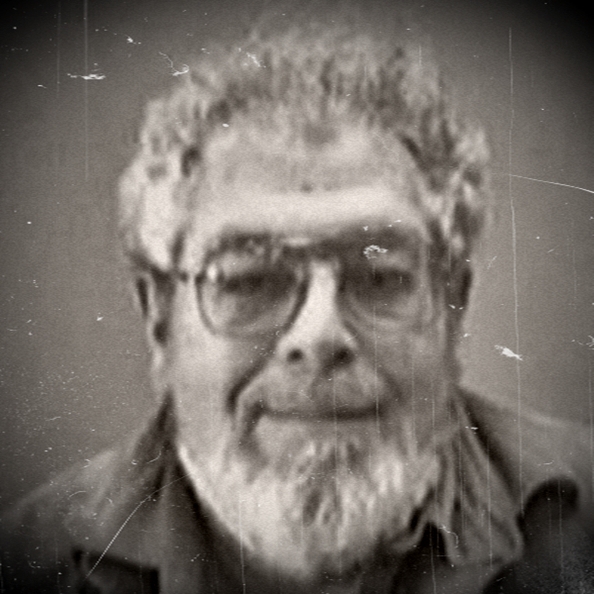
Robert Michael Yoder, better known as Mike, was born on January 13th, 1954. By 2010, he was living with his wife in Perry Township in Hocking County, near the small village of Laurelville, Ohio. His home stood on Wolfe Road, in the rural countryside northwest of the Hocking Hills.
Although he lived in Hocking County, much of Mike’s business life was centered in neighboring Ross County. He owned The Potting Shed, a greenhouse on Pleasant Valley Road in the Chillicothe area. He also owned several rental properties in Ross County. The combination made him known beyond his immediate neighborhood and meant that, like many small-business owners and landlords, he regularly came into contact with customers, tenants, workers and other members of the public.
There is little publicly available information about Mike’s private life, and the surviving official records concentrate almost entirely on the circumstances of his death. What investigators did emphasize, however, was his reputation. When the case received renewed attention in 2013, Hocking County Detective Ed Downs said that during his investigation he had been unable to find anyone who seemed to dislike Mike Yoder. That observation became important because it made the usual explanations for a homicide much harder to identify.
April 11th, 2010 was a Sunday. At some point that morning Mike’s wife, Dianne, left the residence to attend church. Mike remained behind. According to the Ohio Attorney General’s cold-case database, investigators eventually narrowed the time of Mike’s death to between approximately ten and eleven a.m.
Precisely what Mike was doing immediately before the attack has never been publicly detailed. Nor have authorities released a complete reconstruction of how the killer arrived, whether Mike knew the person, or how long the encounter lasted. What is known is that violence occurred outside or in the immediate vicinity of his Wolfe Road home.
Mike suffered severe blunt-force injuries to his head. Authorities would later describe the trauma as massive. The weapon responsible has not been publicly identified in the official summaries of the case. By the time the assailant left, Mike Yoder was dead.
At approximately one p.m., Dianne Yoder returned home from church. She found her husband lying outside the residence, reportedly in the driveway. Law-enforcement officers were called to the property.
The Hocking County Coroner determined that the fifty-six-year-old had died from blunt-force trauma to the head, and his death was classified as a homicide. It was Hocking County’s first homicide of 2010. For investigators, the discovery immediately presented a difficult question: Why would somebody violently kill a businessman outside his rural home on a Sunday morning?
Within days, authorities appeared hopeful that the answer might come quickly. On April 14th, WHIZ reported that Hocking County Sheriff Lanny North said the investigation remained active and that he hoped a suspect would soon be taken into custody.
The most important conclusion investigators eventually made concerned motive. Authorities believe that burglary or theft was behind Mike Yoder’s murder. That theory raises several possibilities, but the publicly released evidence is too limited to establish which, if any, is correct.
It is not known from official public accounts whether Mike surprised a burglar already on his property, whether the offender approached him first under some pretext, or whether the person responsible knew enough about Mike to deliberately choose his home as a target. Authorities have likewise not publicly specified exactly what was missing from the residence.
If theft was indeed the motive, the homicide may not have been the original purpose of the visit. An intruder discovered unexpectedly by a homeowner can turn a property crime into a violent confrontation in seconds. Conversely, the offender could have arrived prepared to use violence if challenged. Investigators have never publicly said which scenario they favor.
Days became months, and months became years, and an arrest never came. The case instead began its long transition from active homicide investigation to cold case. Mike Yoder’s homicide joined thousands of other Ohio killings in which investigators knew that a crime had occurred but could not establish the identity of the perpetrator strongly enough to bring a case before a court.
Then, in 2012, Ohio officials began an effort to make such cases more visible. The Ohio Attorney General’s Unsolved Homicides Initiative, established in September of that year, was intended to compile unsolved killings from law-enforcement agencies throughout the state into a searchable database. Officials hoped that bringing cases together would generate new tips, allow investigators from different jurisdictions to compare information and keep forgotten cases in public view.
At the time Yoder’s case was highlighted in 2013, officials estimated that Ohio had approximately 5,000 unsolved homicides. More than 1,300 cases had already been submitted to the state database.
On May 29th, 2013, more than three years after Mike Yoder’s death, the Hocking County Sheriff’s Office and then-Ohio Attorney General Mike DeWine publicly renewed the effort to solve the crime. Authorities announced a $5,000 reward for information leading to the arrest and conviction of the person or people responsible.
More than sixteen years later, however, the murder of Robert “Mike” Yoder remains unsolved.

