
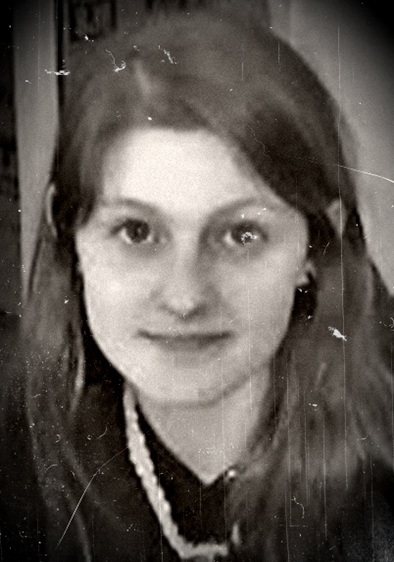
Fifteen-year-old Chelsea Johnson lived in Fairfield, a suburban community north of Cincinnati, Ohio, and attended Options Academy. She was a sophomore who earned good grades, and hoped to become a veterinarian. She enjoyed fishing and camping, reading, and texting her friends, and relatives remembered her as an affectionate teenager who sometimes left notes for her mother simply to tell her that she loved her.
Sunday, April 15th, 2012 apparently began as an ordinary day. Chelsea left home sometime that afternoon. Early reports said she had told her mother she was going to the store. Surveillance footage obtained during the investigation reportedly showed Chelsea at a nearby convenience store.
A store manager later told reporters that Chelsea had been there at approximately twelve thirty p.m. with a man he described as her neighbor. According to the manager, the man bought a prepaid telephone card before the two left the store. That footage became one of the pieces investigators used in trying to reconstruct Chelsea’s final hours.
Another, potentially far more important, piece of evidence was found in her phone records. Police subsequently learned that Chelsea had exchanged messages that afternoon with twenty-four-year-old George Donald Davis II, a man who knew Chelsea’s family and had previously lived nearby.
According to testimony by Fairfield police Detective Mike Woodall, Chelsea and Davis exchanged messages for roughly two hours, between approximately three thirty and five thirty p.m. Investigators said the conversation concerned Davis providing Chelsea with heroin and requesting sexual activity in return.
When Chelsea did not return home from the store, her family began trying to locate her. Her mother, Vicky Fible, contacted Chelsea’s friends, attempting to determine where her daughter might have gone and whether anyone had heard from her. The search continued into the following day.
At approximately nine a.m. on Monday, April 16th, Chelsea was reported missing to Fairfield police, while family members and friends continued looking for her.
Roughly nine hours later, the search reached the area around the Creekside Village of Fairfield apartment complex, near River Road and Pleasant Avenue. The complex was undergoing extensive renovations at the time.
At approximately six p.m., a family friend searching for Chelsea discovered her body near a creek behind the apartments.
Early reporting indicated that her cellphone was also recovered from the creek. An autopsy established that she had been stabbed to death. The Ohio Attorney General’s Office records April 15th, 2012, the previous day, as Chelsea’s homicide date.
Fairfield police began interviewing people who might have known where Chelsea had been during her final hours. Within days, investigators acknowledged that several people had been questioned. They also emphasized that they had found no evidence connecting Chelsea’s killing with another troubling Fairfield case: the disappearance of twenty-two-year-old Katelyn Markham, who had vanished from her home in August 2011.
Investigators had several potentially important pieces of evidence: the surveillance footage, Chelsea’s phone, her electronic communications and the circumstances surrounding the location where her body was discovered. But publicly, there was no immediate arrest.
Attention increasingly turned toward George Davis because of the messages exchanged with Chelsea on the afternoon she disappeared. Police stressed an important distinction: Davis was initially considered a person of interest, not someone who had been charged with Chelsea’s murder.
Detectives alleged that Davis had offered Chelsea heroin in exchange for sexual activity. The evidence surrounding those communications was substantial enough to generate a separate criminal prosecution.
In September 2012, Davis was indicted on charges that included heroin trafficking, importuning and compelling prostitution. Contemporary reports stated that he had been questioned about Chelsea’s death but had not been named as a murder suspect. His relatives publicly maintained that although Davis had his own legal problems, he had nothing to do with Chelsea’s killing.
Davis ultimately pleaded guilty to offenses associated with the communications and proposed exchange involving Chelsea and served prison time. Those convictions, however, should not be confused with a conviction for Chelsea’s homicide. Davis was never convicted of killing her.
As months became years, Chelsea’s family repeatedly appealed for information. They held vigils and memorial events and publicly urged anyone who knew what had happened on April 15th to talk to investigators.
By April 2014, on the second anniversary of Chelsea’s death, Fairfield police made an extraordinary public statement. Police Officer Doug Day told WLWT that investigators were “very confident” they knew who had killed Chelsea. Police did not publicly identify the individual they believed was responsible.
For Chelsea’s relatives, the declaration may have sounded like the breakthrough they had been waiting for. But there was a serious problem. Knowing, or believing one knows, who committed a crime is not the same thing as possessing enough admissible evidence to prove that allegation beyond a reasonable doubt.
Butler County Prosecutor Mike Gmoser said the case was not yet ready for prosecution. According to reports at the time, his position was that investigators still had additional work to do before prosecutors could responsibly take the matter before a grand jury.
Eventually, evidence in Chelsea’s case was presented to a Butler County grand jury. In March 2015, nine witnesses testified over the course of two days. The grand jury returned no indictment in Chelsea’s murder, and no homicide charge followed.
Fairfield police and the Butler County Sheriff’s Office continued working the homicide, and in November 2016 authorities announced that investigators had again narrowed their attention to a person of interest.
The sheriff’s office did not publicly identify that person. Officials said the individual had long been viewed as a likely person of interest in the case and appealed again for information from the public.
The announcement briefly renewed hope for Chelsea’s family. Yet once again, no homicide indictment followed, and the case went fallow once again.
As of September 2026, Chelsea Johnson’s murder remains officially unsolved.

