
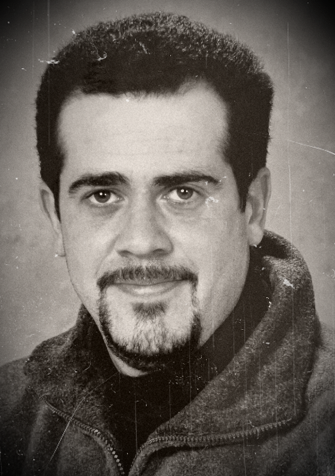
On the night of March 15th, 2012, forty-three-year-old Mario Imbesi left a family gathering in Port Chester, New York, and began the drive back to his apartment in Danbury, Connecticut. He had been celebrating his mother’s birthday and reportedly left sometime around ten fifteen or ten thirty p.m., telling his family that he needed to get home because he had work the following morning. He took some leftover birthday cake with him, intending to bring it to work the next day. It was the last time his family would see him alive.
Mario, whose full name was Mariano A. Imbesi, had been born on February 17th, 1969, to Domenico and Francesca Imbesi. Raised in Port Chester, he graduated from Port Chester High School in 1987 and later worked as a plant manager for ATP Industries in nearby Bethel, Connecticut. He was married and had two daughters, Brianna and Alessandra. By 2012, he had been living for several years in a second-floor apartment at the Farview Terrace condominium complex on Farview Avenue in Danbury.
According to investigators, Mario returned to his apartment late on March 15th. At approximately eleven twenty p.m., another resident reportedly heard a thud followed by the sounds of a short struggle coming from his apartment. The witness subsequently saw two men, described as white and appearing to be around thirty years old, walking away from the area. One of them was carrying what appeared to be a medium-sized box concealed beneath a white garbage bag. Police would later come to believe that the object was a safe that had been kept inside Mario’s residence.
Mario never arrived at work on Friday, March 16th. Concerned by his absence, a coworker went to Farview Terrace and asked the building manager to open his apartment. Mario was found face down on the floor. Police were called shortly before twelve forty p.m., and he was pronounced dead at the scene. An autopsy performed by the Connecticut Office of the Chief Medical Examiner determined that Mario had died from blunt-force trauma to the head, and his death was ruled a homicide.
Evidence suggested that the attack may have taken place almost immediately after Mario arrived home. One report noted that he was found still holding a set of keys in his right hand. Police believed he had been forced through the doorway and assaulted with what investigators described in a search warrant as a pipe-like object. No definitive murder weapon was identified at the scene, although investigators seized several objects for examination, including a hammer and a broken lamp bearing a reddish stain.
The apparent disappearance of Mario’s safe quickly became important to the investigation. Police believed it may have contained jewelry, paperwork and prescription drugs. Detectives recovered $261 in cash, a bottle of oxycodone and other unidentified pills from the apartment, but the safe itself was missing. The witness account of a man leaving the building with a box-shaped object therefore raised the possibility that robbery had played a role in the killing. Police have confirmed that a robbery occurred, but have stopped short of identifying robbery as the proven motive for the homicide.
Within weeks, investigators had developed a person of interest. Search warrant documents made public in April 2012 focused attention on a New Canaan man whom police said had regularly purchased narcotics from Mario. Because the man was never charged with Mario’s murder, contemporary news organizations did not publicly identify him. Investigators found that he and Imbesi had exchanged more than 500 telephone calls and text messages during the six weeks before the killing. According to the warrant affidavit, some of those communications concerned drug transactions.
The investigation also uncovered several circumstances that detectives considered suspicious. The day after Mario was killed, the New Canaan man reportedly pawned gold jewelry resembling jewelry that Mario was known to possess. Investigators were never able to establish publicly that the pawned jewelry actually belonged to Mario. Residents had also reported seeing a black pickup truck near Farview Terrace on the night of the murder, and its description was said to resemble a vehicle in which the man had previously been seen while buying drugs from Mario. Cellphone information further suggested that a phone connected to the man had been near Mario’s apartment several days before the murder, around the time an exterior door lock at the building was apparently damaged. Despite those circumstances, no charges resulted.
The case contained another unusual element that initially prompted speculation about a very different motive. Mario had previously appeared as a federal grand jury witness in connection with the murder of Springfield, Massachusetts, organized crime figure Adolfo “Big Al” Bruno, a captain in the Genovese crime family who was shot to death in 2003. Imbesi had provided testimony concerning Frank Roche, the gunman who killed Bruno, and Mario’s name later surfaced in federal court records connected to prosecutions of men associated with organized crime.
Given that history, speculation arose almost immediately that Mario’s death might have been retaliation connected to organized crime. Danbury police did investigate the possibility, but no evidence was publicly disclosed linking his killing to his earlier grand jury testimony. More recently, investigators have said the organized-crime possibility was examined without producing a suspect, although they have not declared the theory permanently closed.
Detectives also examined Mario’s movements immediately before his death. Investigators determined that he had flown to Florida on March 14th and returned in time to attend his mother’s birthday gathering the following evening. Police recovered several cellphones, a JetBlue boarding pass and luggage connected to the trip. His sister later recalled that Imbesi had described the short Florida visit simply as being “for business,” without explaining what kind of business he meant. There has been no public indication that authorities established a direct connection between the trip and his killing.
Despite the numerous leads, witness accounts, telephone records and physical evidence gathered during the investigation, the case gradually went cold. More than a decade later, however, the investigation began moving again. Mario’s sister and his eldest daughter, Brianna—who was only nine when her father was murdered—continued pressing authorities for answers. New detectives eventually reviewed the evidence, and Detective Justin Williams was assigned to the cold case in January 2024. Advances in forensic technology allowed evidence from the original investigation, particularly DNA-related material, to be examined using techniques that had not been available in 2012.
By April 2026, Danbury police revealed that the renewed forensic work had produced what Williams described as promising new investigative leads. Police were looking into additional persons of interest, and Williams said one individual bore a resemblance to a composite sketch created in 2012 from a witness’s description of one of the two men seen near Mario’s apartment on the night of the killing. Danbury State’s Attorney David Applegate likewise described the case as viable and said extensive laboratory testing had opened new avenues for investigators.
As of the most recent publicly reported update in April 2026, no one had been charged with Mario Imbesi’s murder.

