
Forty-four-year-old businessman Pareshkumar D. “Paresh” Patel was born in India and came to the United States in 1991, joining his wife in the Richmond, Virginia area. Indian news reports identified his hometown as Amod, in the Petlad area of Gujarat’s Anand district. By 2012, he had spent roughly two decades establishing a life in central Virginia.
He was married to his wife, Loma, and was the father of two teenagers. Relatives told NBC12 that Paresh had earned a master’s degree in electronics and owned more than one gas station in the Richmond area. Yet the picture of him that emerged after his death was defined less by his businesses than by his family, his humor and his religious life.
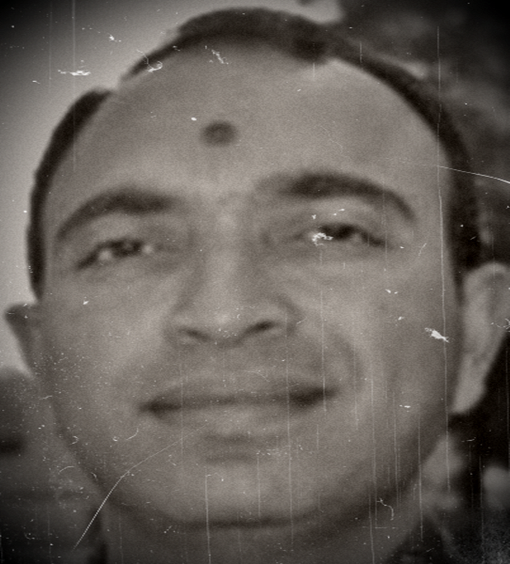
Paresh was deeply involved with the BAPS Swaminarayan Hindu community in Chesterfield County and served as a chapter leader at the temple. Friends described him as religious, friendly and straightforward. Customers at the Raceway remembered a generous store owner who sometimes helped people who did not have enough money for gas.
His brother-in-law Rajendra Patel remembered something else: Paresh’s sense of humor. He joked that Paresh was in the wrong line of work and should have become a stand-up comedian. The evening before the abduction, the two men had taken a walk through their neighborhood. Paresh appeared normal. There was nothing, according to his family, suggesting that he was frightened or expecting trouble.
Another relative recalled walking with Paresh until approximately eight twenty-five on Saturday evening, September 15th, 2012. It was the last time the family knew of anyone close to him seeing him before he left for work the following morning.
Paresh’s morning routine may ultimately have made him vulnerable. Investigators later learned that Paresh generally opened the Raceway himself and did so at roughly the same time each day. Richmond Police Detective Victoria Griffith-Matko described it as a routine that would have been obvious to anyone watching the business. On September 16th, Patel arrived shortly before six a.m., but never opened the store.
A witness saw two men confront Paresh almost as soon as he got out of his vehicle. The FBI later described the pair as wearing hoodies and said they shoved him into a van before speeding away. Early reports variously described the vehicle as a dark van, SUV or minivan.
Police were called and immediately treated the disappearance as an abduction rather than an ordinary missing-person case. Paresh’s vehicle was still sitting outside the Raceway.
Chesterfield Police Lieutenant Randy Horowitz emphasized how unusual the crime was, saying officers had not dealt with an abduction of this type in the county for years. The FBI joined Chesterfield investigators by that evening.
The sudden disappearance was baffling to Paresh’s family. Relatives told reporters that they knew of no serious problems with customers, no enemies and no apparent difficulties at home. His friends at the BAPS temple were equally bewildered.
On Monday evening, September 17th, members of Richmond’s Indian community gathered at the temple to pray for Paresh’s safe return. A friend, Amul Desai, said Paresh’s absence from the temple had immediately been noticeable because he attended regularly. Another acquaintance described him as an exceptionally religious man. At that point, his family was still hoping the kidnapping would end with Paresh coming home.
During the first several days, authorities released very little about what they were finding. A September 19th report by WTVR journalist Mark Holmberg contained two particularly intriguing details. According to the report, there had been no demand for ransom, and Paresh’s cellphone had been located later on the day of his abduction near the Belmont exit of Chippenham Parkway. Police did not publicly explain how or when the phone got there.
The same report noted that Paresh had passed in front of a surveillance camera immediately before being abducted. At the time, police declined to release the recordings, reportedly because the footage was too grainy to provide useful identifying details.
A year later, however, surveillance images were made public. Investigators said the footage showed circumstances consistent with Paresh being specifically targeted. Major Crimes Captain Emmett Williams told NBC12 that the perpetrators grabbed Paresh by the arm and put him into a dark minivan, which then traveled south toward Chesterfield. In Williams’s assessment, it appeared that the abductors had gone there specifically for Paresh.
That possibility made the crime particularly disturbing. This did not look like a store robbery that unexpectedly escalated after the owner arrived. Paresh had not even opened the business. The cash drawer visible in the surveillance imagery was still open and empty because the store had not begun operating for the day.
There is an enormous blank space in the Paresh Patel case between approximately six a.m. on September 16th and the afternoon of September 20th. Police have never publicly reconstructed where Paresh was taken, where he was held, when he was killed or where the shooting occurred.
On Thursday, September 20th, a Richmond city employee was working near Ancarrow’s Landing on the city’s Southside when human remains were discovered. Richmond Police officially record the discovery at approximately three eighteen p.m. Contemporary news reports placed it closer to four p.m.
Ancarrow’s Landing sits beside the James River near the Richmond Slave Trail, behind the city’s wastewater treatment area and across the river from Rocketts Landing. Contemporary reports described the body as being in a grassy area near the trail and not far from the parking area. The location has limited road access, something investigators and journalists noted while examining how a killer might have brought a body there unnoticed. The remains were fully clothed and already decomposing.
Because Chesterfield County was investigating a recent abduction, Richmond authorities quickly contacted Chesterfield detectives, who came to the scene. FBI personnel also became involved as officials tried to determine whether the dead man could be Paresh Patel. The identification was confirmed through fingerprints the following day.
Initially, even the precise cause of Paresh’s death was uncertain. The condition of his body complicated the autopsy. A September 26 WTVR report said sources had indicated that decomposition prevented the medical examiner from immediately establishing a definitive cause. An indentation had reportedly been found on Paresh’s skull, prompting further examination by an anthropologist.
Within weeks, however, investigators had learned substantially more. On October 4th, NBC12 reported, citing police sources, that Paresh had been shot in the head. Detectives were still looking for the murder weapon and did not know where the shooting had occurred.
By April 2013, Richmond Police were prepared to state the finding more definitively. Detective Victoria Griffith-Matko told NBC12 that the medical examiner had confirmed multiple gunshot wounds to Paresh Patel’s head.
The crucial crime-scene question, however, remained unanswered. Police could not determine publicly whether Paresh had been murdered at Ancarrow’s Landing or killed somewhere else and transported there afterward. Without knowing where the shooting occurred, investigators lacked something homicide detectives normally depend heavily upon: a confirmed murder scene.
One circumstance surrounding Paresh’s death inevitably attracted attention. At the time he was murdered, Paresh was involved in a civil business lawsuit that was approaching trial. NBC12 reported that the litigation sought close to $1 million and that Chesterfield Police were aware of it, although officials would not discuss whether investigators had interviewed the opposing parties.
Contemporary reporting identified the dispute as involving an ice-cream kiosk Paresh had operated at Chesterfield Towne Center through a company called Pramukh Inc. Paresh alleged in court that employees associated with Hershey Creamery had interfered with the kiosk’s lease after learning that the business was profitable. The defendants disputed the claims.
The timing naturally made the lawsuit something investigators could not simply ignore. But there is an important distinction between an investigative avenue and evidence of involvement in murder.
No public law-enforcement statement has identified anyone involved in that civil litigation as a suspect in Paresh’s killing, and no reliable public evidence has established that the lawsuit caused his abduction. NBC12 reported only that police knew about the dispute and were examining the circumstances surrounding Paresh’s life and businesses.
Police examined other potential motives as well. When NBC12 revisited the case on its first anniversary in September 2013, Captain Emmett Williams revealed that investigators had considered the fact that a law-enforcement task force was then investigating cigarette trafficking along the Interstate corridor through Richmond, Chesterfield and Henrico County. Williams characterized it as one of numerous issues investigators had examined while trying to understand why Paresh might have been targeted. No criminal allegation against Paresh relating to such activity was announced.
Robbery, business disputes, a targeted kidnapping and other possibilities have all circulated around the case, but investigators have never publicly identified a proven motive. There was also no publicly confirmed explanation for why the abductors apparently needed to take Patel away from the gas station rather than rob him there.
Richmond Police ultimately became the lead homicide agency because Paresh’s body was found inside Richmond city limits. Chesterfield County Police, which had begun the kidnapping investigation, continued working alongside the city, while the FBI supplied federal investigative resources. Detectives from the agencies met repeatedly as they tried to combine evidence gathered in the two jurisdictions.
Investigators distributed hundreds of flyers and established traffic checkpoints in an attempt to find anyone who might have seen Paresh, the dark minivan or suspicious activity around Ancarrow’s Landing.
Despite the extensive effort, a year passed without an arrest. Captain Williams said in September 2013 that investigators were still making incremental progress and did not then regard the investigation as a cold case. He also expressed confidence that someone outside law enforcement knew who abducted Patel and why he ultimately ended up dead.
Years eventually passed. In September 2020, on the eighth anniversary of Paresh’s abduction, the FBI Richmond Division formally renewed attention to his murder through its Central Virginia Violent Crimes Task Force. The Bureau announced a reward of up to $15,000 for information leading to the arrest and conviction of the person or persons responsible. The FBI said renewed investigative work had moved the case forward significantly, although it did not disclose what new evidence had been developed.
As of this writing in October 2026, however, the murder of Pareshkumar D. Patel remains unresolved.

