
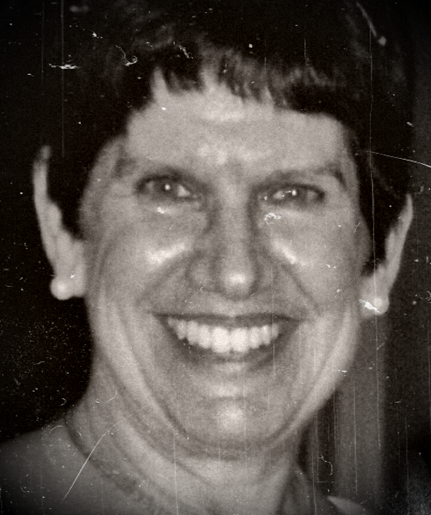
On May 9th, 2013, sixty-six-year-old Dawn Glanz was found dead on the bathroom floor of her home in Bowling Green, Ohio. There was blood around her head, but nothing else immediately suggested that a crime had occurred. There were no signs of forced entry, nothing appeared to have been stolen, and the circumstances seemed consistent with a tragic medical emergency. Her husband, Robert Brown, believed that she had suffered a stroke or heart attack, fallen, and struck her head.
The authorities initially agreed. Dawn’s death was treated as natural, and arrangements were made for her cremation.
But shortly before her body was to be cremated, a woman who had known Dawn for more than three decades contacted the Bowling Green police chief. She believed there was something terribly wrong with the circumstances of her friend’s death, and she wanted the police to investigate before it was too late.
That phone call changed everything. An autopsy revealed that Dawn had suffered a penetrating injury to the back of her head, apparently inflicted with a sharp instrument. The injury had triggered a fatal cardiac event. What had initially appeared to be a natural death was, in fact, a homicide.
The discovery launched a murder investigation that would uncover troubling questions about Dawn’s marriage, her substantial financial assets, and inconsistencies in her husband’s account of the final evening of her life.
Before her death became the subject of a homicide investigation, Dawn Glanz had built a respected academic career at Bowling Green State University, where she taught art history.
Her intellectual interests extended well beyond the classroom. She was particularly knowledgeable about American art and its relationship to history, culture, and national identity. Among her scholarly accomplishments was a book titled How the West Was Drawn: American Art and the Settling of the Frontier, which examined the role of nineteenth-century artwork in shaping perceptions of the American West.
She was remembered not only for her academic expertise but also for her personality. Friends described a warm, sociable woman with an enthusiasm for life and a genuine interest in other people.
One of those friends was Tyne Hyslop, who had known Dawn for approximately thirty-three years and also served as her financial adviser.
In a 2022 interview with Toledo television station 13abc, Hyslop remembered Dawn as vivacious, outgoing, and exceptionally kind. She was someone who had formed enduring friendships and earned the respect of colleagues and students.
Dawn retired from Bowling Green State University in 2003, but continued living in Bowling Green, maintaining the home on Kensington Boulevard where she would eventually be found dead.
Dawn had been in her mid-fifties when she married Robert A. Brown, commonly known as Bob, around 2001. According to accounts of the case, it was her first marriage.
Brown, who was slightly older than Dawn, had a son named Josh from an earlier relationship. Through the marriage, Dawn became Josh’s stepmother.
The couple maintained an arrangement that was somewhat unusual for a married pair: they lived in separate homes. Dawn continued residing at her property on Kensington Boulevard in Bowling Green, while Brown maintained a residence in Toledo, roughly twenty-five miles away. According to accounts of the investigation, Brown attributed the arrangement to his business interests and obligations in Toledo.
Living separately was not, by itself, evidence of marital trouble. However, the arrangement would later become important because it complicated investigators’ efforts to establish the couple’s movements and interactions during the hours preceding Dawn’s death.
Friends and colleagues also described concerns about changes they had observed in Dawn during the months before she died. Some believed that she had become increasingly isolated from activities and relationships that had previously been important to her. During the later investigation by the television program Cold Justice, acquaintances said they believed Brown had encouraged Dawn to distance herself from her church and to take medications.
These were observations and allegations from people who knew Dawn, rather than independently established findings of misconduct. Nevertheless, they contributed to concerns among her friends about the dynamics of her marriage.
The events of Wednesday, May 8th, 2013, would become central to the murder investigation. According to Brown’s account, he and Dawn had spent part of the evening together. He said they had obtained food from Five Guys, the hamburger restaurant chain, and eaten dinner at Dawn’s home. Brown maintained that he subsequently returned to Toledo, leaving Dawn alive at her residence.
By the following morning, he said, he had become concerned after being unable to contact her by telephone. He returned to the Kensington Boulevard property and discovered her on the bathroom floor.
That account initially offered investigators a seemingly straightforward timeline: the couple had shared dinner, Brown had departed, and Dawn had apparently suffered a medical emergency sometime afterward.
But years later, investigators would uncover surveillance footage that raised serious questions about whether the dinner had happened as Brown described it. For the moment, however, police had little reason to believe they were dealing with anything other than a sudden death.
On Thursday morning, May 9th, Brown phoned 911 and requested emergency assistance at his wife’s home. During the call, he told the dispatcher that Dawn was on the floor and suggested that she might have suffered a stroke. When asked whether she was bleeding, he indicated that he believed she was.
Emergency personnel responded to the house and found Dawn lying on the bathroom floor, with blood near her head. She was pronounced dead at the scene.
The location and appearance of her body initially suggested a collapse caused by a medical event. The absence of obvious evidence of burglary or forced entry reinforced that interpretation. No property was reported stolen, and there was no immediately apparent indication of a struggle.
The authorities treated the death as natural, rather than criminal. Dawn’s remains were transferred to a funeral home, where arrangements proceeded for cremation.
As the funeral home prepared for Dawn’s cremation, though, then-Bowling Green Police Chief Brad Conner received an unexpected call. The woman on the telephone expressed serious concerns about Dawn’s death. She believed there might have been a financial motive for someone to harm her and urged the authorities to examine the circumstances more closely.
The caller was initially anonymous in public accounts of the investigation, but she was later identified as Tyne Hyslop, Dawn’s longtime friend and financial adviser.
Hyslop was familiar with Dawn’s finances and believed there were reasons to question whether her death had truly been natural. Her intervention prompted authorities to halt the cremation and arrange an autopsy.
The examination revealed a penetrating sharp-force injury to the scalp at the back of her head. Investigators believed the wound could have been caused by a narrow, pointed implement, possibly something resembling a screwdriver or ice pick. The trauma was reported to have precipitated a fatal heart attack. In December 2013, the Wood County coroner officially ruled her death a homicide.
The delayed recognition that Dawn had been murdered created an immediate and potentially devastating problem for investigators. Because the initial responders had believed they were dealing with a natural death, Dawn’s house had not been treated as a homicide scene from the beginning. By the time the autopsy established that she had been stabbed, much of the physical evidence that might have helped reconstruct her final moments had already been disturbed or cleaned away. That meant investigators were attempting to solve a murder without the benefit of a fully preserved crime scene.
The precise weapon had not been recovered or publicly identified. There was no reported burglary, and investigators had no obvious evidence that an unknown intruder had forced entry into the home.
They also faced the problem of establishing when the attack occurred, who had access to the property, and whether anything about the scene had been deliberately altered.
Bowling Green investigators eventually noticed something they considered particularly interesting about the position and condition of Dawn’s body: her clothing appeared to have been straightened after she was on the bathroom floor. Sergeant Scott Kleiber would later describe the scene as having been altered. That observation suggested the possibility that someone had interacted with Dawn’s body after she collapsed. However, investigators had to consider it in the context of a scene that had already been handled as a medical emergency.
As police examined Dawn’s personal circumstances, her financial affairs emerged as a major focus. Dawn had accumulated substantial assets. According to later accounts of the case, her wealth included money inherited from her father, and her estate was reportedly worth approximately $2 million. Her husband stood to inherit a significant portion of those assets following her death.
For Tyne Hyslop, who was both Dawn’s longtime friend and financial adviser, this raised serious concerns. Hyslop told investigators that Dawn had repeatedly withdrawn money from her investment accounts at her husband’s request. She also recalled Dawn expressing dissatisfaction with the continuing withdrawals and indicating that she wanted to stop giving him money. Those statements suggested a possible source of financial tension within the marriage.
Hyslop believed that Brown stood to gain substantially from Dawn’s death, and she openly discussed her suspicions during the investigation.
Despite the homicide ruling and concerns raised by Dawn’s friends, investigators were unable to gather enough evidence to charge anyone. Detectives interviewed people who had known Dawn, examined aspects of her relationship with Brown, and considered whether someone familiar with the household had been involved. But no arrest followed.
By June 2016, more than three years after the killing, Bowling Green police were publicly appealing for assistance. The department specifically sought information about anything seen or heard at Dawn’s Kensington Boulevard home on the evening of May 8th or during the early morning hours of May 9th, 2013.
In 2018, Dawn’s murder received national attention when it became the subject of an episode of the Oxygen true-crime series Cold Justice. The program followed experienced investigators as they revisited unsolved homicides, reexamining old evidence and interviewing witnesses in the hope of finding information that could help local authorities advance the cases. Dawn’s nephew, Dehan Glanz, had suggested involving the television program after the official investigation stalled.
The family approached Bowling Green police, who agreed to cooperate with the production. The investigation was led by former Houston prosecutor Kelly Siegler, working with Tonya Rider, a Bowling Green State University professor and retired Toledo detective. Local officers, including Detective Brian Houser and Sergeant Scott Kleiber, participated in the effort.
The team spent approximately ten days in Bowling Green, speaking with witnesses, consulting technical experts, and revisiting questions that had remained unanswered since Dawn’s death. Their work brought renewed attention to the family’s concerns and, importantly, produced additional information about Brown’s reported movements on May 8th.
The episode aired in August 2018. Although the new investigation did not immediately result in an arrest, it prompted additional work by the Bowling Green Police Division and the Wood County Prosecutor’s Office.
Among the most significant findings of the Cold Justice investigation was evidence that appeared to contradict Brown’s account of his last evening with Dawn. Brown had told authorities that he and his wife had eaten food from Five Guys on May 8th, the evening before her body was discovered. According to his account, the couple had shared dinner before he left Dawn’s home and returned to Toledo.
However, investigators obtained surveillance footage from the restaurant that raised doubts about this story. The footage showed Brown entering the restaurant and ordering food alone. The amount he paid appeared consistent with purchasing a single meal rather than dinner for two people. When he left the restaurant, he carried a small bag and one beverage.
Investigators also examined footage from another camera positioned outside the restaurant. With the assistance of digital experts, they determined that Brown appeared to be the only occupant of his vehicle.
The inconsistencies were potentially significant because establishing when Dawn was last seen alive was central to reconstructing the circumstances of her murder.
Investigators also revisited the physical circumstances surrounding the discovery of Dawn’s body. Brown’s 911 call had described a situation that sounded like a medical emergency. He told the dispatcher that his wife had fallen or suffered a stroke. That explanation was understandable in the context of the initial discovery, but the subsequent homicide ruling required investigators to reconsider the scene.
Of particular interest was the condition of Dawn’s clothing. Sergeant Kleiber indicated that investigators believed her clothing had been straightened while she was lying on the floor. The observation raised the possibility that someone had repositioned or otherwise attended to her body after the attack. The question was whether this had occurred before Brown discovered her, during an attempt to assist her, or at another point.
Because the original scene had not been preserved as a homicide scene, investigators faced substantial limitations in determining precisely what had happened.
The stabbing itself also presented unusual circumstances. Dawn had suffered a relatively localized penetrating injury to the back of her head, yet the fatal physiological consequence was a heart attack. An injury of that nature might not have been immediately obvious to someone examining her body without conducting a thorough forensic investigation.
As investigators explored the financial circumstances, the conflicting accounts of the final evening, and the condition of the death scene, Brown inevitably remained a person whose actions warranted examination. However, it is important to distinguish the concerns raised by witnesses and investigators from a formal determination of criminal responsibility. Brown has not been convicted of any crime relating to Dawn’s death. In fact, according to a 2022 report by 13abc, Bowling Green police had not publicly named him as a suspect, and no charges had been filed against him.
During the Cold Justice investigation, Brown declined to speak with the television investigators despite repeated efforts to contact him. He also declined to discuss the case when 13abc attempted to interview him in September 2019.
By February 2022, Bowling Green Police Lieutenant Adam Skaff explained that investigators had presented information to prosecutors but believed that something more than circumstantial evidence was needed to advance the case. Authorities hoped that someone might come forward with an overlooked detail, a previously undisclosed conversation, or some other information that could provide the missing link. That information had not materialized in a form sufficient to bring charges.
The case was again discussed in June 2026 on The Trail Went Cold, a podcast devoted to unsolved disappearances and murders. The episode revisited the discovery of Dawn’s body, the anonymous tip that prevented her cremation, the financial questions surrounding her death, and the investigation that followed.
As of October 2026, the mysterious murder of Dawn Glanz is still unsolved.

