
On a warm summer evening in rural Brown County, Ohio, David Dodson was looking forward to celebrating his forty-ninth birthday with his family. His daughter, Brittany Stykes, was supposed to be joining them, bringing along her little girl, Aubree.
It was August 28th, 2013, and Brittany was running late. Her parents, David and Mary Dodson, weren’t particularly concerned. The twenty-two-year-old lived nearby, and the drive to their home was familiar.
Then they heard the sirens.
Emergency vehicles were racing along U.S. Route 68, not far from the Dodsons’ home. Soon afterward, their son called with disturbing news: something serious had happened on the highway.
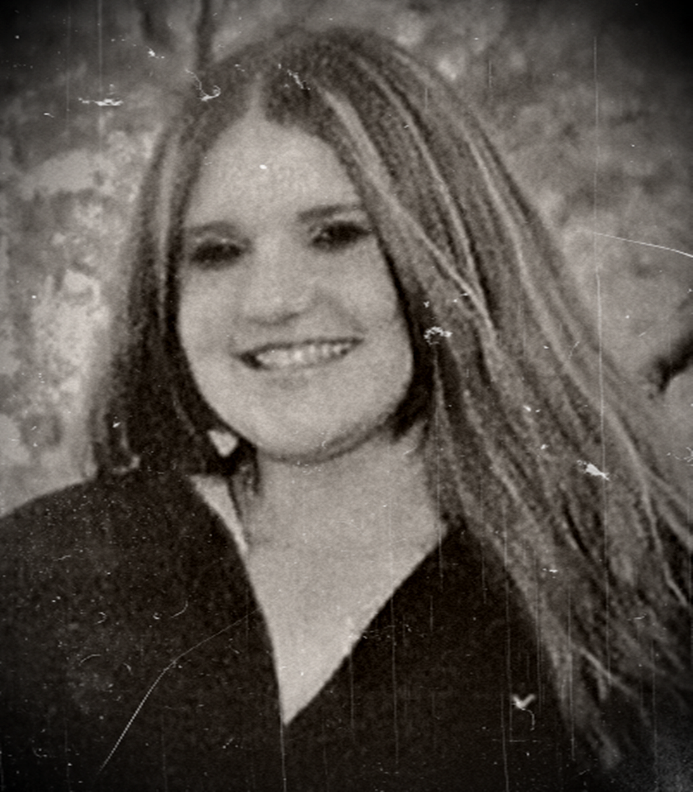
David got into his truck and headed toward the commotion. As he approached the scene, he found the road blocked by police. He asked an officer whether the victim was a young woman with long brown hair, accompanied by a red-haired baby. The answer was yes.
Brittany had been found dead behind the wheel of a bright yellow Jeep Wrangler, which had left the roadway and come to rest down an embankment. She had been shot multiple times.
Beside her, still secured in her car seat, was Aubree. The little girl had also been shot, suffering a devastating wound to her head. Somehow, she was still alive.
And there was another heartbreaking detail: Brittany was pregnant with her second child, who also died as a result of the attack.
What happened along that isolated stretch of highway would become one of southwestern Ohio’s most troubling unsolved homicide investigations.
Brittany Ann Stykes was born on May 4th, 1991. She grew up in Brown County, a largely rural area east of Cincinnati. Brittany’s parents described her as an affectionate, lively person who loved animals and spending time with the people closest to her. She had grown up around horses and other animals on her family’s property. She and her father also shared an interest in working on old cars, and she enjoyed riding four-wheelers.
Brittany was married to Shane Stykes, and together they were raising their young daughter, Aubree. By August 2013, Brittany was expecting another baby.
The precise movements of Brittany Stykes during her final hours on August 28th have become central to the investigation. That evening, she was driving Shane’s distinctive bright yellow Jeep Wrangler, accompanied by Aubree, who was approximately fourteen months old. The two were traveling toward the home of Brittany’s parents to celebrate David’s birthday.
Surveillance footage from a McDonald’s recorded Brittany shortly before the shooting. The footage provided investigators with an important reference point in reconstructing her movements, although it did not establish who attacked her.
Just after eight p.m., Brittany and Aubree were discovered in the Jeep along U.S. Route 68, south of Gooselick Road. The vehicle was located roughly three miles from the Dodsons’ home, down an embankment in a wooded area. Brittany had been shot several times and was pronounced dead. Her daughter had suffered a gunshot wound to the head.
There was no known eyewitness who could provide investigators with a reliable account of the shooting itself. Police had to reconstruct what had happened from the physical evidence, Brittany’s movements, and information supplied by people who might have encountered her or the attacker.
Even the exact manner in which the shooting unfolded would become the subject of competing theories. Had someone deliberately stopped her along the highway? Had the killer been waiting for her? Was she followed? Or had the attack occurred so suddenly that she never had an opportunity to react?
Although Brittany was beyond saving, Aubree’s survival offered one small measure of hope in the aftermath of the shooting. The bullet had struck the little girl in the head, leaving her with injuries that required extensive medical care. According to Shane Stykes, Aubree underwent four brain surgeries during her recovery. The fact that she survived such a serious injury was remarkable, but obviously Aubree was too young to give investigators a meaningful account of the shooting.
An examination by the Brown County Coroner’s Office determined that two bullets had struck Brittany. At least three additional bullet strikes were identified on the driver’s side door of the Jeep. One bullet struck Brittany in the neck, causing a relatively superficial wound. Another entered the side of her chest, punctured her lungs, and traveled through her body into her arm. This second wound was devastating.
The coroner also documented abrasions on Brittany’s face, right arm, fingers, and right leg. Although these injuries could have resulted from the vehicle leaving the highway, the available reporting does not establish exactly how each occurred.
Investigators reported no gunshot residue indicating that Brittany had been shot at close range. This was significant because it suggested that the shooter may have fired from some distance outside the vehicle.
Other findings were equally important. Brittany’s toxicology results were negative for alcohol and drugs. Her jewelry remained on her body, and she still had approximately $125 in cash, suggesting that robbery was not the motive.
Investigators also reported that no spent shell casings were recovered from the crime scene. Their absence complicated efforts to identify the firearm and reconstruct the attack.
Taken together, the evidence raised the possibility that Brittany had been deliberately targeted. But that possibility was not the same as proof, and investigators could not conclusively establish a motive.
The distinctive Jeep became one of the investigation’s most important pieces of evidence. It contained the bullet damage, biological evidence, and physical traces associated with the shooting. Yet even after years of examination, the vehicle did not produce the breakthrough detectives needed.
Detectives with the Brown County Sheriff’s Office, assisted by the Ohio Bureau of Criminal Investigation, began examining Brittany’s personal life, relationships, and recent movements. They interviewed family members and acquaintances, followed tips, and attempted to identify anyone who might have had a reason to attack her.
Among the earliest people questioned was her husband, Shane Stykes. In the immediate aftermath, investigators naturally wanted to establish Shane’s whereabouts and determine whether he could account for his movements during the period when Brittany was killed.
Shane told investigators that he had been exercising at a gym approximately fifteen minutes from the crime scene. He said he was at home later that night when deputies arrived and asked whether he owned a yellow Jeep. Police took him to the sheriff’s office for questioning and tested his hands for gunshot residue.
Approximately two weeks after the shooting, authorities publicly stated that Shane had been cleared based on his alibi and forensic testing.
However, suspicion and tension within Brittany’s family persisted. Brittany’s parents had questions about their son-in-law, while Shane maintained that he had nothing to do with his wife’s murder.
Shane also told reporters that he believed he knew who was responsible. According to him, he had given investigators the name of a person he suspected from the beginning, although he declined to identify that person publicly.
In interviews marking the first anniversary of Brittany’s death, lead investigator Buddy Moore said detectives were considering several possibilities. He also indicated that he did not believe the shooting was random. Moore suggested that information gathered from people already incarcerated for other offenses might eventually prove useful.
But at that stage, there was no arrest, no recovered murder weapon, and no publicly established motive. The investigation was still searching for the connection between Brittany and whoever had opened fire on her Jeep.
The murder also created lasting tension between Brittany’s husband and her parents. In December 2013, a custody dispute arose over Aubree. Brittany’s parents alleged that Shane was restricting their access to their granddaughter. The legal action was eventually dropped, but the disagreement reflected the difficulty of navigating family relationships after the shooting.
In 2015, approximately two years after Brittany’s murder, investigators received information that appeared to offer something the case had lacked from the beginning: a possible eyewitness account, a suspect, and a motive. A woman contacted authorities claiming she knew who had killed Brittany.
According to a search warrant affidavit subsequently obtained by Cincinnati television station WCPO, the woman identified her former boyfriend as the alleged gunman. Her account suggested that Brittany’s murder had been a calculated act of retaliation, possibly connected to money allegedly owed by her husband.
The informant claimed she had been traveling with her former boyfriend on the evening of August 28th, 2013. She alleged that they encountered Brittany’s yellow Jeep at a gas station, after which the man began following her.
For approximately twenty-five minutes, according to the woman’s story, they followed the Jeep until the man used a portable blue emergency light to make Brittany believe she was being stopped by a police officer. The woman claimed that Brittany pulled over along U.S. Route 68 near Gooselick Road. Her former boyfriend then allegedly approached the Jeep and shot Brittany.
The informant claimed that the attack was intended as retaliation over an unpaid debt and that the gunman had received two payments of $10,000 to carry it out. She also alleged that the man was responsible for other killings.
If accurate, the account would have explained several puzzling aspects of the case: how the attacker got Brittany to stop, why she was targeted, and why someone might have wanted her killed despite the apparent absence of a motive in her own life.
But the entire scenario rested on the informant’s statements. Investigators had not independently established that the alleged traffic stop, payments, or murder-for-hire arrangement had actually occurred. Nevertheless, the information was substantial enough to prompt further investigative action.
The informant’s allegations led detectives across the Ohio River into Kentucky. In September 2015, Brown County deputies and Kentucky State Police executed a search warrant at a property on Hogg Ridge Road in the Falmouth area of Pendleton County. Investigators arrived with metal detectors and digging equipment, searching for evidence that might corroborate the woman’s account. According to subsequent reporting, authorities documented nineteen items of evidence during the search.
At the time, investigators described the operation positively, and there was renewed hope that the case might finally be moving toward a resolution.
The allegations also brought attention to a man identified in some local reporting as Tommy Lopez, who was accused by the informant of carrying out the attack. In November 2015, the Brown County Crime Reporter reported that a grand jury was examining evidence connected with those allegations.
Yet the apparent breakthrough never resulted in a publicly reported murder indictment or conviction in Brittany’s case. No one was charged with killing her, and as the years passed, the proposed murder-for-hire scenario remained unproven.
More recently, a June 2026 podcast reported that sheriff’s officials characterized the source of the blue-light theory as unreliable. That report should not be treated as a substitute for the underlying investigative records, but it reinforces the need to distinguish the 2015 allegation from established fact. There is no verified public evidence showing that Brittany was stopped by someone impersonating a police officer, that a $20,000 murder contract existed, or that the man accused in 2015 committed the killing.
As the investigation continued, the yellow Jeep Wrangler became the center of a separate legal dispute. After the shooting, authorities retained the vehicle as evidence. It was, after all, the location where Brittany had been found murdered and Aubree had nearly died. But the vehicle belonged to Shane Stykes, who wanted it returned.
In 2017, Shane sued the Brown County sheriff and prosecutor to recover possession of the Jeep and other personal property. His request troubled Brittany’s parents, who believed the Jeep should remain in police custody as long as the homicide was unsolved. They feared that returning such an important piece of evidence could jeopardize the possibility of future forensic examination.
Shane, however, described the vehicle as having enormous sentimental value. He said he and his late father had worked on the Jeep together, and that it was the vehicle in which he and Brittany had gone on their first date. He wanted to restore it and eventually give it to Aubree when she was old enough to drive.
The courts ultimately sided with Shane. In October 2018, authorities returned the Jeep, along with a laptop computer and child safety seat. Prosecutors indicated that investigators had already collected substantial forensic evidence, including DNA samples, from the vehicle.
By the time Brittany’s murder reached its tenth anniversary in August 2023, the investigation had become a frustratingly familiar cycle of renewed publicity, occasional leads, and disappointment. David and Mary Dodson continued speaking with reporters, attending memorial gatherings, and asking anyone with information to come forward.
The Brown County Sheriff’s Office publicly acknowledged that the case had consumed considerable resources. Its dedicated case page reported more than 75 interviews and approximately $1 million in investigative expenditures.
By 2024, detectives said they were exploring newer technology in an effort to uncover evidence that earlier investigative methods might have missed. Despite those efforts, the case remained unsolved.
Over the years, detectives have encountered allegations implicating different people, elaborate theories about the motive, and purported confessions. Some claims initially appeared promising enough to warrant extensive investigation, only to collapse under scrutiny.
In August 2025, Brown County Sheriff Chris Hodges discussed one particularly frustrating example. According to Hodges, a man had approached authorities the previous year and confessed to killing Brittany. Detectives investigated his statements, but the information he provided did not withstand examination. Investigators were able to disprove key aspects of his account, concluding that he had not committed the murder. The supposed confession produced another dead end.
By March 2026, Brittany’s parents had grown increasingly frustrated with the lack of progress. Nearly thirteen years had passed since their daughter was murdered, and they believed an outside review might offer the best chance of finally obtaining answers. David and Mary Dodson publicly called for the Ohio Bureau of Criminal Investigation’s cold-case specialists to take a fresh look at the evidence.
On August 28th, 2026, the thirteenth anniversary of Brittany’s murder, the family again gathered at the roadside memorial near the place where she died. They continued to call for justice and for anyone with information to speak up. The $50,000 reward remained available.
But as of this writing in October 2026, no arrest or conviction in Brittany’s murder has been publicly confirmed.

