
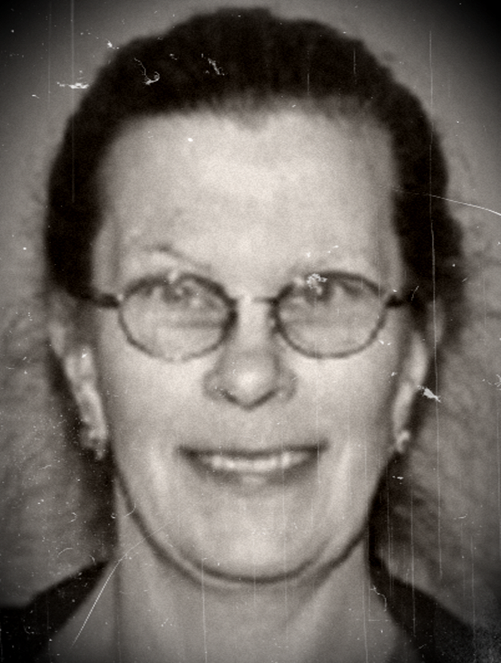
Sixty-two-year-old Jerene Matta lived alone at 1809 Greenway Street in Yakima, a city in central Washington. She had a reputation among neighbors and local police for being particularly attentive to what happened around her home.
She regularly contacted law enforcement to report suspicious activity, minor crimes, and neighborhood disturbances. Some residents apparently regarded her as a neighborhood busybody, but there was no question that Jerene paid attention to her surroundings.
Detective Drew Shaw of the Yakima Police Department, who would eventually lead the investigation into her murder, was familiar with her reputation. Jerene was outspoken, sometimes confronting people she believed were behaving inappropriately near her property. She might object to someone parking outside her home or reprimand neighborhood children for getting too close.
Her vigilance extended well beyond simply watching through a window. Jerene had installed multiple security cameras around the entrances to her house. Inside, she maintained what investigators later described as something resembling a surveillance command center, with several large television monitors displaying camera feeds. The arrangement was unusually extensive for a private residence.
Whether Jerene had installed the equipment because of particular threats, earlier criminal incidents, or a more general desire to protect herself was never firmly established. Investigators found no confirmed evidence that someone had been stalking or systematically threatening her before the murder. Nevertheless, her security system would become one of the most significant aspects of the later investigation.
Saturday, December 7th, 2013 was an unusually cold day in Yakima. That evening, members of the Yakima Police Department were gathering for their annual Christmas party. Detective Drew Shaw was preparing to enjoy the festivities with his wife when Lieutenant Nolan Wentz approached him with unexpected news: there had been a suspected homicide at a residence on Greenway Street. Shaw left the gathering, changed clothes, and headed toward the scene. He arrived shortly before seven p.m.
Earlier that evening, residents in the vicinity of Greenway Street had noticed indications of a fire and contacted emergency services. Initially, callers were uncertain exactly which house was burning. Firefighters eventually traced the smoke to Jerene’s residence.
They forced their way inside to extinguish the flames. During their search of the building, they discovered Jerene lying on the floor of a hallway near a bathroom. Her cat was also found dead inside the house.
When Shaw entered the residence, the hallway was blackened with soot. The condition of Jerene’s body made it immediately apparent that investigators were dealing with something far more sinister than an accidental fire. Her wrists had been restrained behind her back with duct tape, and her ankles had been bound as well. Investigators noted that an extraordinary amount of tape had been used to immobilize her.
Jerene had suffered substantial injuries to her face and head, and her throat had been cut. The violence suggested a prolonged and terrifying assault.
But despite those injuries, the fire itself had played a crucial role in her death. According to Detective Shaw’s later account, Jerene ultimately died from smoke inhalation. In other words, she had survived the initial physical attack long enough to inhale the smoke produced by the deliberately set fire. The possibility that she had been alive while the house burned made the crime especially disturbing.
One of the earliest investigative discoveries suggested that the attack may have unfolded over a considerable period. Jerene’s home security alarm had activated at approximately three ten p.m. on December 7th. It sounded again at approximately five twelve p.m.
According to Shaw’s account, the alarm company’s procedures at the time did not automatically result in police responding unless the homeowner confirmed that an emergency was occurring. Consequently, the initial alarm did not bring officers rushing to Jerene’s home. Firefighters arrived at approximately five thirty-five p.m., more than two hours after the first alarm activation.
Investigators could not establish precisely when Jerene was initially confronted, but the alarm records raised the possibility that she had been held captive or assaulted for an extended period.
The investigation determined that the fire originated in a spare room opposite the laundry room. Authorities believed an accelerant, possibly gasoline, had been used.
The fire did not consume the entire residence, and Jerene’s body was found in an area that had not been directly burned. Detectives suspected the perpetrator had started the blaze to destroy evidence, conceal the killing, or both.
Forensic evidence would eventually demonstrate that the attempt to eliminate every trace of the attackers had not been entirely successful. But by the time police began processing the scene, some of their most potentially valuable evidence was already missing.
As detectives examined Jerene’s house, they noticed that several electronic devices were missing. Multiple large television monitors had been taken from the room where she watched her security cameras. More importantly, the hard drives connected to her surveillance system had disappeared.
This was a serious blow to the investigation. Jerene had surrounded her home with cameras, and the missing recordings might have shown who approached the property, when they arrived, and how they departed. The equipment might even have captured the beginning of the attack.
Instead, police were left wondering whether the attackers had removed the electronics simply because they were valuable or because they understood that the recordings could identify them.
Jerene’s pickup truck was also missing. Taken together, the missing property suggested robbery, although investigators initially struggled to understand why anyone would commit such an exceptionally violent crime for the contents of an ordinary residence.
There were other peculiarities. Outside the house, investigators learned that firefighters had driven over three Afghan-style blankets lying in the street. The blankets were spread out together, and what appeared to be vomit was found on them. Jerene’s relatives subsequently identified the blankets as having come from her home.
Investigators considered several explanations. The blankets might have been used to conceal stolen belongings as they were carried outside. Alternatively, someone involved in the attack might have used them for another purpose. Police also considered whether Jerene herself might have vomited during the assault. Although the blankets were collected for forensic examination, the evidence ultimately failed to produce a usable DNA profile.
Detectives canvassed the neighborhood, hoping someone had noticed an unfamiliar person or vehicle near Jerene’s house during the afternoon. Several witnesses provided potentially important information. A neighbor reported seeing an older green or teal Pontiac Grand Prix parked near Jerene’s residence shortly before eleven a.m. on December 7th.
The witness observed a similar vehicle near the house again around four thirty p.m., although she could not determine whether it was the same car. At approximately five p.m., she saw the vehicle leave the area.
Another witness, who had reported the fire, described seeing a young man on nearby Prasch Avenue after firefighters arrived. Despite the freezing weather, he was not wearing a coat and appeared to be sweating. The witness estimated his age at approximately eighteen or nineteen. She subsequently saw a second man running toward him. According to her account, one of the men urged the other to continue running.
The observations caught investigators’ attention, particularly because of the unusual behavior and proximity to the crime scene. However, detectives could not establish that either man had anything to do with Jerene’s murder. The Grand Prix sightings were similarly inconclusive.
On December 8th, the morning after Jerene’s murder, a Yakima police officer noticed a pickup truck parked in a lot approximately four or five blocks from the crime scene. The parking area belonged to a nearby college. After checking the license plate, the officer confirmed that the vehicle belonged to Jerene. It had been abandoned surprisingly close to her home.
For Detective Shaw, the location was significant. Whoever had stolen the truck apparently had not taken it far, raising the possibility that someone connected to the crime lived nearby.
About sixty feet from where the truck was recovered was the residence of Lloyd Calvert, a man already familiar to local police because of his extensive criminal history. Investigators questioned Calvert. Initially, he denied knowing anything about Jerene’s murder or the circumstances surrounding her truck. Shaw was unconvinced.
Several days later, the detective personally visited Calvert’s apartment and challenged him about the vehicle’s proximity to his residence. This time, Calvert provided information he had not previously disclosed.
According to Shaw’s account, Calvert said two acquaintances had unexpectedly visited his apartment on the evening of December 7th. Both were familiar to police for property-related offenses. Calvert reportedly found their appearance unusual because they had arrived on foot, despite being known for stealing vehicles. The men asked Calvert to drive them to a residence on the north side of Yakima. He agreed.
Calvert told investigators that Jerene’s truck had not been in the nearby parking lot when he departed with the men. However, when he returned, he noticed it parked there.
The story immediately attracted detectives’ attention. Had the two visitors stolen Jerene’s truck and abandoned it near Calvert’s apartment? Had they been involved in the attack? Or was the timing a coincidence?
Investigators considered Calvert and the two acquaintances possible suspects. Importantly, however, none of the three was established to have participated in Jerene’s murder. Shaw later explained that he continued to consider them relevant to the investigation, but the evidence had not been sufficient to bring charges. The names of the two acquaintances have not been publicly disclosed, and Calvert has since died.
While detectives investigated Jerene’s missing truck, Shaw was pursuing another theory. He suspected that the attackers might have assaulted Jerene to obtain access to her money.
The severity of her facial injuries suggested to him that someone could have been trying to force information from her, possibly a bank account number or PIN. If that was the case, the perpetrators might have attempted to withdraw money shortly after the attack.
Shaw visited Jerene’s financial institution to determine whether her accounts had been accessed. Bank employees could not disclose confidential account records without proper legal authorization. However, after speaking with a manager, Shaw became convinced that obtaining a search warrant would be worthwhile.
His suspicions proved justified. Investigators discovered that someone had attempted to use Jerene’s bank account on the night of her murder.
According to Shaw, there were multiple attempts to access the account at an ATM. Eventually, the individual went to another bank across the street and successfully withdrew money. The total amount obtained was less than $1,000.
This discovery strongly supported the possibility that robbery had been a motive for the attack. It also gave investigators something they had desperately needed: surveillance footage of a person attempting to withdraw money from Jerene’s account.
Unfortunately, the person had taken considerable precautions to conceal their appearance, wearing a hooded coat, a balaclava covering much of the face, and black-rimmed glasses. At one point, the figure appeared to look directly toward the surveillance camera. Despite that, the clothing made identification extremely difficult. Investigators could not reliably determine the person’s age, sex, or other distinguishing physical characteristics from the footage.
Police collected numerous items for forensic testing, hoping that physical evidence would finally identify someone involved in the attack. Among the items submitted were samples from the blankets found outside, swabs from Jerene’s pickup truck, the duct tape used to restrain her, material recovered from beneath her fingernails, and a screwdriver found inside the abandoned vehicle. The laboratory results arrived in the late summer of 2014.
Some samples proved disappointing. The material collected from the blankets and the swabs from the truck’s steering wheel and door handles did not yield DNA profiles suitable for comparison.
Other samples were more promising. Investigators discovered a female DNA profile beneath the fingernails of Jerene’s left hand. The DNA did not belong to Jerene, and the profile was suitable for entry into CODIS, the FBI’s national DNA database. Detectives hoped the discovery might eventually identify someone who had been in physical contact with her during the attack. However, as of the October 2025 account provided by Shaw, no matching profile had been found.
Testing of the duct tape produced another result: a male DNA profile. Unfortunately, this sample was not of sufficient quality to be entered into CODIS. Investigators nevertheless compared it against DNA obtained from individuals they were investigating. Calvert’s DNA did not match the recovered evidence. Investigators also obtained comparison samples associated with the two men Calvert had described, but those did not match the relevant profiles either. These results complicated the case.
The unidentified female DNA under Jerene’s fingernails was particularly intriguing because much of the initial investigation had focused on male persons of interest. However, the existence of a female DNA profile does not necessarily establish that a woman participated in the murder. Investigators must consider how and when DNA might have been transferred.
Similarly, the male DNA on the tape could potentially identify someone who handled it, but the available evidence has not produced a publicly confirmed match.
Investigators also examined whether anyone close to Jerene might have been involved. Her adult son, Chris, had spent time at his mother’s house, and a screwdriver recovered from Jerene’s abandoned pickup truck contained his DNA. Detective Shaw, however, did not consider this finding inherently suspicious. Chris had legitimate reasons to have been around his mother’s property and vehicle.
Police attempted to locate him on the evening of December 7th to notify him of his mother’s death, but he was not at his apartment. The following day, Chris arrived at the house and discovered that something terrible had happened. According to Shaw, he was visibly devastated, and police were contacted after he became distraught outside the residence.
Detectives interviewed him and considered the possibility of family involvement, as they would in any homicide investigation. However, Shaw said investigators found no evidence indicating that Chris had participated in the crime or benefited from his mother’s death.
One of the most persistent questions surrounding Jerene’s murder concerns the motive. Her unusually extensive surveillance system might suggest that she feared someone or believed her safety was threatened.
Her tendency to report neighborhood crimes also raised the possibility that someone had developed a personal grievance against her.
Could she have been murdered because she had witnessed something? Had her cameras recorded someone committing a crime? Was someone attempting to silence her?
These possibilities are compelling, but investigators have never publicly established evidence supporting them.
Detective Shaw has generally favored a different explanation. Based on the stolen electronics, vehicle, and money, he believes Jerene was probably the victim of a financially motivated crime.
His theory is that more than one person participated and that the attackers may have targeted her because they believed she possessed property worth stealing or considered her vulnerable because she lived alone. Shaw has suggested that those responsible may have been looking for items they could sell to obtain money for drugs.
The theory could explain the stolen televisions, surveillance equipment, and truck. It might also account for the violence if the attackers attempted to force Jerene to reveal financial information or disclose where valuables were kept.
But significant questions remain. Why use such an excessive amount of duct tape? Why inflict so much physical violence? Why set the house on fire? And why take the security system’s recording equipment? Some of these actions are consistent with an effort to conceal evidence after a robbery, but no definitive reconstruction of the crime has been established.
In 2021, the department launched its Never Forget initiative, which included an interactive map identifying homicide victims and inviting the public to provide information. Jerene was included among those remembered.
In 2024, the department’s cold-case efforts brought renewed public attention to her murder. Investigators released information through video presentations, hoping that revisiting the circumstances might encourage someone to come forward. Local television station KIMA Action News also revisited the case in May 2024, reporting on the stolen property and the recovery of Jerene’s truck.
In October 2025, the true-crime podcast The Deck featured Jerene’s murder in an episode titled Jerene Matta (Queen of Spades, Washington). The episode included extensive interviews with Detective Shaw, who discussed the investigation, the evidence, and his continuing interest in obtaining justice for Jerene.
It also brought several details of the crime to a wider audience, including the extent of Jerene’s security system, the circumstances of the bank withdrawals, and the DNA profiles that investigators still hoped to identify. The episode was subsequently shared through the Anatomy of Murder podcast in January 2026.
As of October 2026, there has been no verified public announcement of an arrest or resolution in Jerene Matta’s murder.

