
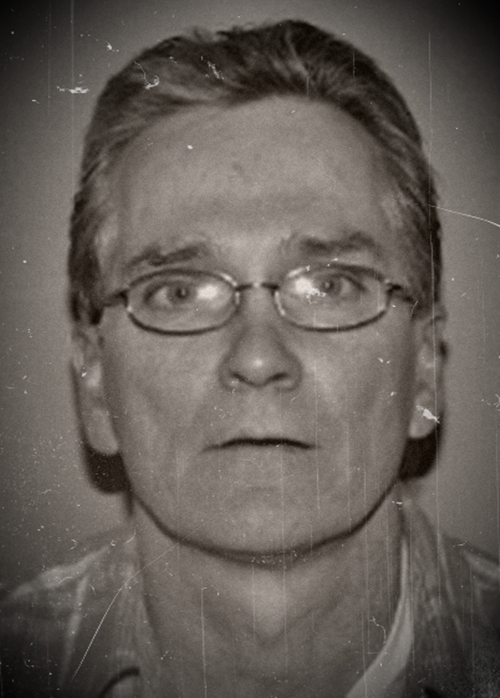
Joseph Mullins, often referred to as “Little Joe,” was born in Ohio on March 29th, 1957. The second-oldest of six children, he spent part of his childhood in West Virginia after his mother remarried. Family was central to his life, and those who knew him remembered a man who was protective of his loved ones, quick to laugh, and always willing to lend a hand.
His younger sister, Linette, shared a particularly close relationship with him. Eleven years separated the siblings, but Joe took an active role in her upbringing. After the family experienced the deaths of two of his younger siblings, one in 1968 and another in 1980, he became especially protective of his little sister.
Linette later recalled that her brother taught her to drive, welcomed her into his home, and came to her assistance whenever she needed him. To her, he was more than an older brother. He was a protector and a source of reassurance.
Joe eventually established a life in Ohio, where he married his second wife and helped raise her four sons. He had also been a stepfather during his earlier marriage in West Virginia. Although he had no biological children of his own, fatherhood was an important part of his identity.
By trade, Joe was a printer. He worked at the print shop owned by his wife, whom he had met through the business. Outside his regular job, he was an accomplished handyman who enjoyed carpentry, renovation projects, and tile work.
He was particularly fond of building things for other people. When his stepsons developed an interest in BMX riding, Joe constructed a bicycle course in the backyard. He also helped relatives renovate their homes and assisted friends with projects ranging from repairs to building a dog run.
One of his favorite undertakings was a backyard treehouse. In December 2014, the then-fifty-seven-year-old Joe was still making improvements to the structure, decorating it with Christmas lights around the windows. Shortly before his disappearance, he shared a photograph of the nearly completed treehouse on Facebook, playfully wondering whether Santa Claus would notice it. It would become one of his last social media posts.
On the evening of December 19th, 2014, Joe’s wife returned to their home on Infirmary Road in Portage County at approximately nine-thirty p.m. The residence was in the Mantua Township area, although the Ohio Attorney General’s cold-case database identifies its location as Ravenna.
According to the official case summary, she found indications that her husband had been home, but he was missing. Initially, his absence might not have seemed especially alarming. Joe was sociable and sometimes visited friends without making elaborate arrangements. His wife reportedly believed he might have gone to a friend’s house.
However, when she contacted that friend, he had not seen Joe. The friend came over, and they began searching for him. Other family friends soon joined the effort. They repeatedly attempted to contact Joe on his cellphone, but their calls went unanswered. A search of the immediate area produced no sign of him.
By the early morning hours of December 20th, the Portage County Sheriff’s Office had been contacted, and deputies responded to the residence.
The circumstances were peculiar. Joe had apparently vanished without warning, leaving his family with no explanation of where he had gone. There was no obvious indication that he had packed his belongings or planned to leave town.
More troubling evidence soon emerged. Investigators examining the property discovered blood near a detached garage. Testing determined that it belonged to Joseph Mullins.
Inside the residence, another blood smear was discovered on a bedspread in the master bedroom. That blood was also Joe’s. The findings raised the possibility that violence had occurred on the property before his disappearance.
Yet there were elements of the scene that complicated the investigation. The Ohio Attorney General’s case summary states that nothing in the house appeared to be missing or disturbed. There was no obvious evidence of a burglary or a major struggle.
As investigators examined the disappearance, Joe’s relatives struggled to understand how a man with such strong family ties could simply vanish. On the morning of December 20th, his sister Linette received a telephone call from the Portage County Sheriff’s Office. Investigators wanted to know whether she had spoken to her brother within the previous twenty-four hours.
She had not. In fact, the last communication she received from him was a voicemail left shortly before he disappeared. At the time, Linette was working with the Mingo County Sheriff’s Department in West Virginia, helping organize a holiday program that took underprivileged children shopping with deputies. Her brother knew she would be busy. In his message, he acknowledged the shopping event, encouraged her to enjoy herself, asked her to call him later, and told her he loved her.
She never got the chance to return his call. The final voicemail would haunt her for years. Linette made repeated trips from West Virginia to Ohio during the search, driving approximately five hours each way. She contacted anyone she thought might have information and repeatedly sought updates about the investigation.
Early investigative possibilities reportedly included the idea that Mullins might have stepped outside because he believed a friend had arrived. If that happened, he could have encountered someone else instead.
Another possibility considered was that he had voluntarily left the area. However, Linette strongly rejected the suggestion that her brother had intentionally disappeared. She knew his character, his routines, and his concern for the people he loved. In her view, he would never have deliberately subjected his family to such worry.
His relatives continued searching and hoping. But as December drew to a close, the investigation was about to take a devastating turn.
Ten days after Joe Mullins disappeared, his body was found in downtown Cleveland. The discovery occurred in the city’s warehouse district, an area of commercial and industrial buildings near the Cuyahoga River, approximately thirty miles from his home.
According to the account published by Project: Cold Case, there had actually been an earlier report of a body in the area. A homeless man reportedly contacted authorities after discovering human remains, but an incorrect address apparently prevented the body from being located.
The following day, December 29th, a worker associated with a coal barge reported finding a deceased person. This time, the body was located. An examination determined that Joe had died from blunt-force trauma to the head and face.
The publicly documented investigation presents several important clues, but also considerable uncertainty. For example, the presence of Joseph’s blood both near the detached garage and inside the master bedroom of his home suggests that he had bled at more than one location on the property.
However, those findings alone do not establish that he was fatally attacked there. Investigators have not publicly disclosed enough information to determine whether the bloodstains resulted from a single event, whether the injuries were sustained at the residence, or whether someone attempted to conceal evidence. The absence of an obvious burglary is another noteworthy detail.
Another unresolved issue involves Joe’s cellphone and keys, which were among the items missing from the residence. Public reporting has not established what ultimately happened to them or whether either item provided useful investigative leads.
There is also the question of motive. Nothing in the publicly documented evidence establishes whether Joe was killed during a personal dispute, a confrontation with an acquaintance, a robbery, or some other encounter. His family described him as well-liked and helpful, someone who did not seem to have enemies.
Further losses for the family unfortunately followed. Joe’s brothers Dennis and Georgie died in May 2021 and April 2022, respectively. By the time of the 2025 Project: Cold Case profile, Linette was the last surviving sibling.
As of October 2026, Joseph Mullins’s death remains listed in the Ohio Attorney General’s database of unsolved homicides.

