
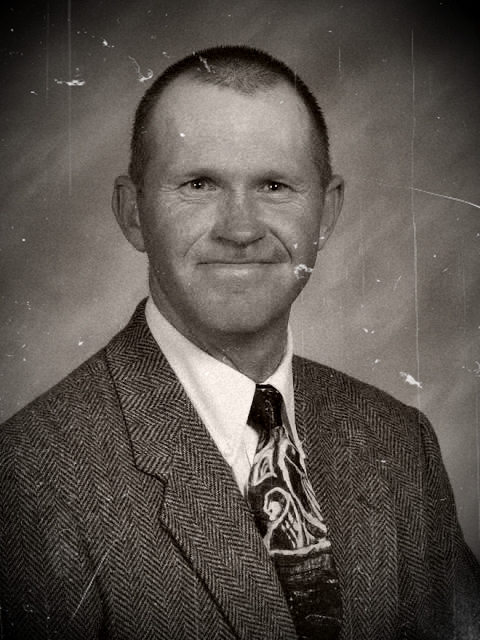
John Jacoby was born on May 29th, 1967, and grew up in Windsor, a community situated between Fort Collins and Greeley in northern Colorado. By 2015, Windsor was expanding rapidly, but it retained much of the close-knit character that had defined it for generations.
Forty-seven-year-old John Jacoby was one of those residents who seemed to know everyone. Known affectionately as Johnny, he was a friendly, approachable man whose cheerful personality made him a recognizable figure throughout town. Friends remembered someone who found it easy to strike up conversations, who enjoyed being involved in the community, and who rarely seemed to encounter anyone he could not get along with.
He worked two part-time jobs. One was as a caretaker for Windsor’s Parks and Recreation Department, where he had been employed since 2012. The other was as a grocery bagger at the local King Soopers supermarket. Between his jobs, his bicycle rides, and his participation in local activities, Johnny was a familiar face to people from many different walks of life.
His bicycle was especially distinctive. He rode it everywhere, sometimes pulling a small trailer behind him to carry his belongings. Friends recalled seeing him at local parks, high school sporting events, and community gatherings. He was also involved in charitable efforts, including helping raise money for K99 Radio’s annual 28 Hours of Hope fundraiser.
Monday, May 18th, 2015, began as an ordinary day in Windsor. Johnny had been involved in preparations for upcoming Memorial Day activities. Earlier that morning, he had spoken with his friend Bobby Warner about arrangements for the holiday events. Neither man could have imagined that it would be their final conversation.
At approximately ten fifteen a.m., Johnny was riding northbound on Weld County Road 15, roughly two miles north of Windsor’s Main Street, near its intersection with Weld County Road 72. The location was a relatively quiet rural area, with agricultural land and open stretches of roadway surrounding it. Johnny was riding his bicycle with a small trailer attached.
At some point during his journey, an unknown assailant fired two shots into his body. Precisely how the attack unfolded has never been publicly established. Investigators have not identified the attacker’s position, whether the gunfire came from a passing vehicle, or whether Johnny had any warning before he was shot.
What is known is that Johnny was struck twice and collapsed beside the road. His attacker fled, leaving him mortally wounded.
A passing motorist subsequently spotted Johnny lying in a roadside ditch and contacted emergency services. Responders arrived, but there was nothing they could do to save him. He was pronounced dead at the scene.
Initially, it appeared possible that the cyclist had been struck by a vehicle and abandoned in a hit-and-run accident. But the discovery of gunshot wounds quickly changed the nature of the investigation.
One of the most heartbreaking aspects of John Jacoby’s murder involved the emergency response. Johnny had two brothers, and one of them, David Jacoby, worked as a paramedic. When emergency personnel were dispatched to the scene of what initially appeared to be a roadside accident, David was among the first responders. He arrived to discover that the victim was his own brother.
Violent crime of this nature was unusual in the town. Johnny’s killing was reported as Windsor’s first homicide in approximately eight years.
The Windsor Police Department launched a homicide investigation immediately after Johnny’s body was discovered. Officers examined the stretch of Weld County Road 15 where he had been found, attempting to establish what had happened and identify any physical evidence that might lead them to the shooter.
Investigators faced several significant obstacles. The murder had taken place in daylight, but on a relatively isolated road. There were no publicly identified eyewitnesses who could describe the actual shooting, and the killer had apparently escaped before authorities arrived.
Johnny’s friends and family could think of no obvious reason anyone would want to harm him. There was no publicly established personal dispute, robbery motive, or other circumstance explaining why he had been targeted.
As investigators continued their work, an unsettling possibility emerged: John Jacoby’s murder might not have been an isolated incident. Someone else in northern Colorado had recently been shot under similarly mysterious circumstances.
On April 22nd, 2015, less than four weeks before John Jacoby’s murder, twenty-year-old Cori Romero had been driving in the Fort Collins area late at night. At approximately eleven fifteen p.m., Cori was traveling near East Harmony Road and the entrance ramp to southbound Interstate 25.
As she approached the highway, someone fired two shots at her vehicle. One of the bullets struck her in the neck. Despite her injury, she managed to pull over and summon help. She survived the attack, although the circumstances suggested that she had come dangerously close to being killed.
The shooting was deeply disturbing because investigators could not identify an obvious reason anyone would have attacked her. The gunfire appeared to have come without warning, and no clear motive emerged.
At first, the shooting of Cori Romero and the murder of John Jacoby were investigated as separate crimes. There were obvious differences: Cori Romero had been attacked at night while driving a car near a busy highway. John Jacoby had been shot during daylight while riding a bicycle along a rural road. The victims were different ages, and there was no publicly established personal connection between them.
But the attacks shared an alarming characteristic: both involved apparently unsuspecting people being shot while traveling through northern Colorado. And on May 29th, 2015, Windsor Police Chief John Michaels announced that investigators had obtained evidence linking the shootings.
Authorities did not publicly explain the precise nature of that evidence, although they made clear that the connection was more substantial than a simple similarity in circumstances.
The announcement dramatically changed the investigation. Police were no longer searching only for the person who had murdered John Jacoby. They were searching for someone who appeared to have attacked at least two unrelated people in separate locations. And if the shootings truly were random, there was no way of knowing whether the attacker might strike again.
By late May 2015, anxiety was spreading throughout the region. News of the connection between John Jacoby’s murder and Cori Romero’s shooting raised the possibility that an unknown gunman was targeting people traveling along local roads.
There had also been reports of motorists experiencing shattered vehicle windows under unexplained circumstances. Some residents wondered whether those incidents might be connected to the shootings.
Authorities cautioned against jumping to conclusions. Aside from Cori Romero’s attack, investigators had not established that the reported window-shattering incidents involved gunfire. Nevertheless, the possibility of a roaming shooter was difficult to ignore.
Concerns became serious enough that a northern Colorado triathlon was canceled because of the shootings. Organizers worried about the safety of participants who would be cycling along exposed roads in the area.
As the investigation expanded, authorities established the Northern Colorado Shooting Task Force. The effort brought together several agencies, including the Windsor Police Department, the FBI, the Larimer County Sheriff’s Office, and prosecutors from Weld and Larimer counties.
A central challenge remained the apparent lack of connection between the victims. Neither John Jacoby nor Cori Romero had been publicly linked to criminal activity or personal conflicts that might explain the attacks. The possibility of an offender selecting victims simply because they happened to be vulnerable was particularly disturbing.
Investigators also had to consider whether the person responsible might have used a vehicle to approach victims and escape quickly. However, the public evidence was insufficient to establish exactly how John Jacoby’s killer had traveled or whether the shooter had specifically sought him out.
The investigative task force continued examining the shootings while the public waited for news of a possible breakthrough.
Then, in June, another man was murdered. On the night of June 3rd, 2015, sixty-five-year-old William Connole was walking near his home in Loveland, Colorado. William, a cancer survivor, regularly took evening walks through his neighborhood.
At approximately ten forty-five p.m., he was standing near the intersection of East First Street and North St. Louis Avenue when someone shot and killed him.
Approximately fifteen minutes earlier, someone had fired at a motorcyclist elsewhere in Loveland. The motorcyclist escaped without injury. The two June attacks were eventually linked through forensic evidence.
With John Jacoby murdered in May, Cori Romero wounded in April, and William Connole killed in June, northern Colorado was confronting an extraordinary series of violent incidents. All three principal victims had seemingly been attacked without provocation while going about ordinary activities.
But investigators eventually established an important distinction. Although the Romero and Jacoby shootings were connected to each other, authorities did not find evidence linking them to the Loveland attacks. This distinction would become especially significant several years later.
In March 2018, nearly three years after the shootings, investigators announced a major development. Christopher David Parker, then thirty-five, was arrested in connection with the June 3rd, 2015, Loveland shootings. Parker was accused of murdering William Connole and attempting to kill the motorcyclist who had been fired upon earlier that evening.
For northern Colorado residents, the arrest seemed to offer the possibility of answers to a series of crimes that had haunted the region for years.
But there was a crucial limitation. Investigators did not identify Parker as the person responsible for John Jacoby’s murder or the shooting of Cori Romero. Authorities explained that the evidence linking Parker to the Loveland attacks did not establish a connection to the earlier Windsor and Fort Collins shootings.
Parker eventually pleaded guilty to second-degree murder in William Connole’s death and received a thirty-nine-year prison sentence in June 2023.
On May 18th, 2025, the tenth anniversary of John Jacoby’s murder, the case remained unresolved. The FBI continued publicizing his killing and its connection to the April 22nd shooting of Cori Romero. By then, the federal reward for information leading to the arrest and conviction of those responsible had increased to $50,000.
As of November 2026, the Colorado Bureau of Investigation still lists John Jacoby’s death among the state’s cold cases, and the FBI continues seeking information.

